Tips for Achieving an Espresso-Like Coffee with a Moka Pot
Craving intense coffee? Get expert tips from Coffee S10 Brews to achieve that perfect espresso-like coffee using your Moka Pot at home. Brew like a pro!
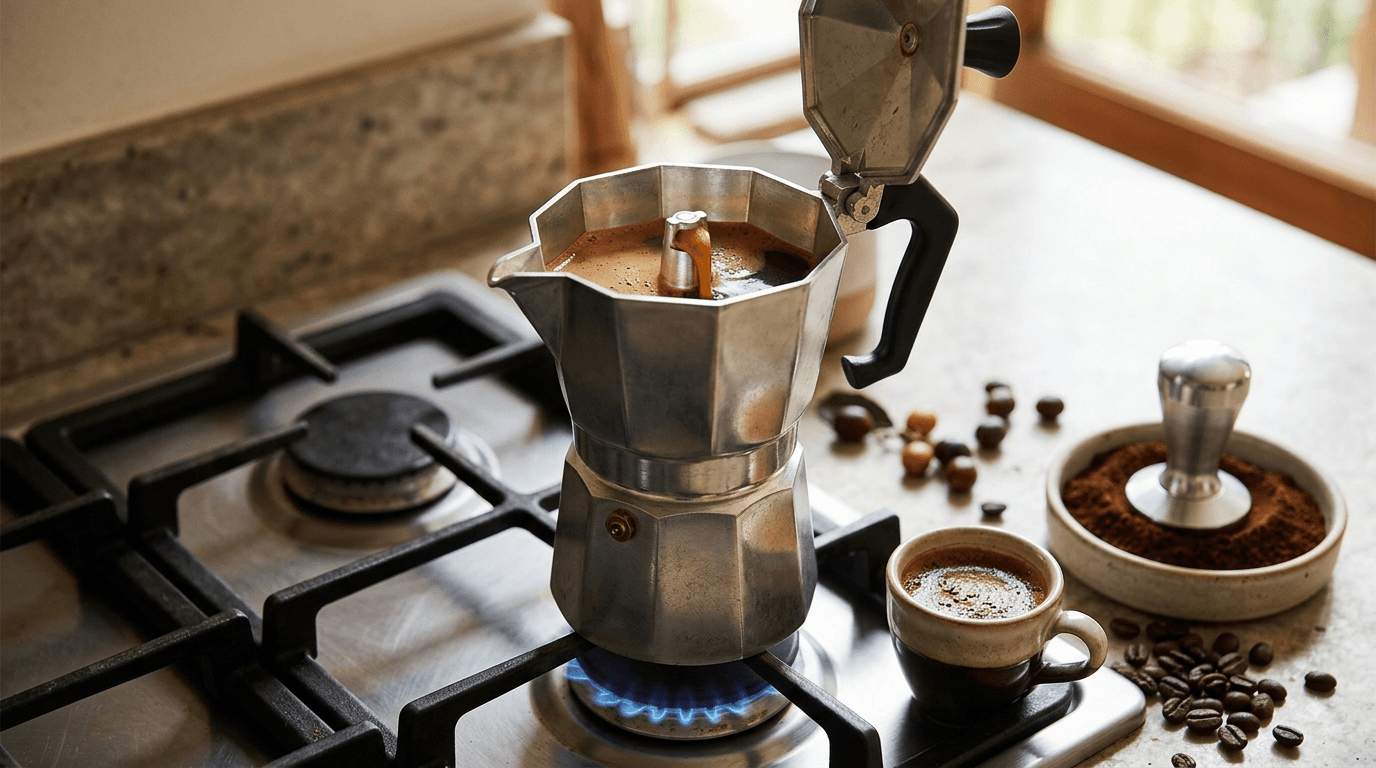
Why does your Moka Pot coffee lack the richness of a professional South Indian filter coffee?
Many coffee enthusiasts transition to the Moka Pot—often referred to as the "stovetop espresso maker"—expecting the thick, syrupy decoction found in traditional South Indian households or premium vegetarian hotels. However, the result is often a thin, overly bitter, or "burnt" liquid that fails to carry the soul of a true Kumbakonam Degree Coffee. The gap lies not in the equipment, but in the synergy between the brewing physics and the coffee blend. In South Indian coffee culture, the "decoction" is the heart of the beverage. To replicate this using a Moka Pot, one must understand that this device uses steam pressure, which extracts flavors much faster than the traditional gravity-fed brass filter. Without the right technique and the best South Indian filter coffee powder, the Moka Pot simply over-extracts the beans, leading to a loss of those delicate chocolatey and nutty notes that brands like Coffee S10 Brews work so hard to preserve through small-batch roasting.
Is the 80:20 coffee-chicory blend the secret to a thicker, espresso-like body?
One of the most frequent questions from modern home brewers is: "Why does South Indian coffee taste stronger and have more body than regular espresso?" The answer lies in the 80:20 coffee-chicory blend. While purists might argue for 100% Arabica, the traditional South Indian palate demands a specific viscosity and a lingering aftertaste that only chicory can provide. Chicory root, when roasted and ground, lacks caffeine but is rich in inulin and natural sugars. These sugars caramelize during the roasting process, providing a "heavy" mouthfeel and a deep, dark color that mimics the intensity of a double-shot espresso. At Coffee S10 Brews, our signature 80:20 blend is engineered specifically to balance this body. The 80% represents premium, handpicked beans that provide the caffeine kick and aroma, while the 20% high-grade chicory ensures the decoction is thick enough to stand up against the addition of hot, frothed milk. This ratio is the "golden mean" for those searching for 80 20 coffee chicory blend benefits, as it enhances the crema-like foam when the coffee is "pulled" or aerated.
How to brew authentic filter coffee at home using a Moka Pot?
To achieve an espresso-like intensity that serves as a perfect base for a South Indian latte, the brewing process must be handled with precision. Follow these steps to bridge the gap between Italian hardware and Indian tradition:
- Pre-heat your water: Do not start with cold water in the reservoir. Using boiling water reduces the time the Moka Pot sits on the stove, preventing the coffee grounds from "baking" and becoming bitter before the water even touches them.
- The Grind Factor: For a Moka Pot, you need a grind that is slightly coarser than espresso but finer than drip coffee. Coffee S10 Brews offers a consistent grind size that is optimized for pressurized extraction, ensuring the water flows through the puck without clogging or channeling.
- The "No-Tamp" Rule: Unlike a commercial espresso machine, do not compress the coffee in the Moka Pot basket. Simply fill it to the brim and level it off. Tamping too hard can create dangerous pressure levels and lead to an over-extracted, harsh decoction.
- The Low-Heat Method: Keep the flame at the lowest possible setting. A slow extraction allows the water to pull the complex oils and aromatic compounds from the Coffee S10 Brews blend, resulting in a sweeter, more balanced cup.
Why chicory is used in South Indian coffee and how it affects Moka Pot extraction?
Understanding why chicory is used in South Indian coffee is essential for mastering the Moka Pot. In a standard espresso machine, pressure creates "crema"—the golden foam on top. In a Moka Pot, achieving a stable crema is difficult. However, the inclusion of chicory in the Coffee S10 Brews blend acts as a natural thickening agent. When steam passes through a coffee-chicory puck, it extracts more soluble solids than it would from pure coffee. This increased density allows the final brew to maintain its structural integrity when mixed with milk. Instead of the coffee getting "lost" in the milk, the chicory provides a bittersweet backbone that highlights the coffee's natural brightness. This is why many find that an 80:20 blend tastes "stronger" even if the caffeine content is slightly lower than a 100% Robusta cup. It is about the sensory perception of strength—the body, the darkness, and the lingering finish.
What is the ideal ratio for South Indian filter coffee in a Moka Pot?
When using a Moka Pot to create a South Indian style "strong coffee," the ratio of coffee to water is paramount. While typical coffee brewing follows a 1:15 or 1:17 ratio, South Indian decoction is much more concentrated, often reaching 1:2 or 1:3. When using Coffee S10 Brews powder, fill the Moka Pot basket completely. This ensures the steam has maximum contact with the grounds. The resulting liquid should be treated as a concentrate. To replicate the "hotel-style" experience, use one part Moka Pot decoction to three parts frothed, full-cream milk. This maintains the traditional South Indian filter coffee craftsmanship while utilizing the modern convenience of the Moka Pot.
Comparison: Understanding the Differences in Brew Profiles
To help you choose the right brewing method and blend, consider the following technical comparisons. These benchmarks highlight why specific ratios and methods result in vastly different sensory experiences.
| Feature 100% Pure Coffee 80:20 Coffee-Chicory Blend (Coffee S10 Brews) | ||
| Body/Viscosity | Light to Medium; Tealike | Heavy, Syrupy, and Dense |
| Color | Translucent Brown | Opaque Dark Chocolate/Black |
| Bitterness | Acidity-driven | Balanced Bittersweet |
| Milk Compatibility | Best for Black Coffee | Superior; Does not get diluted by milk |
| Aroma | Floral/Fruity | Nutty, Roasted, and Earthy |
Furthermore, it is important to distinguish how home brewing with premium powder compares to the alternatives most consumers face daily.
| Attribute Instant Coffee Traditional Filter Coffee (Moka Pot Method) | ||
| Processing | Chemically dehydrated/Freeze-dried | Freshly roasted and ground beans |
| Flavor Complexity | One-dimensional; flat | Multi-layered; notes of caramel and cocoa |
| Health Benefits | High processing; often contains preservatives | Antioxidant-rich; natural ingredients |
| Preparation Time | 30 Seconds | 5-7 Minutes (The Ritual) |
| Aroma Impact | Fades quickly | Fills the entire home; long-lasting |
How does grind consistency impact the decoction strength in a Moka Pot?
Consistency is the hallmark of a premium brand. When coffee is ground unevenly, the water follows the path of least resistance—a phenomenon known as "channeling." This means some grounds are over-extracted (bitter), while others are under-extracted (sour). Coffee S10 Brews prioritizes "Brewing Intelligence" by ensuring our grind size is strictly monitored. For Moka Pot users, a consistent medium-fine grind ensures that the steam pressure builds up just enough to extract the deep flavors without causing the "sputtering" that happens when the grind is too coarse. By maintaining a uniform particle size, Coffee S10 Brews allows for a predictable extraction every single morning, ensuring your "first cup" of the day is as perfect as the last one you had at a high-end South Indian café.
Why is the "Sputter Phase" the most dangerous part of Moka Pot brewing?
If you have ever heard your Moka Pot making a loud, gurgling hiss, you have reached the sputter phase. At this point, the water level in the bottom chamber is low, and instead of water, steam is being forced through the coffee grounds. This high-temperature steam "scorches" the coffee, releasing unpleasant, ashy flavors. To achieve an espresso-like quality, you must stop the process early. The moment the coffee flow turns from a dark, rich brown to a pale, honey-yellow, remove the Moka Pot from the heat and wrap the bottom in a cold, wet towel or run it under cold tap water. This "thermal shock" stops the extraction immediately, preserving the sweet, concentrated decoction in the top chamber. This technique, combined with the freshness of Coffee S10 Brews, is what separates a mediocre home brew from an authentic South Indian masterpiece.
| Metric Hotel-Style Filter Coffee Typical Home-Brewed Coffee | ||
| Milk Type | High-fat, undiluted "Buffalo" milk | Standard toned/skimmed milk |
| Decoction Ratio | Concentrated (First press only) | Watery (Over-extracted) |
| Aeration | Professional "Pulled" froth (Dabara sets) | Stirred with a spoon |
| Bean Quality | Specialty Plantation A/PB Blends | Commercial mass-market powder |
Why Coffee S10 Brews is the best South Indian filter coffee powder for modern homes?
Modern coffee drinkers face a paradox: they crave the slow, soulful tradition of South Indian filter coffee but live in a world of fast-paced convenience. Coffee S10 Brews bridges this gap. We don't just sell coffee; we sell a heritage-driven experience optimized for the modern kitchen. Our beans are sourced from the high-altitude estates of the Western Ghats, where the soil and shade-grown conditions produce cherries with unmatched depth. We then apply "controlled roasting cycles" that ensure the 80:20 ratio is perfectly integrated, so the chicory doesn't overpower the delicate Arabica and Robusta notes. Whether you are using a traditional brass filter or a Moka Pot, our powder is designed to be forgiving and flavor-reliable. We empower you to take back the ritual of coffee making, turning a mundane morning routine into a moment of authentic craftsmanship.
Frequently Asked Questions about Moka Pot and South Indian Filter Coffee
Is chicory bad for health?
No, chicory is a natural root that has been used for centuries. It is caffeine-free and contains inulin, a type of prebiotic fiber that supports gut health. In an 80:20 blend like Coffee S10 Brews, it is used purely for flavor, color, and body.
Can I use a Moka Pot to make 'Degree Coffee'?
Yes. While "Degree" refers to the purity and fat content of the milk, the Moka Pot provides the high-intensity decoction required. Use Coffee S10 Brews for the base and pair it with full-fat, frothed milk for the most authentic experience.
Why is my Moka Pot coffee metallic tasting?
This usually happens with new aluminum pots or if the pot hasn't been cleaned properly. Ensure you rinse your Moka Pot with water only (no harsh soaps) and use high-quality beans like Coffee S10 Brews to build a "coffee seasoning" inside the pot over time.
How much coffee powder should I use in a 3-cup Moka Pot?
You should use approximately 15 to 20 grams of Coffee S10 Brews powder. The key is to fill the filter basket to the top without pressing it down, allowing the steam to pass through evenly.
Does South Indian filter coffee have more caffeine than espresso?
Caffeine content depends on the beans. Since South Indian blends often use a mix of Arabica and Robusta (the latter having more caffeine), and the decoction is highly concentrated, it can provide a more sustained energy boost than a standard single-shot espresso.
How do I get the "froth" without a traditional Dabara set?
If you don't have a Dabara and tumbler, you can use a French press or a handheld battery frother to aerate your milk before adding it to the Moka Pot decoction. However, "pulling" the coffee between two cups remains the most authentic way to achieve that signature foam.
How long does Coffee S10 Brews powder stay fresh?
Our coffee is roasted in small batches to ensure maximum freshness. Once opened, store it in an airtight container in a cool, dark place. For the best flavor, we recommend consuming it within 3-4 weeks of opening.
Mastering the Moka Pot is a journey of trial and error, but with the right blend and a few technical adjustments, you can enjoy a world-class South Indian filter coffee in your own kitchen. By choosing Coffee S10 Brews, you aren't just buying coffee; you are investing in a brand that respects the tradition of the 80:20 blend and the science of the perfect extraction. Explore our range of premium coffee powders and deep-dive into our brewing guides to transform your daily cup into a celebrated ritual.