Top Coffee Accessories (Tampers, Brushes, Thermometers) in India
Master your South Indian filter coffee ritual. Explore essential coffee accessories in India to perfect every brew with Coffee S10 Brews. Tampers & more!
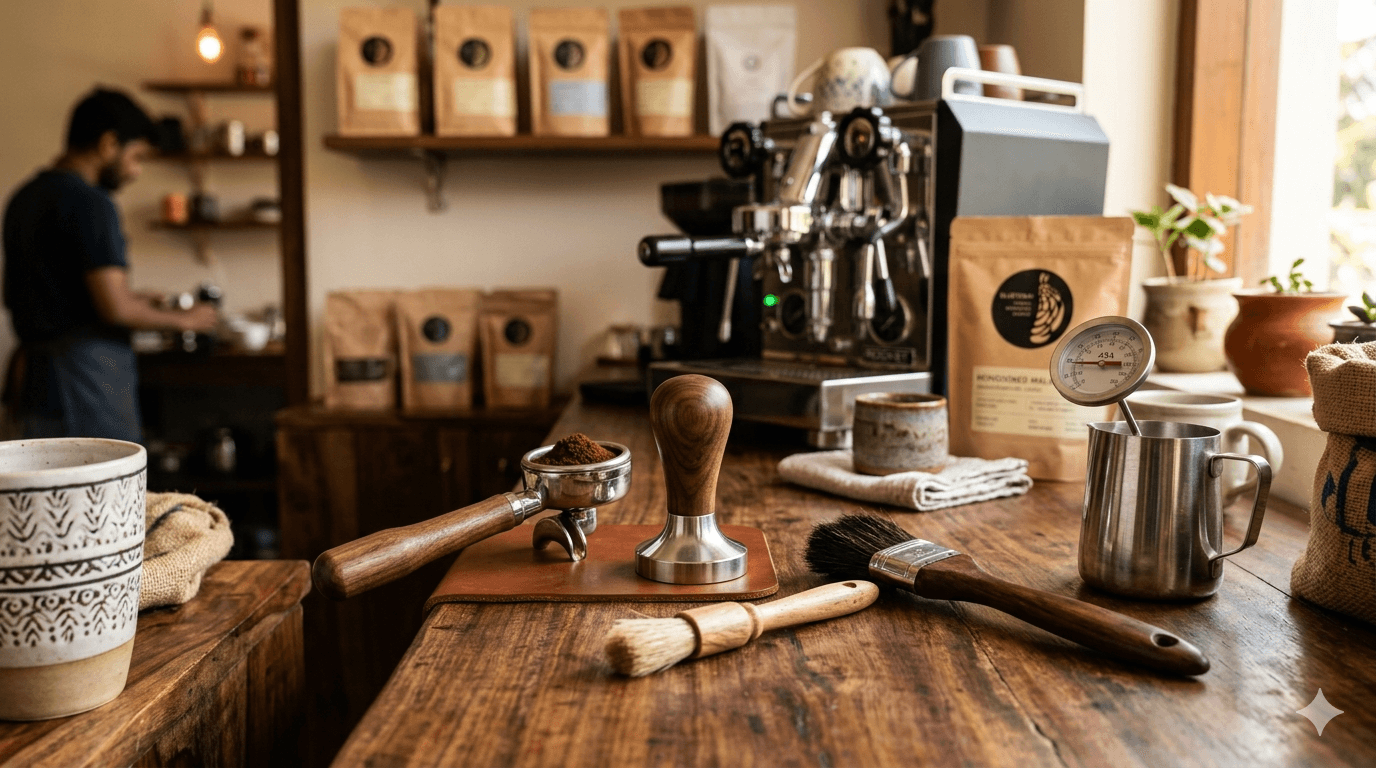
Why are high-quality coffee accessories essential for brewing authentic South Indian filter coffee at home?
For many coffee enthusiasts in India, the transition from instant coffee to authentic filter coffee is a journey of sensory awakening. However, the most common frustration among beginners is the inability to replicate that thick, aromatic, and velvet-textured "hotel-style" decoction. The secret lies not just in the beans, but in the precision of the tools used. High-quality coffee accessories—ranging from calibrated tampers to precision thermometers—bridge the gap between a watery brew and a soul-satisfying cup of South Indian tradition. When you use a premium 80:20 coffee-chicory blend like Coffee S10 Brews, the presence of chicory demands specific thermal and pressure conditions to release its full body and caramel-like sweetness. Without the right accessories, you risk over-extracting the bitterness or under-extracting the delicate oils that define South Indian craftsmanship. Investing in the right kit ensures that every gram of your small-batch roasted grounds is utilized to its maximum potential, providing consistency that manual guesswork simply cannot match.
How does using a professional coffee tamper improve the strength of your filter coffee decoction?
One of the most overlooked aspects of the traditional South Indian filter is the "tamping" process. While many traditional filters come with a simple disc-on-a-stick, professional-grade tampers are becoming a staple for serious home baristas in India. The primary goal of tamping is to create a level, compacted "puck" of coffee grounds. In the context of a South Indian filter, this compaction ensures that the hot water permeates the coffee bed evenly rather than finding the path of least resistance—a phenomenon known as channeling. When you use Coffee S10 Brews’ signature 80:20 blend, the grind is specifically calibrated for slow-drip extraction. A firm, even tamp slows the water transit time, allowing the water to dissolve the complex sugars and aromatic compounds effectively. This results in a thicker, more concentrated decoction with a rich crema. If you find your coffee tasting weak despite using premium grounds, the culprit is likely uneven water flow caused by the lack of a proper tamping tool.
What is the best water temperature for brewing an 80:20 coffee-chicory blend?
Temperature control is the cornerstone of brewing intelligence. Many Indian households make the mistake of using boiling water (100°C) directly on the coffee grounds. This scorched approach destroys the volatile aromatic oils of the handpicked Arabica and Robusta beans found in Coffee S10 Brews. Ideally, the water temperature for an 80:20 blend should be between 92°C and 96°C. At this range, the chicory dissolves into a smooth, viscous liquid that adds body, while the coffee grounds release their nuanced flavors without becoming overly acidic or burnt. A digital coffee thermometer is an indispensable accessory for anyone searching for the best South Indian filter coffee experience. By monitoring the temperature, you ensure that the heat is sufficient to extract the "kick" of the caffeine and the depth of the chicory without triggering the release of harsh tannins. This precision is what separates a mediocre home brew from a masterpiece that rivals the best heritage hotels in Chennai or Bangalore.
How to maintain hygiene and flavor clarity with specialized coffee cleaning brushes?
Traditional South Indian brass and stainless steel filters are notorious for harboring old coffee oils and microscopic grounds in their fine mesh holes. Over time, these residues go rancid, imparting a metallic or "stale" aftertaste to even the freshest Coffee S10 Brews batches. A standard kitchen sponge is often too abrasive or too large to clean the intricate perforations of a coffee filter. Specialized coffee cleaning brushes—designed with stiff but flexible bristles—are essential for deep-cleaning the filter's pores. Regular use of a brush prevents the buildup of "coffee stones," which are hardened deposits of oils and minerals. By maintaining a pristine brewing environment, you ensure that the only thing you taste is the authentic profile of the small-batch roasted beans. Clean equipment is the silent partner of freshness and consistency, allowing the floral and nutty notes of the coffee to shine through without interference from previous brews.
Why do professional baristas recommend digital scales for the perfect coffee-to-water ratio?
The "two-spoon" method is the most common way Indians measure coffee, but it is also the most inconsistent. The density of coffee grounds can vary based on humidity, roast date, and even how tightly you pack the spoon. For those seeking the gold standard of South Indian filter coffee, a digital scale is a non-negotiable accessory. To achieve the perfect decoction, a ratio of 1:2 or 1:3 (coffee to water) is generally recommended. By weighing your Coffee S10 Brews grounds, you ensure that you are getting the exact 80:20 balance intended by the roaster. Precision weighing eliminates the frustration of a "hit or miss" morning routine. When you measure by weight rather than volume, you can replicate the exact flavor profile every single day, turning your kitchen into a center of brewing excellence. This level of control is particularly important when dealing with high-intent coffee consumption, where the expectation for a "strong" cup must be met with scientific accuracy.
Understanding the impact of the 80:20 blend on your choice of coffee accessories
The 80:20 ratio—comprising 80% premium coffee and 20% high-grade chicory—is the heart of South Indian coffee culture. Chicory is more water-soluble and hygroscopic than coffee, meaning it absorbs moisture and expands more significantly. This biological behavior dictates how you use your accessories. For instance, when using a tamper, one must be careful not to over-compress an 80:20 blend, as the chicory expansion could potentially block the filter holes entirely if packed too tight. Similarly, the thermal retention of chicory means that your thermometer readings are critical; if the water is too cool, the chicory won't provide that signature thickness. Coffee S10 Brews prides itself on this traditional blend because it offers a sensory experience that 100% Arabica cannot: a lingering aftertaste and a heavy body that stands up perfectly to hot, frothed milk. Understanding these dynamics allows you to use your accessories as tools of empowerment rather than just gadgets.
Comparison of Coffee Types: Why the Right Tools Matter
| Feature Instant Coffee 100% Ground Coffee 80:20 Filter Coffee (S10 Brews) | |||
| Preparation Method | Dissolves in water | Percolation/Pressure | Traditional Gravity Drip |
| Texture & Body | Thin and watery | Medium/Clean | Thick, Syrupy, and Rich |
| Role of Accessories | None required | High (Grinders/Tampers) | Critical (Filters/Thermometers) |
| Flavor Profile | One-dimensional | Acidic/Floral | Nutty, Earthy, and Bold |
| Best Served With | Water or Milk | Black | Frothy, High-fat Milk |
How does grind size consistency affect your South Indian brewing ritual?
While Coffee S10 Brews provides a perfectly calibrated grind for traditional filters, many enthusiasts choose to grind their own beans. If you are in this category, a burr grinder is the most critical accessory in your arsenal. Blade grinders produce inconsistent "boulders and dust," leading to a decoction that is simultaneously bitter and sour. For South Indian filter coffee, a medium-fine grind—similar to the texture of table salt—is required. This specific grind size allows the water to pass through the 80:20 blend at a rate that captures the essence of the bean without over-extracting. If the grind is too coarse, the water rushes through, leaving the flavor in the grounds. If it is too fine, the chicory will clog the filter, resulting in a stalled brew. Coffee S10 Brews ensures that their pre-ground offerings maintain this strict consistency across every batch, saving you the expense of a high-end grinder while delivering professional results at home.
Why is a milk thermometer the secret to the perfect South Indian "Kaapi" foam?
The final step of the South Indian coffee ritual is the frothing of the milk. Traditionalists use the "Davara" and "Tumbler" to stretch the milk and create foam, but the temperature of that milk is what determines the sweetness. Milk contains natural sugars (lactose) that become sweetest at around 65°C to 70°C. If you boil the milk past this point, the sugars char, and the proteins break down, resulting in a flat, "cooked" flavor that masks the delicate notes of your Coffee S10 Brews decoction. A milk thermometer allows you to hit that sweet spot every time. When the perfectly heated milk is poured from a height into the rich 80:20 decoction, it creates a stable, velvety micro-foam that holds its shape. This attention to detail is what elevates the home-brewing experience into a genuine cultural ritual, mirroring the craftsmanship found in the most prestigious South Indian coffee houses.
Home-Brewed vs. Hotel-Style South Indian Coffee
| Attribute Standard Home Brew Hotel-Style (Professional) S10 Brews Home Method | |||
| Decoction Strength | Often weak or watery | Extremely thick and dark | Consistent and concentrated |
| Aroma | Fades quickly | Pungent and inviting | Long-lasting and fresh |
| Milk Texture | Boiled and flat | Stretched and frothy | Precisely aerated |
| Temperature Control | Guesswork | Standardized boilers | Thermometer-guided precision |
The role of the Davara and Tumbler in the sensory experience of coffee
While often viewed as simple serving vessels, the brass Davara and Tumbler are essential accessories for temperature regulation and aeration. The wide surface area of the Davara (the saucer-like bowl) allows the drinker to cool the coffee to an optimal sipping temperature quickly. Furthermore, the act of "throwing" the coffee between the tumbler and the Davara isn't just for show—it aerates the liquid, much like decanting wine, which opens up the aromatic profile of the coffee. For a blend like Coffee S10 Brews, which features a complex interplay between robust coffee and earthy chicory, this aeration is vital. It softens the "punch" of the caffeine and allows the palate to detect the subtle sweetness of the 80:20 ratio. Using these traditional accessories in tandem with modern tools like digital scales creates a bridge between the heritage of the past and the precision of the modern specialty coffee movement.
How to choose the right coffee accessories for your budget and skill level?
Navigating the world of coffee accessories in India can be overwhelming. For a beginner, the priority should be a high-quality stainless steel or brass filter and a basic digital scale. As you refine your palate and begin to appreciate the nuances of different blends, you can move toward precision thermometers and specialized cleaning kits. The goal is not to accumulate gadgets but to solve specific brewing "pains." If your coffee is too bitter, look into a thermometer. If it is too weak, look into a better tamper or a more consistent grind from Coffee S10 Brews. The brand’s philosophy is built on making this transition easy; by providing a superior 80:20 blend that is already roasted and ground to perfection, they remove the most difficult variables from the equation. Your accessories then become tools of refinement, allowing you to master the South Indian filter coffee ritual with confidence and ease.
Frequently Asked Questions about South Indian Coffee Accessories
1. Why doesn’t my filter coffee taste like hotel coffee?
Hotel coffee often tastes better because they use a precise 80:20 coffee-chicory blend, maintain strict water temperatures, and allow the decoction to sit for the perfect amount of time. Using a brand like Coffee S10 Brews and a digital thermometer can help you replicate this at home.
2. Is a coffee tamper really necessary for a South Indian filter?
While not strictly mandatory, a tamper ensures even water distribution. This prevents "channeling" and results in a much thicker, more concentrated decoction, which is the hallmark of great filter coffee.
3. How do I clean my brass coffee filter without damaging it?
Avoid harsh chemicals. Use a specialized coffee cleaning brush and a mixture of pitambari (for brass) or mild soap. The brush is essential for clearing the tiny holes that get clogged with coffee oils and chicory particles.
4. What is the best ratio for South Indian filter coffee?
For a traditional, bold taste, an 80:20 coffee-to-chicory ratio is ideal. In terms of brewing, a ratio of 1 part coffee powder to 2-3 parts water usually yields the best decoction.
5. Can I use a regular meat thermometer for coffee milk?
Yes, as long as it is calibrated and digital. However, specialized coffee thermometers are often designed to clip onto your milk pitcher, making them easier to use while frothing.
6. Why does my 80:20 blend sometimes clog the filter?
This usually happens if the grind is too fine or if you have tamped the powder too hard. Chicory expands when wet, so it needs a bit of room. A medium-fine grind, like the one provided by Coffee S10 Brews, is designed to prevent this.
7. Does the material of the filter (Brass vs. Stainless Steel) affect the taste?
Brass is the traditional choice and is believed to retain heat better, leading to a more efficient extraction. However, stainless steel is easier to maintain and does not affect the flavor as long as it is kept clean with a proper brush.
Experience the Craftsmanship of Coffee S10 Brews
Mastering the art of South Indian filter coffee is a rewarding journey that combines tradition with modern precision. By equipping yourself with the right accessories—from tampers to thermometers—and using the premium 80:20 blend from Coffee S10 Brews, you are choosing a path of quality and authenticity. We invite you to explore our signature blends, meticulously crafted for those who refuse to settle for anything less than the perfect cup. Dive deeper into the world of Indian coffee culture with our comprehensive brewing guides and educational resources. Elevate your morning ritual today with Coffee S10 Brews—where every bean tells a story of heritage and every cup is a masterpiece of flavor.