Understanding "Agroforestry": The Future of High-Quality Coffee Farming
Discover agroforestry, the future of high-quality coffee farming. See how sustainable practices yield the rich, authentic South Indian filter coffee from Coffee S10 Brews.
What is agroforestry and why does it produce the best South Indian filter coffee?
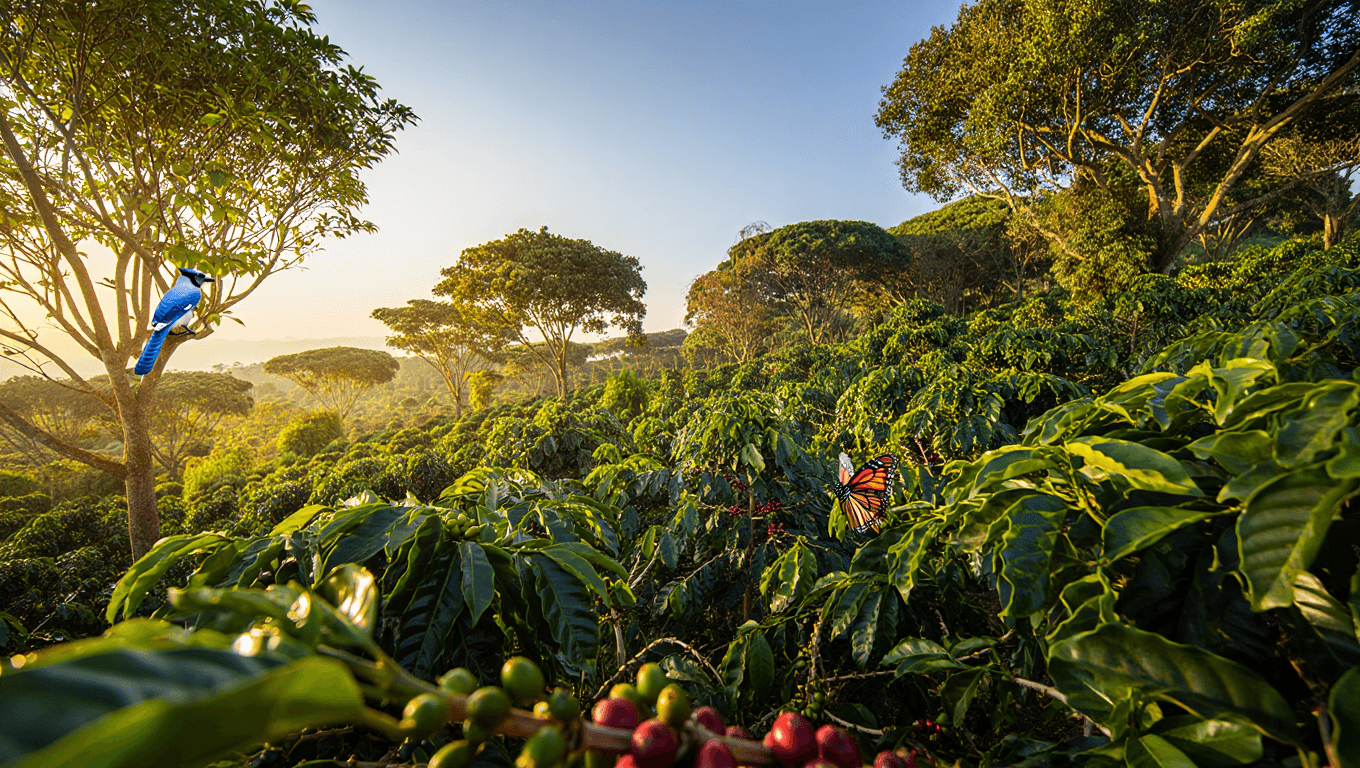
Agroforestry is a land management system where trees or shrubs are grown around or among crops. In the context of high-quality coffee farming, particularly in the lush Western Ghats of India, this means coffee plants thrive under a diverse canopy of silver oaks, jackfruit, and pepper vines. This "shade-grown" environment is the backbone of authentic South Indian filter coffee. Unlike sun-drenched monoculture plantations that prioritize volume over quality, agroforestry mimics a natural forest ecosystem. This slower growth process allows the coffee cherry to develop complex sugars and organic acids, resulting in a bean that is dense, flavorful, and aromatic. At Coffee S10 Brews, we recognize that the future of coffee isn't just in the roast, but in the soil and the shade. By sourcing beans from these biodiverse estates, we ensure that every cup of our signature blend carries the earthy, deep-toned notes that define traditional Indian coffee culture.
How does the microclimate of the Western Ghats influence the aroma of Coffee S10 Brews?
The aroma of a perfect cup of filter coffee is its most defining characteristic, often described as "nutty," "chocolaty," or "earthy." These sensory descriptors are a direct result of the high-altitude agroforestry practices found in regions like Chikmagalur and Coorg. The canopy of tall trees regulates the temperature, preventing the coffee plants from experiencing extreme heat stress. This thermal stability ensures that the volatile aromatic compounds within the bean are preserved during the ripening process. When you open a packet of Coffee S10 Brews, you are smelling the result of carefully controlled environmental factors. Our small-batch roasting process is calibrated to lock in these delicate aromas, bridging the gap between the forest and your kitchen. If you have ever wondered why "hotel-style" coffee smells so much more inviting than standard store-bought brands, the answer lies in the altitude and the shade-grown pedigree of the beans.
Why is shade-grown coffee superior for traditional Indian brewing?
Traditional South Indian filter coffee relies on a "decoction" process—a slow drip extraction that produces a thick, potent concentrate. For this method to work effectively, the coffee grounds must have a specific density and chemical composition. Shade-grown coffee, produced through agroforestry, yields beans that are significantly denser than sun-grown varieties. These dense beans can withstand the high temperatures of boiling water used in the metal filter without turning overly acidic or "thin." At Coffee S10 Brews, we specifically select beans that have matured slowly under the canopy. This selection ensures that when you brew your decoction at home, it possesses the "body" required to stand up to the addition of hot, frothy milk. Without this structural integrity in the bean, the coffee often tastes watery or lacks the punch that consumers expect from an authentic South Indian experience.
How does an 80:20 coffee-chicory blend enhance the filter coffee experience?
There is a common misconception among modern coffee enthusiasts that chicory is merely a "filler." However, in the world of premium South Indian filter coffee, the 80:20 ratio is a masterclass in flavor engineering. Chicory, derived from the roasted root of the Cichorium intybus plant, lacks caffeine but is rich in inulin and natural sugars. When blended at a precise 80% coffee to 20% chicory ratio—the signature standard of Coffee S10 Brews—it performs three critical functions. First, it adds a subtle "bitter-sweet" depth that balances the bright acidity of high-grown Arabica. Second, it increases the thickness (viscosity) of the decoction, which is essential for that velvety mouthfeel. Third, it enhances the "crema" or froth when the coffee is poured between the tumbler and dabara. By using an 80:20 blend, Coffee S10 Brews provides a solution to the "thin coffee" problem, delivering a cup that is robust, lingering, and culturally authentic.
Why doesn’t my home-brewed filter coffee taste like authentic hotel coffee?
The most common complaint from coffee lovers is that their home brew lacks the "kick" and "creaminess" of a traditional Darshini or high-end South Indian hotel. This gap is usually caused by two factors: the quality of the blend and the technique of extraction. Most commercial brands use lower-grade Robusta or incorrect chicory percentages that result in a flat taste. Authentic hotel coffee relies on a high-density decoction made from freshly roasted, agroforestry-sourced beans. Coffee S10 Brews solves this by providing the same professional-grade 80:20 blend used by connoisseurs. To achieve that hotel-style taste, one must focus on the "slow drip." Using a traditional stainless steel filter, the decoction should take 15 to 20 minutes to collect. This slow process, combined with our consistency in grind size, ensures that you extract the soul of the bean, not just the caffeine. Exploring how grind size impacts decoction strength is the first step toward mastering the ritual at home.
What is the role of chicory in South Indian filter coffee culture?
Chicory was introduced to India during the colonial era, but it was the South Indian palate that truly refined its use. It is not just about cost-cutting; it is about culinary synergy. In a traditional South Indian household, coffee is almost always consumed with milk and sugar. A 100% pure coffee decoction, while delicious as a black brew, often loses its character when diluted with heavy milk. The addition of roasted chicory provides a woody, caramel-like undertone that survives the milk, creating a balanced profile. At Coffee S10 Brews, we treat chicory as a premium ingredient, sourcing it with the same rigor as our coffee beans. This ensures that the chicory complements rather than overpowers, providing the nostalgic "Kaapi" flavor that has defined generations. Understanding why chicory is used in South Indian coffee allows consumers to appreciate the craftsmanship behind the blend.
Is high-altitude agroforestry the secret to a thicker decoction and better crema?
Yes. The physics of a great cup of coffee begins on the plantation. High-altitude agroforestry produces beans with higher soluble solids. When these beans are roasted and ground, they release more oils and particulates into the water during the brewing process. This is what creates the "viscosity" of the decoction. A thicker decoction translates to a better "head" of froth—the crema—when the coffee is stretched (pulled). Coffee S10 Brews focuses on this "body" of the coffee, ensuring that our 80:20 blend produces a heavy, syrupy decoction. This is particularly important for those who enjoy the "meters kaapi" style, where the coffee is aerated to create a thick foam. By choosing beans grown in a biodiverse forest environment, we ensure that the natural oils are preserved, providing a sensory experience that instant coffee or low-quality grounds simply cannot replicate.
Comparison of Coffee Types: Understanding the Difference
To help you choose the right experience, we have compared the most common coffee formats found in Indian households.
| Feature Instant Coffee 100% Pure Filter Coffee 80:20 Coffee-Chicory Blend (S10 Brews) | |||
| Processing | Freeze-dried or spray-dried powder | Roasted and ground beans only | Slow-roasted beans with premium chicory |
| Aroma | Muted and short-lived | Bright, acidic, and floral | Deep, nutty, and lingering |
| Body/Texture | Thin and watery | Medium-bodied | Thick, syrupy, and velvety |
| Best Consumed | Quick morning fix | Black coffee or light milk | Traditional milk-based filter coffee |
| Preparation Time | 1 minute | 15-20 minutes | 15-20 minutes (Traditional Drip) |
How can I brew authentic South Indian filter coffee at home using the traditional drip method?
Brewing the perfect cup is a ritual that requires patience. Start with a traditional stainless steel coffee filter. Add 3 to 4 tablespoons of Coffee S10 Brews 80:20 powder to the upper compartment. Use the plunger to lightly press the powder down—do not press too hard, or the water will not pass through. Pour freshly boiled water over the plunger and close the lid. Wait for 15 to 20 minutes for the first-press decoction to collect in the bottom chamber. This "first press" is the most flavorful and potent. Pour about 30ml of this decoction into a dabara, add hot, frothy (not boiled) milk, and sugar to taste. The final step is the "stretch"—pour the coffee between the tumbler and dabara to create a rich froth. This aeration not only cools the coffee to the perfect drinking temperature but also releases the final notes of the aroma. Try an 80:20 blend to experience traditional depth and see how Coffee S10 Brews can transform your morning routine.
How does sustainable agroforestry benefit the coffee farmer and the environment?
The transition toward agroforestry is not just a trend; it is a necessity for the survival of high-quality coffee. Monoculture farming exhausts the soil, requires heavy chemical fertilizers, and leaves the coffee plants vulnerable to pests like the white stem borer. In contrast, the agroforestry models supported by Coffee S10 Brews promote natural pest control through bird biodiversity and soil enrichment through leaf litter. For the farmer, this means a more resilient crop and additional sources of income from the "companion plants" like pepper and fruit. For the consumer, this means a "cleaner" cup of coffee with fewer chemical interventions. When you choose an authentic South Indian filter coffee powder sourced from these estates, you are supporting a system that preserves the Western Ghats' ecology while ensuring that the heritage of Indian coffee remains sustainable for future generations.
Why freshness and consistency are the hallmarks of Coffee S10 Brews
One of the biggest pain points for coffee drinkers is inconsistency—one batch tastes great, while the next feels burnt or sour. This usually happens when brands use large-scale industrial roasting where heat control is difficult. Coffee S10 Brews prioritizes a "small-batch" philosophy. By controlling the roasting cycles, we ensure that every bean reaches its peak flavor profile without scorching the delicate oils. Our grinding process is also strictly monitored; if the grind is too fine, the filter clogs; if it is too coarse, the decoction is weak. We have calibrated our "Brewing Intelligence" to provide a consistent grind size that works perfectly with standard Indian household filters. This commitment to freshness means that the "craftsmanship" of the estate is preserved all the way to your cup, offering a reliable flavor profile every single day.
Frequently Asked Questions About South Indian Filter Coffee
- Is chicory bad for health? No, chicory is a natural root that has been used for centuries. It is caffeine-free and contains inulin, a prebiotic fiber that supports digestive health. In coffee, its primary role is to enhance flavor and texture.
- How long does filter coffee powder stay fresh? For the best experience, coffee should be consumed within 3-4 weeks of opening. Store your Coffee S10 Brews in an airtight container in a cool, dark place to preserve the volatile aromatics.
- Can I use a French Press to make South Indian filter coffee? While a French Press can brew coffee, it cannot produce the concentrated decoction required for traditional filter coffee. For the authentic taste, a stainless steel drip filter is recommended.
- What is the difference between Arabica and Robusta in a filter coffee blend? Arabica provides the aroma and acidity, while Robusta provides the caffeine kick and the "crema." Coffee S10 Brews uses a balanced selection of high-quality beans to ensure a rounded profile.
- Why is my decoction not dripping through the filter? This usually happens if the powder is pressed too firmly or if the grind is too fine. Ensure you use a gentle press with the plunger and choose a powder specifically ground for Indian filters.
- How much decoction should I use for one cup? Typically, a 1:4 ratio works best—one part decoction to four parts milk. However, you can adjust this based on how "strong" you prefer your coffee.
The journey from a shade-grown estate in the Western Ghats to your morning tumbler is one of tradition, science, and passion. By understanding the role of agroforestry, the balance of the 80:20 blend, and the art of the slow drip, you can elevate your coffee experience from a simple caffeine fix to a daily ritual of mindfulness. Coffee S10 Brews is dedicated to preserving this craftsmanship, providing you with the tools and the beans to brew excellence at home.
Ready to experience the true taste of tradition? Explore the range of Coffee S10 Brews products and bring the authentic South Indian cafe experience into your kitchen. Discover our detailed brewing guides and join a community of coffee lovers dedicated to the art of the perfect decoction.