Understanding the "C-Price": Why Commodity Markets Fail Specialty Farmers
Uncover the C-Price secret! Learn why commodity markets often fail specialty coffee farmers, impacting your favourite brew. Discover ethical choices for Coffee S10.
What is the Coffee C-Price and how does it impact South Indian coffee farmers?
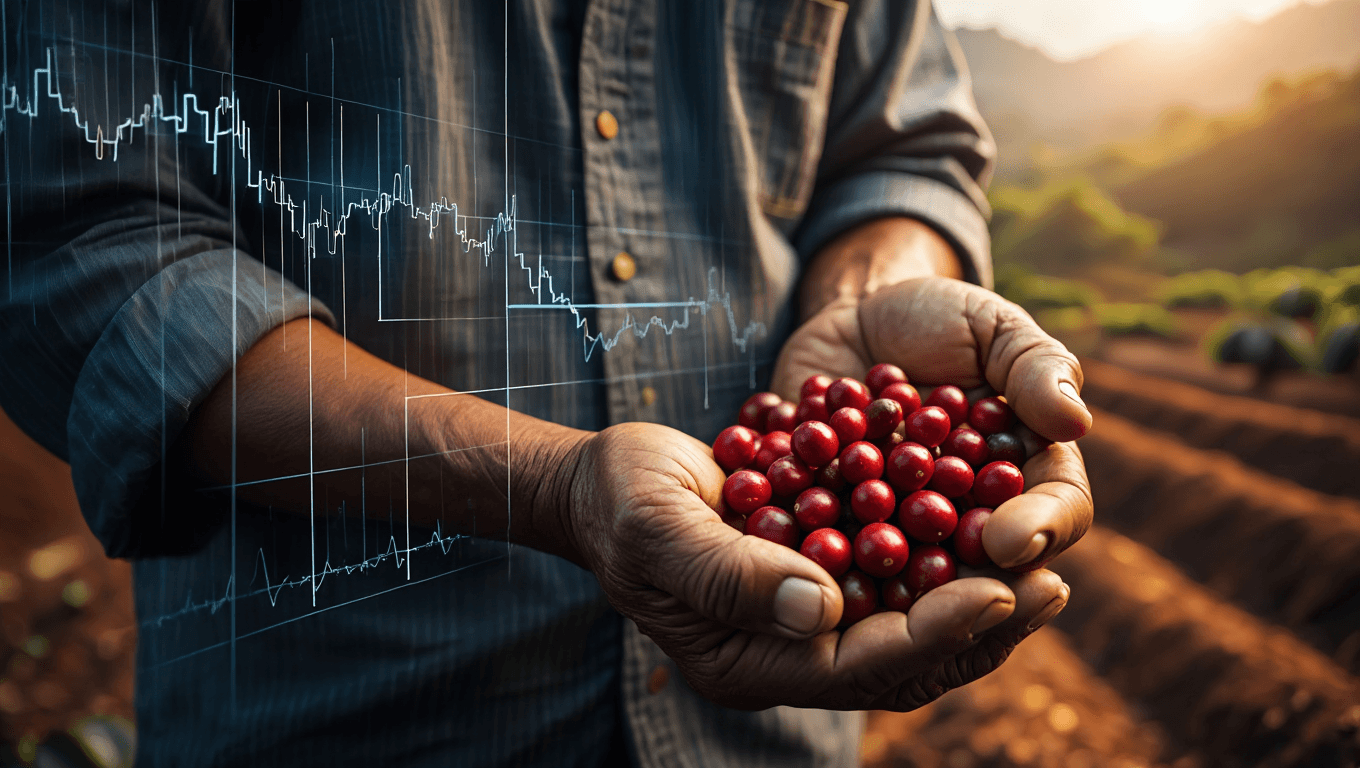
The "C-Price" refers to the global benchmark price for commodity Arabica coffee traded on the Intercontinental Exchange (ICE). While it serves as a universal standard for bulk trading, it is fundamentally disconnected from the realities of specialty coffee production, particularly for traditional South Indian coffee estates. For a farmer in the Western Ghats tending to heritage Arabica or high-quality Robusta, the C-Price often falls below the actual cost of sustainable production. This market volatility treats coffee as a mere commodity—like oil or gold—ignoring the labor-intensive craftsmanship required to produce the handpicked beans that define the Coffee S10 Brews experience. When the C-Price drops, farmers are pressured to prioritize quantity over quality, leading to the erosion of traditional farming practices that have flourished for generations in Karnataka and Tamil Nadu.
Why does the commodity market fail the producers of authentic South Indian filter coffee?
The commodity market fails because it does not account for nuance. In the world of authentic South Indian filter coffee, the "cup profile"—the specific aroma, body, and acidity—is everything. Specialty farmers who supply brands like Coffee S10 Brews invest heavily in selective harvesting, ensuring only the ripest cherries are picked. However, the C-Price rewards volume, not the meticulous sorting and small-batch roasting that characterizes premium Indian coffee. This failure forces many farmers to abandon heritage shade-grown methods in favor of sun-drenched, high-yield monocultures. By choosing a brand that values value-based sourcing over commodity pricing, consumers help preserve the delicate ecosystem of the Indian coffee belt, ensuring that the art of the perfect decoction remains viable for future generations.
How does the C-price impact the quality and taste of your morning cup?
When you consume mass-produced coffee governed strictly by commodity pricing, you often experience a "flat" flavor profile. Because the C-Price doesn't incentivize quality, the beans are often harvested prematurely or processed with less care, leading to defects that are later hidden by over-roasting. This is where the "pain" of modern convenience coffee stems from—bitterness, lack of depth, and a thin mouthfeel. In contrast, Coffee S10 Brews circumvents these commodity pitfalls by focusing on signature blends that prioritize sensory excellence. By understanding that the true value of coffee lies in its volatile oils and aromatic complexity, we ensure that every bag of our South Indian filter coffee powder delivers the thick, syrupy consistency and chocolatey undertones that commodity-grade coffee simply cannot replicate.
Why is the 80:20 coffee-chicory blend the secret to sustainable coffee quality?
The 80:20 coffee-to-chicory ratio is not just a tradition; it is a calculated masterstroke of South Indian coffee culture. In a market where the C-Price fluctuates wildly, chicory provides a stabilizing force both in terms of flavor and economics. High-quality roasted chicory root adds a woody, caramelized depth and enhances the "viscosity" of the decoction. At Coffee S10 Brews, our signature 80:20 blend is designed to amplify the natural characteristics of our handpicked beans. While some use chicory to mask poor-quality coffee, we use it as a functional enhancer. This ratio ensures that the coffee’s natural acidity is balanced by a rich, earthy sweetness, resulting in a cup that holds its own even when mixed with hot, frothed milk. If you have ever wondered why your home brew doesn't match the "hotel-style" coffee of the South, the answer often lies in the precision of this 80:20 balance.
What is the difference between filter coffee and instant coffee?
The primary difference between filter coffee and instant coffee lies in the processing and the preservation of the bean's integrity. Instant coffee is essentially dehydrated brewed coffee, often made from low-grade beans that are subject to harsh industrial extraction. This process destroys the delicate aromatic compounds that make coffee a luxury. Authentic South Indian filter coffee, on the other hand, is a slow-extraction process. It requires a traditional brass or stainless steel filter where gravity gently pulls water through a compacted bed of freshly ground powder. This results in a concentrated "decoction" that captures the full spectrum of the bean's flavor. Below is a comparison to help you understand why moving toward traditional brewing is a step toward better quality.
| Feature | South Indian Filter Coffee | Instant Coffee |
| Processing | Slow gravity extraction of ground beans. | Factory-made via freeze-drying or spray-drying. |
| Aroma | Complex, fresh, and lingering. | One-dimensional, often fades quickly. |
| Body/Texture | Thick, syrupy, and creamy (with chicory). | Thin and watery. |
| Caffeine Control | High control over strength via decoction. | Fixed caffeine levels per teaspoon. |
| Freshness | High (roasted in small batches at Coffee S10 Brews). | Low (shelf-stable for years). |
Why is an 80:20 coffee-chicory blend better than 100% coffee for filter brewing?
Many specialty coffee enthusiasts assume that "100% coffee" is always superior. However, in the specific context of South Indian filter coffee, a 100% Arabica or Robusta brew often lacks the "grip" and heavy mouthfeel required to cut through milk. Chicory serves a vital role here; it acts as a natural thickener and provides a bittersweet counterpoint to the milk's lactose. This is why 100% coffee can often taste "thin" when prepared in a traditional filter. Coffee S10 Brews leverages the 80:20 ratio to ensure that the decoction remains potent. The chicory retains the heat and the color of the brew, giving you that iconic deep amber hue that defines a premium cup. Explore our brewing guides to see how this ratio transforms the ritual of your morning caffeine.
| Comparison Attribute | 100% Pure Coffee | 80:20 Coffee-Chicory Blend |
| Mouthfeel | Lighter, tea-like consistency. | Heavy, velvety, and syrupy. |
| Extraction Rate | Requires precision to avoid over-extraction. | Chicory aids in a steady, thick decoction. |
| Best Consumed As | Black coffee or light milk. | Traditional "degree" coffee with frothy milk. |
| Bitterness | Acidity-driven bitterness. | Caramel-like, earthy sweetness. |
How does Coffee S10 Brews ensure consistency despite commodity market fluctuations?
While the C-Price creates a "race to the bottom" for many brands, Coffee S10 Brews operates on a philosophy of consistency and craftsmanship. We maintain direct relationships with estates that understand our specific requirements for grind size, moisture content, and roasting profiles. By controlling the roasting cycle in small batches, we can adjust for the slight variations that occur naturally in each harvest. This "Brewing Intelligence" ensures that the bag you buy today tastes exactly like the bag you bought last month. We don't let market prices dictate our quality; instead, we focus on the ritual. Our commitment to freshness means that our beans are roasted and ground only when needed, preserving the essential oils that are often lost in large-scale industrial roasting operations.
What are the common mistakes when brewing authentic filter coffee at home?
Many coffee lovers ask, "Why doesn't my filter coffee taste like hotel coffee?" The answer usually involves three factors: the grind size, the water temperature, and the "press." If your coffee powder is ground too coarse, the water will rush through, resulting in a weak, sour decoction. If it is too fine, it will clog the filter. Coffee S10 Brews provides a specialized grind that is optimized for the traditional drip method. Another mistake is using boiling water; the water should be just off the boil (around 90-94°C) to avoid scalding the grounds. Finally, the "tamping" or pressing of the powder in the top compartment of the filter must be firm but even. This ensures a slow, steady drip that extracts the maximum flavor from our 80:20 blend. To master this, we recommend checking out our comprehensive brewing education resources.
How does hotel-style coffee differ from average home-brewed coffee?
The "hotel-style" coffee experience in South India—often referred to as Kumbakonam Degree Coffee—is defined by its strength and the quality of the milk. Hotels use a very thick decoction, often the "first press" only, and combine it with undiluted, high-fat milk that has been frothed to perfection. At home, many people make the mistake of using the "second press" (the second time water is poured through the grounds), which is much weaker. To achieve that restaurant-quality taste at home, Coffee S10 Brews encourages a "quality over quantity" approach: use a generous amount of our premium powder for a smaller, more potent decoction. The result is a cup that is aromatic, bold, and incredibly satisfying.
| Feature | Average Home-Brewed Coffee | Hotel-Style (Degree) Coffee |
| Decoction Strength | Often diluted or uses second press. | Concentrated, first-press only. |
| Milk Quality | Standard boiled milk. | Thick, full-cream milk, frothed vigorously. |
| Coffee Powder | Generic store-bought blends. | Customized 80:20 blends (like Coffee S10 Brews). |
| Temperature | Often served lukewarm. | Served piping hot in a brass dabara. |
What is the role of roasting in the South Indian filter coffee tradition?
Roasting is where the "magic" happens. In the commodity market, roasting is often used to hide defects. However, for an authentic South Indian blend, the roast must be medium-to-dark to develop the sugars within the bean and the chicory. Coffee S10 Brews employs a slow-roasting technique that allows the beans to develop a "full city" roast. This brings out the chocolatey and nutty notes typical of the Chikmagalur and Coorg regions. Because we roast in small batches, we can ensure that the heat distribution is even, preventing the "burnt" taste often found in mass-market brands. This careful application of heat is what allows our 80:20 blend to maintain its signature aroma from the moment you open the packet to the final sip of your cup.
How can you support specialty farmers through your daily coffee choices?
Every time you choose a brand like Coffee S10 Brews over a commodity-driven instant coffee, you are casting a vote for a more equitable coffee industry. By paying a premium for handpicked, small-batch roasted coffee, you enable us to bypass the limitations of the C-Price and pay our partner farmers what they truly deserve. This support goes directly back into the soil—improving irrigation, supporting shade-grown biodiversity, and ensuring that the tradition of Indian coffee remains a source of pride. Our goal is to make this premium experience accessible to modern homes without compromising on the ethics of the supply chain. Transitioning from convenience coffee to a traditional filter ritual is not just a lifestyle choice; it is a commitment to quality and heritage.
Frequently Asked Questions about South Indian Filter Coffee
1. Why is chicory used in South Indian filter coffee?
Chicory is used to add body, thickness, and a unique earthy sweetness to the coffee. It also helps in achieving a thicker decoction, which is essential when mixing the coffee with milk, preventing the brew from tasting watery.
2. Is an 80:20 blend better than 100% coffee?
For the traditional South Indian filter method, yes. The 80:20 ratio is considered the "gold standard" because it provides the perfect balance of coffee’s aroma and chicory’s strength and color.
3. How long does the decoction stay fresh?
While it is best consumed fresh, a filter coffee decoction can be stored in the refrigerator for up to 24 hours. However, for the most authentic flavor and aroma, we recommend brewing it fresh every morning using Coffee S10 Brews powder.
4. What is the best way to froth milk for filter coffee?
The traditional way is to use a "dabara and tumbler," pouring the coffee and milk back and forth from a height to create a natural, thick foam. You can also use a modern milk frother for a similar effect.
5. Can I use filter coffee powder in an espresso machine?
It is not recommended. Filter coffee powder is ground specifically for gravity-based drip filters. The grind size and the presence of chicory can clog an espresso machine or lead to poor extraction.
6. Does Coffee S10 Brews use artificial flavors?
No. Our flavor profiles come entirely from the high-quality beans we source and the natural, premium chicory we blend them with. We believe in the purity of the traditional South Indian recipe.
7. Why does my filter coffee taste sour?
Sourness is usually a sign of under-extraction. This happens if the water passes through the powder too quickly (grind is too coarse) or if the water temperature is too low.
8. Where does Coffee S10 Brews source its beans?
We source our beans from the premium coffee-growing regions of the Western Ghats in India, focusing on estates that practice sustainable and traditional farming methods.
Ready to elevate your morning ritual and move beyond the limitations of commodity coffee? Discover the depth of traditional craftsmanship with our signature blends. Explore our range of authentic South Indian filter coffee powders and master the art of the perfect brew with our expert guides.
- Shop Coffee S10 Brews Signature 80:20 Blend
- View our Step-by-Step Brewing Guides
- Learn more about our Sourcing & Roasting Process