What is Monsoon Malabar Coffee? (Specialty Robusta)
Unravel the mystery of Monsoon Malabar Coffee, India's unique Specialty Robusta. Explore its rich history, distinct taste & how it redefines your daily brew.
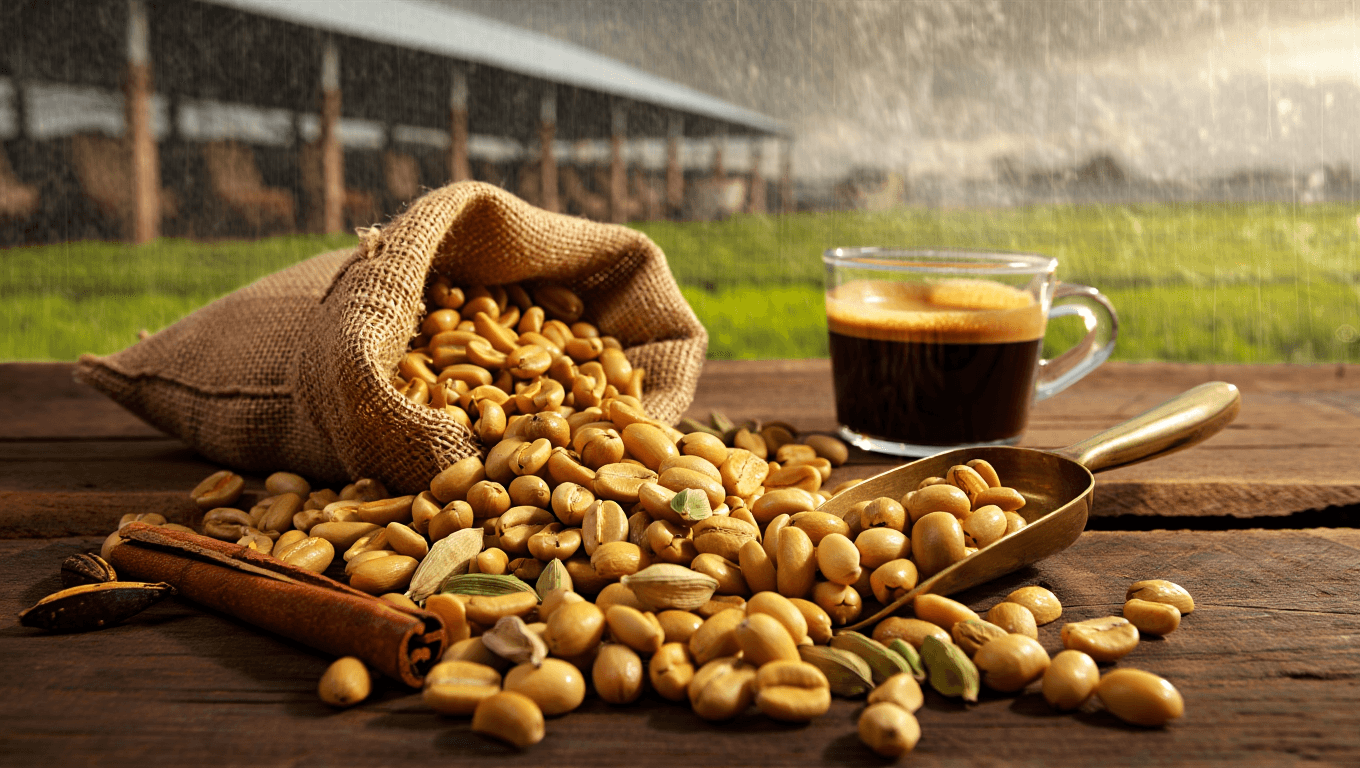
What is Monsoon Malabar coffee and why is it considered a specialty Robusta in South India?
Monsoon Malabar coffee is one of the world’s most unique and geographically significant coffee varieties, originating from the lush Malabar Coast of Karnataka and Kerala. Unlike standard coffee processing, where beans are dried immediately to preserve acidity, Monsoon Malabar undergoes a fascinating transformation known as "monsooning." Historically, this happened by accident during the months-long sea voyages to Europe, where the high humidity and salty sea winds changed the beans' physical and chemical structure. Today, this process is meticulously replicated in open-sided warehouses during the monsoon season.
When we talk about "Specialty Robusta" in the context of Monsoon Malabar, we are referring to high-quality Robusta beans that have been exposed to these moisture-laden winds for three to four months. This process causes the beans to swell, lose their natural acidity, and change color from a pale green to a golden straw hue. For the South Indian coffee drinker, this translates to a cup that is exceptionally smooth, heavy-bodied, and devoid of the harsh bitterness often associated with commercial-grade Robusta. At Coffee S10 Brews, we recognize that this specific processing is what provides the foundational "punch" and "earthiness" required for a truly authentic filter kaapi experience.
How does the monsooning process impact the flavor profile and aroma of South Indian coffee?
The monsooning process is essentially a controlled aging technique. As the beans absorb moisture, they undergo a series of biochemical changes. The most notable impact is the drastic reduction in acidity. While specialty Arabica drinkers often look for "bright" or "citrusy" notes, the traditional South Indian filter coffee palate craves a mellow, neutral, and chocolatey base. The specialty Robusta used in Monsoon Malabar blends provides exactly this. It offers a unique sensory profile characterized by notes of spice, toasted nuts, and a musty, earthy aroma that reminds one of the first rain on dry soil.
From a brewing perspective, these beans are less dense than their un-monsooned counterparts. This change in density means the coffee releases its oils and flavors differently during the roasting process. Coffee S10 Brews utilizes small-batch roasting to ensure that these delicate, monsooned flavors are not scorched. We focus on bringing out the deep caramelization that pairs perfectly with the addition of chicory and hot, frothed milk. If you’ve ever wondered why your home-brewed coffee lacks the "old-world" depth of a traditional Brahmin tiffin center, the answer usually lies in the lack of properly monsooned specialty beans.
Why is the 80:20 coffee-chicory blend the gold standard for South Indian filter coffee?
The debate over chicory in coffee is often misunderstood. In the world of South Indian filter coffee, chicory is not a "filler"—it is a functional ingredient that enhances the beverage's structural integrity. The "80:20" ratio refers to a blend of 80% high-quality coffee (often a mix of Arabica and Monsooned Robusta) and 20% roasted chicory root. This ratio is critical for achieving the thick, syrupy "decoction" that defines the South Indian ritual.
Chicory serves three main purposes: it adds a woody bitterness that complements the milk, it darkens the color of the brew to a rich mahogany, and most importantly, it acts as a thickening agent. Without chicory, the coffee decoction can sometimes feel too "thin" when diluted with milk. Coffee S10 Brews champions the 80:20 Signature Blend because it balances the nutty sweetness of our handpicked beans with the robust body provided by the chicory. This ensures that even after adding milk and sugar, the coffee’s character remains the hero of the cup. For those searching for the best South Indian filter coffee powder, the quality of this 80:20 balance is the primary marker of excellence.
What is the difference between South Indian filter coffee and instant coffee?
To the uninitiated, coffee is just a caffeine delivery system, but the difference between filter coffee and instant coffee is the difference between a slow-cooked meal and a microwave snack. Instant coffee is pre-brewed coffee that has been dehydrated into powder or granules. In this process, most of the volatile aromatic compounds are lost. Filter coffee, specifically the kind crafted by Coffee S10 Brews, relies on the slow extraction of oils and flavors from freshly ground, roasted beans.
| Feature South Indian Filter Coffee (Coffee S10 Brews) Instant Coffee | ||
| Processing | Traditional slow-extraction using a brass or steel filter. | Chemical or freeze-drying of pre-brewed liquid. |
| Ingredients | Freshly roasted beans (Arabica/Robusta) + Chicory. | Processed coffee extract, often with preservatives. |
| Flavor Profile | Complex, earthy, nutty, and creamy. | One-dimensional, often acidic or overly bitter. |
| Aroma | Intense, fresh, and lingering. | Faint and dissipates quickly. |
| Body/Mouthfeel | Syrupy and heavy (ideal for milk). | Thin and watery. |
How can you brew authentic South Indian filter coffee at home like a pro?
The secret to a perfect cup of "Hotel Style" coffee at home isn't just the powder; it's the "Brewing Intelligence" behind the technique. To start, you need a traditional South Indian stainless steel or brass filter. This device consists of two cylinders. The top cylinder has tiny perforations at the bottom where you place the coffee powder. The key is the "tamping" process. You must lightly press the powder with the plunger to ensure the water passes through slowly, extracting the maximum flavor. This results in the "first decoction"—the thickest, most flavorful extract.
Coffee S10 Brews recommends using water just off the boil (around 92°C to 96°C). Pour the water over the tamped powder and let it sit for 15 to 20 minutes. Avoid the temptation to stir or rush the process. Once you have your decoction, the ratio of milk to coffee is vital. Always use full-fat, hot, frothed milk. Pour the coffee and milk between the "dabarah" and the "tumbler" from a height to create that signature frothy head. This aeration process not only cools the coffee to a drinkable temperature but also enhances the aroma, making every sip an immersive experience.
Why does my home-brewed filter coffee taste different from "Hotel Style" coffee?
Many consumers ask, "Why doesn't my filter coffee taste like the one I had in Bangalore or Chennai?" The discrepancy usually comes down to three factors: grind size, freshness, and the blend ratio. Commercial "hotel" coffee often uses a heavy concentration of Monsooned Robusta because it produces a thicker crema and a more persistent "kick." If you are using a 100% Arabica blend at home, it will likely taste too thin and acidic when mixed with milk.
Another factor is the grind size. Filter coffee requires a "medium-fine" grind—slightly coarser than espresso but finer than pour-over. If the grind is too coarse, the water rushes through, resulting in a weak decoction. If it's too fine, the filter gets clogged. Coffee S10 Brews solves this by offering a precision-ground powder specifically calibrated for the traditional Indian filter. By maintaining consistency across every batch and focusing on the 80:20 ratio, we bring the high-street hotel taste directly to your kitchen. Exploring our brewing guides can help you fine-tune these variables for the perfect result every morning.
Is chicory bad for health, or is it a necessary part of coffee culture?
There is a common misconception that chicory is an "adulterant" used to lower costs. While it is true that chicory is cheaper than coffee beans, its role in South Indian coffee is culinary. Chicory is derived from the root of the Cichorium intybus plant. It is naturally caffeine-free and contains inulin, a type of prebiotic fiber that supports digestive health. In fact, in many cultures, roasted chicory is consumed as a health tonic.
In the context of a blend, chicory reduces the overall caffeine content of the cup, making it possible to enjoy multiple glasses of filter kaapi throughout the day without the jitters. It also acts as a flavor enhancer, providing a "baked" sweetness that balances the earthy, spicy notes of the Monsooned Robusta. At Coffee S10 Brews, we use only premium roasted chicory to ensure it complements our coffee rather than overpowering it. When you choose an 80:20 coffee-chicory blend, you aren't compromising on quality; you are choosing a time-tested recipe designed for maximum sensory satisfaction.
| Feature 100% Pure Coffee 80:20 Coffee-Chicory Blend (The S10 Way) | ||
| Caffeine Levels | Higher; can be stimulating. | Moderate; smoother energy curve. |
| Viscosity | Low; more watery. | High; thick and syrupy decoction. |
| Acidity | Varies by bean; usually higher. | Low; chicory neutralizes harsh acids. |
| Best Consumed | Black or with minimal milk. | With hot, frothed milk and sugar. |
Why should you choose Coffee S10 Brews for your South Indian coffee ritual?
In a world of mass-produced, stale coffee, Coffee S10 Brews stands as a guardian of tradition. We believe that coffee is not just a beverage but a ritual that connects us to our heritage. Our commitment to authentic South Indian craftsmanship starts with our bean selection. We source our Specialty Robusta and Arabica from high-altitude estates in the Western Ghats, ensuring that every bean carries the terroir of the region. Our roasting process is handled by experts who understand the nuances of Monsoon Malabar beans, ensuring they are roasted to the exact second where their chocolatey potential is peaked.
Furthermore, we prioritize freshness. Coffee begins to lose its volatile aromatics within days of being ground. By controlling our roasting cycles and using moisture-barrier packaging, we ensure that the "best South Indian filter coffee powder" arrives at your doorstep with its aroma intact. We aren't just selling a product; we are providing the tools and knowledge for you to master the art of the decoction. From our signature blends to our educational brewing resources, Coffee S10 Brews is dedicated to bridging the gap between modern convenience and traditional mastery.
How does roasting impact the sensory descriptors of Monsoon Malabar beans?
Roasting Monsoon Malabar coffee is an art form. Because the monsooning process makes the beans more porous and less acidic, they react to heat much faster than standard beans. A master roaster must be careful not to apply too much heat too quickly, which could lead to "tipping" or scorching the exterior of the bean while the interior remains underdeveloped. At Coffee S10 Brews, we favor a medium-dark roast for our specialty Robusta. This roast level brings out the oils that contribute to a thick crema and a lingering aftertaste of dark chocolate and smoke.
The sensory experience of a Coffee S10 Brews cup begins with the aroma—intense, malty, and slightly spicy. As you take your first sip, you’ll notice the "body" or the weight of the coffee on your tongue. The monsooned beans provide a buttery mouthfeel that coats the palate. Finally, the aftertaste is clean, with a gentle sweetness from the chicory that invites you back for another sip. This consistency in flavor and aroma is what sets our small-batch roasting apart from industrial-scale competitors.
| Feature Home-Brewed (Standard Powder) Hotel-Style (Coffee S10 Brews) | ||
| Extraction Time | Often rushed (under 5 mins). | Patient slow-drip (15-20 mins). |
| Milk Quality | Standard toned milk. | Full-fat, highly aerated milk. |
| Decoction Strength | Weak/Watery. | Thick, "honey-like" consistency. |
| Sweetness | Flat. | Balanced caramel notes from proper roasting. |
Frequently Asked Questions about South Indian Filter Coffee
What is the best coffee powder for South Indian filter coffee?
The best powder is typically an 80:20 or 70:30 blend of coffee and chicory. Look for brands like Coffee S10 Brews that use Monsooned Robusta or specialty Arabica, as these provide the low acidity and high body required for an authentic taste.
How long does the decoction last in the fridge?
While fresh is always best, you can store your coffee decoction in an airtight glass container in the refrigerator for up to 2 days. However, the aroma will begin to fade after 24 hours.
Is Monsoon Malabar coffee high in caffeine?
Monsoon Malabar can be either Arabica or Robusta. Our specialty Robusta variety has a higher caffeine content than Arabica, which gives the coffee its famous "kick." However, the addition of chicory in our 80:20 blend helps balance this for a smoother experience.
Why is my filter coffee bitter?
Bitterness usually results from over-extraction or using water that is boiling too aggressively. Ensure your water is around 94°C and that you are using a high-quality blend where the chicory is not over-roasted.
Can I make filter coffee without a traditional filter?
While a traditional brass filter is best, you can use a French Press as a substitute. However, the sediment and mouthfeel will differ slightly. For the most authentic experience, we recommend using a standard two-tier South Indian filter.
Is chicory safe for everyone?
Yes, chicory is a natural root and is generally safe. It is even used as a caffeine-free coffee substitute. However, like any fiber-rich food, those with specific digestive sensitivities should consume it in moderation.
What is the "first decoction" vs "second decoction"?
The first decoction is the result of the first pass of water through the coffee grounds; it is thick and potent. The second decoction is made by pouring more water through the same grounds. It is thinner and usually used to adjust the strength of the first press or for a lighter cup of coffee.
Experience the Heritage of Coffee S10 Brews
Mastering the art of South Indian filter coffee is a journey through culture, science, and patience. Whether you are a lifelong lover of kaapi or a curious newcomer, the secret lies in the quality of the bean and the precision of the blend. At Coffee S10 Brews, we take the guesswork out of the process by providing you with premium, handpicked, and expertly monsooned coffee. Explore our range of signature 80:20 blends and dive into our extensive brewing guides to transform your morning ritual into a masterclass of flavor. Discover the true depth of South Indian coffee craftsmanship today.