Why "Decaf" Beans Always Look Darker Than Regular Beans
Unlock the secret: Why decaf beans always look darker than regular beans. Delve into the fascinating process & deepen your coffee expertise with S10 Brews.
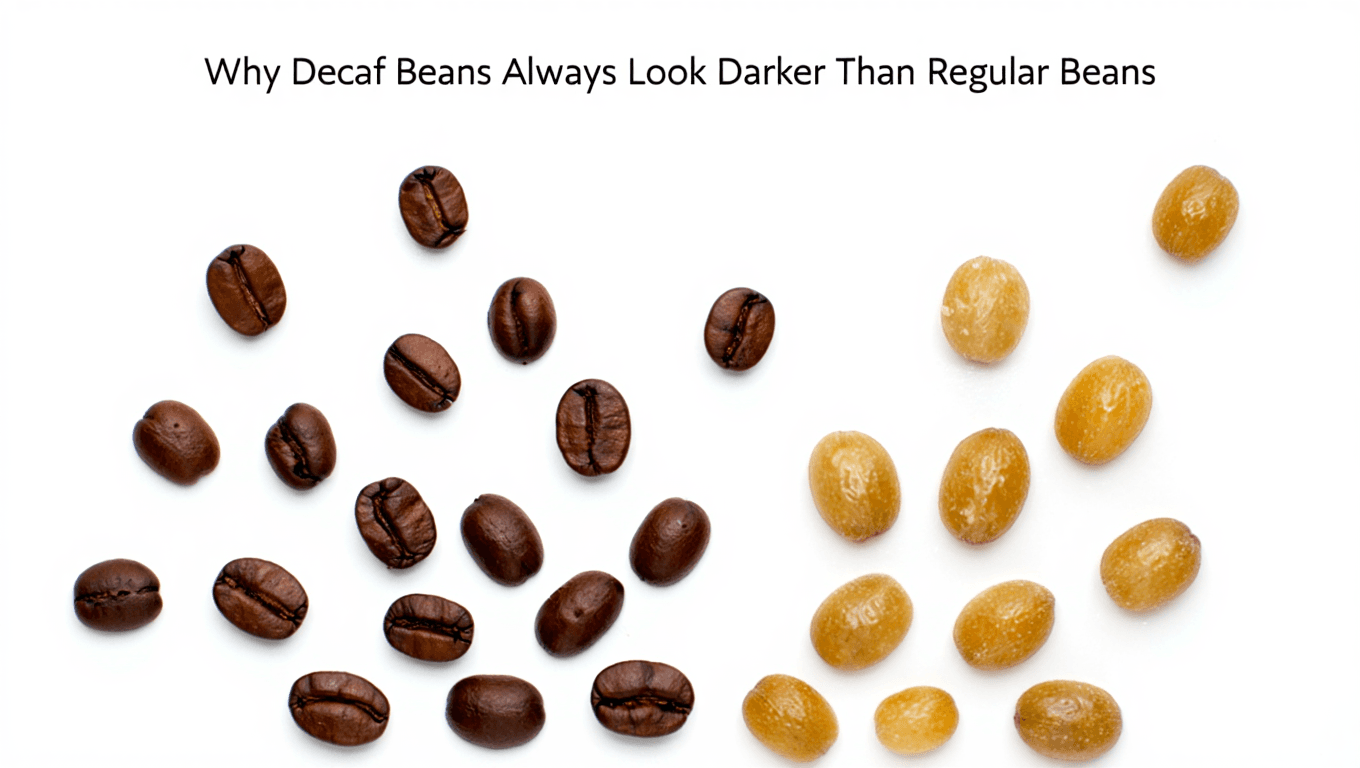
Why do decaf coffee beans look darker than regular coffee beans?
If you have ever compared a bag of decaffeinated coffee beans to a bag of standard Arabica or Robusta, you might have noticed a striking visual difference. Even when both are labeled as a "medium roast," the decaf beans almost always appear darker, oilier, and more brittle. This visual discrepancy often leads consumers to believe that decaf is over-roasted or naturally more bitter. However, the dark hue of decaf beans is not necessarily a result of the roasting temperature, but rather a byproduct of the decaffeination process itself. When we look at the cellular structure of the bean, the removal of caffeine involves soaking the green coffee in water or chemical solvents. This process breaks down the internal cellulose structure and alters the sugars within the bean. Consequently, when these beans hit the roaster, they caramelize much faster than untreated beans. Understanding this physical transformation is the first step in mastering the art of the brew, whether you are looking for the best South Indian filter coffee powder or exploring caffeine-free alternatives.
Does the decaffeination process change the physical structure of coffee beans?
The journey from a coffee cherry to your cup involves several complex stages, but decaffeination adds a significant layer of physical alteration. Most decaffeination methods—whether the Swiss Water Process, Ethyl Acetate (often called the Sugarcane Process), or Carbon Dioxide method—begin with steaming or soaking the green (unroasted) beans. This stage is designed to expand the bean’s pores, making it easier to extract the caffeine molecules. This expansion is permanent. Even after the beans are dried, their cell walls remain more porous and less dense than those of regular coffee beans. Because the beans are more "open," they conduct heat much more efficiently during the roasting process. At Coffee S10 Brews, we observe that this increased heat conductivity means the sugars on the surface of the bean begin to brown and carbonize much earlier. This is why a decaf bean can look like a dark roast while still possessing the flavor profile and internal temperature of a light-to-medium roast. For those seeking the traditional depth of South Indian coffee, understanding these structural changes helps in appreciating how different beans respond to the heat of the traditional brass filter.
Why do decaf beans roast faster and appear oilier?
One of the most common questions from high-intent coffee consumers is: “Why does my coffee look so oily?” In the world of regular coffee, surface oil is usually a sign of a very dark roast or old beans. However, with decaf, oil often appears much sooner. Because the decaffeination process softens the bean’s fiber, the natural oils trapped inside the bean find it much easier to migrate to the surface. During roasting, these oils are pushed out by the heat. While regular beans might require a high temperature to release these oils, decaf beans do so at much lower thresholds. This gives them a glossy, dark appearance that can be misleading. If you are used to the matte finish of a premium 80:20 coffee–chicory blend from Coffee S10 Brews, the shiny surface of decaf might seem alarming, but it is simply a sign of the bean's modified permeability. The faster roasting time also means that roasters must be incredibly precise; even a few seconds too long can turn a decaf batch from sweet to unpleasantly charred.
How does the color of decaf affect the taste of South Indian filter coffee?
In South Indian coffee culture, the visual "strength" of the decoction is a hallmark of quality. Many drinkers associate a deep, dark color with the rich, chocolatey notes of a traditional "hotel-style" coffee. Decaf beans, due to their darker appearance, can often produce a decoction that looks incredibly strong but may lack the actual body or "viscosity" that a caffeine-drinker expects. This is where the craftsmanship of the blend becomes vital. At Coffee S10 Brews, we emphasize that color is not always an indicator of strength. While decaf beans look dark, they often lose some of their volatile aromatic compounds during the caffeine extraction process. To achieve that authentic, soul-satisfying thickness found in a classic Kumbakonam Degree Coffee, many enthusiasts find that a blend of high-quality beans and the right ratio of chicory is superior to simply choosing a dark-looking bean. The 80:20 ratio we champion ensures that even if the color is deep, the flavor remains balanced and the crema is thick and persistent.
Is chicory used in decaf coffee to mimic traditional filter coffee?
Chicory is a misunderstood hero in the Indian coffee landscape. While it is often used to add body and a slight bittersweet edge to regular coffee, it is also a popular addition to decaf blends for those who want the South Indian experience without the stimulant. Chicory is naturally caffeine-free and roasts to a very dark, almost black color. When added to decaf coffee beans—which are already visually dark—it creates a powder that looks exceptionally rich. This leads to a common consumer pain point: “Why does South Indian coffee taste stronger?” The answer lies in the synergy between the dark-roasting properties of both decaf coffee and chicory. At Coffee S10 Brews, we believe that whether you are drinking decaf or our signature 80:20 blend, the goal is "Brewing Intelligence." Understanding how chicory interacts with the soluble solids of the coffee helps you control the strength of your decoction, ensuring you get that perfect "hotel-style" froth every time.
Comparing the visual and sensory profiles of coffee types
To better understand how decaf beans, regular beans, and chicory blends differ, it is helpful to look at their characteristics side-by-side. Many consumers struggle to identify why their home-brewed coffee doesn't match the sensory experience of a professional coffee house. The following table breaks down the key differences between the most common choices in the Indian market.
| Coffee Type Visual Appearance Caffeine Content Body / Viscosity Best Brewing Method | ||||
| 100% Arabica (Regular) | Medium brown, matte finish | High (Natural) | Medium / Bright | Pour-over, Aeropress |
| Decaf Arabica | Dark brown, oily/glossy | Negligible (97%+ removed) | Light to Medium | Drip, French Press |
| Coffee S10 Brews 80:20 Blend | Rich, deep umber | Moderate (Balanced) | High (Thick decoction) | Traditional Indian Filter |
| Instant Coffee | Fine powder or granules | Variable | Low / Thin | Stir and Drink |
Why doesn’t my decaf filter coffee taste like hotel coffee?
The "hotel coffee" experience is a gold standard in South India, characterized by a thick, foamy head of "froot" and a lingering sweetness. When users switch to decaf, they often complain that the coffee tastes "flat" despite looking dark. This is because the decaffeination process can sometimes strip away the oils that contribute to the mouthfeel. Additionally, hotel coffee usually relies on a specific roast profile and a high-quality 80:20 coffee-chicory blend. If you are brewing decaf at home, you may need to increase your coffee-to-water ratio or use a finer grind to compensate for the loss of density in the beans. Coffee S10 Brews addresses this by focusing on small-batch roasting. We ensure that our beans—whether regular or specialty blends—retain their essential oils and aromatic integrity. If you want that authentic taste, ensure your water is just off the boil and your filter is packed correctly to allow for a slow, pressurized drip.
Understanding the 80:20 coffee-chicory blend benefits
For those looking for the ultimate South Indian coffee experience, the 80:20 blend is widely considered the "Golden Ratio." While we have discussed why decaf looks dark, it is important to understand why this specific blend is the preferred choice for millions. The 80% represents high-quality, handpicked beans (often a mix of Arabica and Robusta), and the 20% is premium roasted chicory. The benefits include:
- Enhanced Aroma: The chicory acts as a flavor enhancer, bringing out the chocolatey notes of the coffee.
- Superior Body: It creates a thicker decoction that holds up against the addition of hot, frothed milk.
- Rich Crema: The combination produces a stable foam that is difficult to achieve with 100% coffee alone.
- Natural Sweetness: Chicory has a caramel-like sweetness that reduces the need for excessive sugar.
Coffee S10 Brews prides itself on sourcing the finest chicory to complement our artisan-roasted beans, ensuring that every cup feels like a tribute to tradition.
How to brew authentic filter coffee at home with Coffee S10 Brews
Brewing the perfect cup is a ritual of patience. Whether you are using a dark-roasted decaf or our signature blend, the process remains the same. First, start with a clean stainless steel or brass coffee filter. Add 2-3 tablespoons of Coffee S10 Brews powder to the upper compartment. Use the plunger to lightly press the powder—don't pack it too tight, or the water won't pass through; too loose, and the decoction will be watery. Pour freshly boiled water over the powder and close the lid. Wait for 15 to 20 minutes as the "first decoction" drips into the bottom chamber. This first extract is the most potent and aromatic. Combine this with hot, frothed full-fat milk and sugar to taste. By using our "Brewing Intelligence" guides, you can transform your kitchen into a traditional South Indian café.
The differences between hotel-style coffee and home-brewed coffee
Many people wonder why their home brew lacks the "punch" of a roadside stall or a high-end vegetarian restaurant. The secret usually lies in the equipment and the freshness of the grind. Professional establishments use large filters and high volumes of powder, which maintains heat more effectively during the extraction. To replicate this at home, consider the following comparison:
| Feature Hotel-Style Coffee Home-Brewed Coffee | ||
| Milk Quality | Often high-fat, boiled multiple times for thickness | Standard pasteurized milk, boiled once |
| Decoction Strength | Extracted in large batches (High Pressure) | Small batch (Low Pressure) |
| The "Stretch" | Aerate by pouring between "Dabarah" and "Tumbler" | Usually stirred with a spoon |
| Coffee S10 Brews Solution | N/A | Use 80:20 blend and Dabarah set for aeration |
Why freshness and consistency matter in dark-roasted coffee
Because decaf beans and dark-roasted blends are more porous, they are also more susceptible to oxidation. Oxygen is the enemy of flavor. When you buy a mass-produced "dark roast" from a supermarket shelf, it has likely been sitting there for months, losing its soul. Coffee S10 Brews tackles this by utilizing controlled roasting cycles and small-batch production. We ensure that our grind size is consistent across every batch, which is critical for filter coffee. If the grind is too coarse, the water rushes through, resulting in a sour brew. If it's too fine, it clogs the filter. Our commitment to freshness means that when you open a bag of S10 Brews, you are greeted with the intense, nutty aroma that only comes from beans roasted with precision and care.
Frequently Asked Questions about Decaf and South Indian Coffee
1. Why does decaf coffee look so dark compared to regular coffee?
Decaf beans are more porous due to the decaffeination process. When roasted, they conduct heat faster, causing the sugars to caramelize and turn dark more quickly than regular beans, even at the same roasting temperature.
2. Is decaf coffee completely caffeine-free?
No, most decaffeination processes remove about 97-99% of the caffeine. While it won't give you a "buzz," there are still trace amounts remaining.
3. Why is chicory used in South Indian coffee?
Chicory is used to provide a thicker body, a deeper color, and a unique bittersweet flavor that complements the richness of milk and sugar, creating the classic "filter coffee" profile.
4. Does a darker bean mean the coffee is stronger?
Not necessarily. In the case of decaf, the dark color is a physical byproduct of processing. True "strength" in coffee comes from the ratio of coffee to water and the quality of the beans used.
5. Can I use decaf coffee in a traditional South Indian filter?
Yes, you can. However, because decaf can be less dense, you may need to use slightly more powder to achieve the same decoction thickness as a standard Coffee S10 Brews 80:20 blend.
6. What is the best way to store dark-roasted coffee powder?
Store it in an airtight container in a cool, dark place. Avoid the refrigerator, as coffee absorbs odors and moisture, which can ruin the delicate aromatic oils of the dark roast.
7. Is the 80:20 coffee-chicory blend better than 100% coffee?
"Better" is subjective, but for authentic South Indian filter coffee, the 80:20 blend is the gold standard for achieving the right balance of aroma, strength, and frothiness.
Experience the Craftsmanship of Coffee S10 Brews
At Coffee S10 Brews, we believe that every cup of coffee tells a story of heritage, science, and sensory delight. Whether you are curious about the unique visual properties of decaf beans or you are on a quest to brew the perfect morning cup, we are here to guide you. Our signature blends are a testament to the art of traditional South Indian roasting, refined for the modern palate. We don't just sell coffee; we provide the tools and knowledge for you to become a home barista.
Explore our range of premium coffee powders and discover the difference that handpicked beans and small-batch roasting can make. Visit our website to browse our latest collections, read our deep-dive brewing guides, and join a community of coffee lovers who refuse to settle for anything less than authentic. Embrace the ritual, master the decoction, and taste the legacy of Coffee S10 Brews today.