Why Every Home Barista Needs a "Refractometer" in 2026
Master authentic South Indian filter coffee! Learn why a refractometer is the secret to unlocking consistent, rich brews for home baristas in 2026.
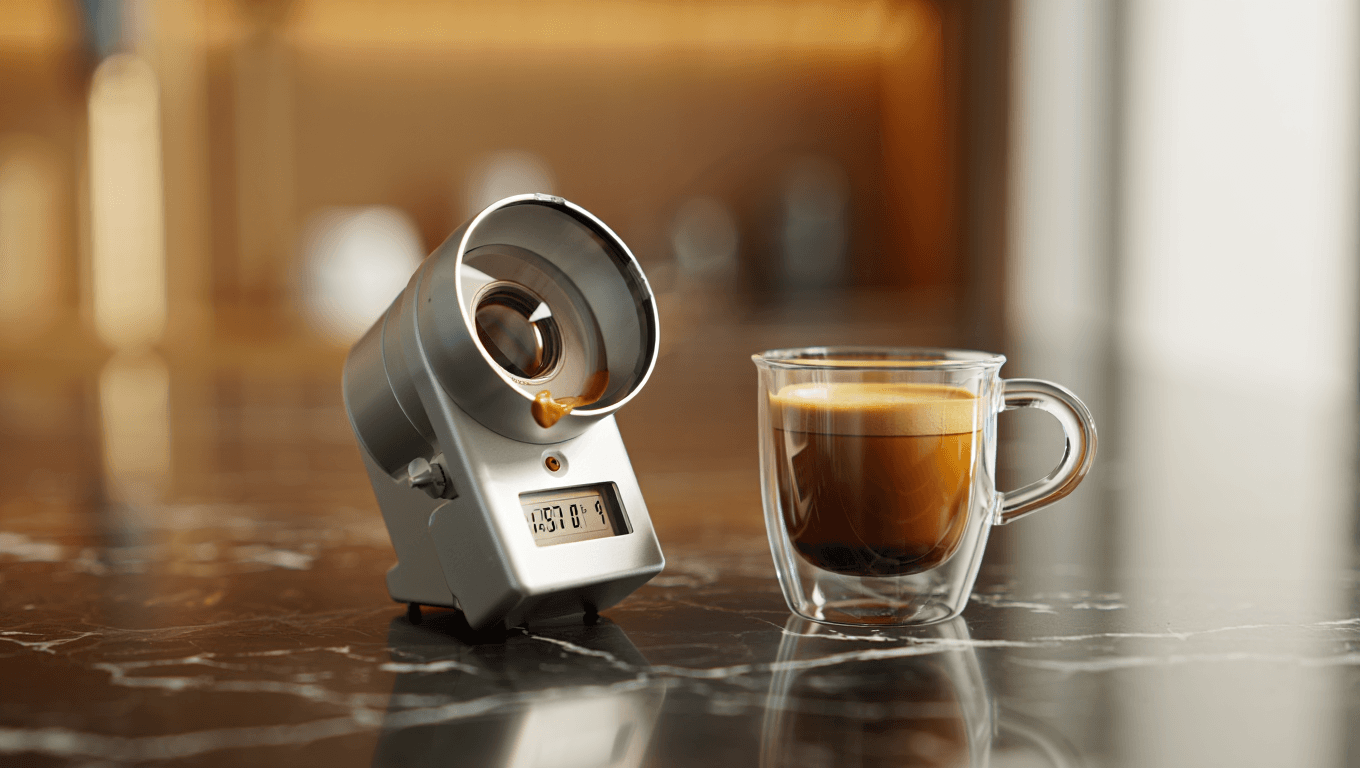
How do you measure the strength of authentic South Indian filter coffee?
For decades, the strength of South Indian filter coffee—or the "decoction"—was measured purely by the eye and the palate. A veteran brewer would look for a specific shade of deep amber-brown and a syrupy viscosity that coated the back of a spoon. However, as we move into 2026, the modern home barista is looking for something more: precision. Measuring the strength of your coffee involves understanding Total Dissolved Solids (TDS). In the context of South Indian coffee, the TDS represents the concentration of coffee and chicory particles that have moved from the grounds into your water. While a standard drip coffee might sit at a TDS of 1.2% to 1.5%, a traditional South Indian decoction is far more concentrated, often reaching levels that rival espresso. Using a refractometer allows you to quantify this intensity, ensuring that every cup of Coffee S10 Brews you prepare has the exact same punch, body, and mouthfeel every single morning.
Why does your home-brewed filter coffee taste different from hotel coffee?
One of the most common frustrations among coffee enthusiasts is the "hotel coffee gap." You buy the same beans, use a traditional brass filter, and follow the steps, yet the result lacks that thick, velvet-like texture found in iconic South Indian eateries. The secret often lies in extraction consistency. Hotels brew in massive quantities where thermal mass is high, leading to a very stable extraction temperature. At home, small variables—like the temperature of your water or the tightness with which you press the tamper (the "umbara")—can cause wild swings in flavor. This is where a refractometer becomes an essential tool for the 2026 home barista. By measuring the refractive index of your decoction, you can identify if your coffee is under-extracted (tasting sour and thin) or over-extracted (tasting unpleasantly bitter). Coffee S10 Brews bridges this gap by providing a consistent, small-batch roast that responds predictably to heat, but a refractometer gives you the data to master the technique.
What is the ideal TDS for a perfect South Indian filter coffee decoction?
To achieve that legendary "degree" coffee experience, your decoction needs to be exceptionally concentrated. While there is no single "perfect" number, most high-end coffee professionals look for a TDS range between 8% and 12% for a primary decoction. Because South Indian filter coffee is meant to be diluted with high-fat milk, a lower TDS will result in a "watery" taste once the dairy is added. A refractometer helps you dial in your brew ratio. If your reading is too low, you know you need to use a finer grind or increase the weight of your Coffee S10 Brews powder. If it’s too high, you might be over-extracting the bitter compounds of the chicory. Achieving this balance is the hallmark of brewing intelligence, transforming a simple kitchen task into a repeatable science.
Why is an 80:20 coffee-chicory blend the gold standard for extraction?
In the world of South Indian filter coffee, the ratio of 80% coffee to 20% chicory is considered the "Golden Ratio." But why? From a scientific perspective, chicory is more water-soluble than coffee. It adds a woody, caramelized depth and, most importantly, increases the viscosity of the liquid. When you use a 100% Arabica or Robusta bean, the decoction can sometimes feel "thin." The 20% chicory in the Coffee S10 Brews signature blend acts as a natural enhancer, providing the heavy body required to stand up against the sweetness of frothed milk. When measured with a refractometer, the 80:20 blend shows a more complex refractive index because of the varied soluble solids contributed by the roasted chicory root. This blend doesn't just taste traditional; it is chemically designed to produce the thickest, most aromatic decoction possible.
How does grind size impact your decoction’s refractive index?
Grind size is the most important variable in the physics of coffee brewing. For a South Indian stainless steel or brass filter, the grind must be "medium-fine"—slightly coarser than espresso but finer than a pour-over. If the grind is too coarse, the water will rush through the coffee bed (channeling), resulting in a low TDS and a weak, sour decoction. If the grind is too fine, the filter will "choke," and the water will sit on the grounds for too long, extracting harsh, ashy flavors. Coffee S10 Brews emphasizes a consistent grind size across every batch because we understand that even a minor deviation can ruin your morning ritual. By using a refractometer, you can see the immediate impact of grind adjustments on your extraction yield, allowing you to fine-tune your process to the specific humidity and temperature of your kitchen.
Is chicory bad or necessary for authentic South Indian coffee?
There is a common misconception that chicory is merely a "filler." On the contrary, in the context of South Indian coffee culture, chicory is a functional ingredient. It performs two vital roles: it lowers the caffeine content slightly (allowing for multiple cups throughout the day) and it increases the "solubility" of the brew. Without chicory, it is very difficult to achieve the dark, syrupy consistency that defines the category. However, quality matters. Low-grade chicory can taste rubbery or overly bitter. Coffee S10 Brews uses premium, jamnagar-sourced chicory that complements our handpicked beans rather than masking them. This ensures that the added body doesn't come at the cost of the coffee's natural aroma and floral notes.
How do you use a refractometer to troubleshoot bitter or sour decoctions?
If your coffee tastes sour or "salty," it is under-extracted. On a refractometer, this will show up as a low TDS. To fix this, you should use hotter water, a finer grind, or let the decoction drip slower. If your coffee tastes bitter, dry, or astringent, it is over-extracted. This usually happens if the water was boiling for too long or if the coffee was left in the filter for hours. A refractometer confirms these sensory notes with hard data. By tracking your brews over a week, you can find your "sweet spot"—the exact TDS where the Coffee S10 Brews notes of chocolate and caramel shine through without any harshness. This level of control is why the refractometer is the ultimate tool for the 2026 home barista.
The role of water temperature in traditional South Indian brewing
Water temperature is often the "silent killer" of good coffee. Most people either use lukewarm water (resulting in no extraction) or boiling water that has been bubbling for five minutes (resulting in a burnt taste). The ideal temperature for brewing a South Indian decoction is between 92°C and 96°C. At this temperature, the water is hot enough to dissolve the desirable oils and sugars in the Coffee S10 Brews powder but not so hot that it scorched the delicate aromatics. Precision brewing requires a gooseneck kettle and a thermometer, but the refractometer tells you the end result: did that temperature change actually improve your extraction? This is how you transition from a casual drinker to a master of the craft.
Comparison of Brewing Methods and Characteristics
| Feature Instant Coffee South Indian Filter Coffee (80:20) Espresso | |||
| Preparation Method | Dehydrated extract dissolved in water | Gravity-fed slow percolation (Decoction) | High-pressure rapid extraction |
| Typical TDS (Strength) | 1.0% - 1.5% | 8.0% - 12.0% (Decoction) | 7.0% - 12.0% |
| Flavor Profile | Flat, one-dimensional | Rich, syrupy, caramelized, aromatic | Intense, bright, acidic |
| Presence of Chicory | Rarely (usually 100% coffee or low grade) | 20% (for body and crema) | None |
| Mouthfeel | Thin and watery | Heavy, velvet-like, coating | Creamy and dense |
Comparison of Coffee Blends: 100% Coffee vs. 80:20 Blend
| Metric 100% Pure Coffee 80:20 Coffee-Chicory Blend | ||
| Viscosity | Low (Thin) | High (Thick/Syrupy) |
| Aroma | Bright, Floral, Acidic | Deep, Earthy, Nutty |
| Milk Compatibility | Best for black coffee or light milk | Designed for heavy, frothed milk |
| Decoction Color | Transparent Amber | Opaque Deep Brown |
| Bitterness Balance | Can be sharp if over-extracted | Smooth, rounded bitterness |
Why small-batch roasting ensures consistent TDS readings
In mass-produced coffee, beans from hundreds of different farms are tossed into giant roasters. This leads to an inconsistent roast where some beans are oily and overdone while others are under-roasted. When you brew such coffee, your extraction will be uneven—some parts are bitter, some are sour. Coffee S10 Brews utilizes small-batch roasting, meaning we monitor every second of the roast cycle. This precision ensures that every grain of coffee in your bag has the same density and moisture content. For the home barista using a refractometer, this translates to consistency. You won't have to change your settings every time you open a new bag; the science of our roast supports the science of your brew.
Transitioning from "guessing" to "mastery" in your morning ritual
The journey of a home barista usually begins with a search for "best South Indian filter coffee powder." But once you find a brand like Coffee S10 Brews, the next step is mastering the ritual. Mastery isn't about following a recipe blindly; it's about understanding why the recipe works. By incorporating tools like a refractometer and a digital scale into your 2026 coffee station, you are honoring the craftsmanship that goes into our beans. You are ensuring that the handpicked selection and the careful 80:20 blending aren't lost to a poor brewing technique. Traditional coffee doesn't have to be "old-fashioned"—it can be the most technologically advanced and rewarding part of your day.
Frequently Asked Questions about South Indian Filter Coffee
1. Why is my filter coffee decoction always too thin?
A thin decoction is usually caused by using a grind that is too coarse or not tamping the coffee powder firmly enough in the top chamber of the filter. For a thick, hotel-style decoction, ensure you are using an 80:20 blend like Coffee S10 Brews and that you press the powder down to create uniform resistance for the water.
2. How long should I let the coffee decoction drip?
A perfect decoction typically takes between 15 to 25 minutes to drip fully. If it drips in under 10 minutes, your grind is too coarse. If it takes over 45 minutes, your grind is too fine or you have packed it too tightly. Using a refractometer can help you find the "sweet spot" within these timeframes.
3. Can I use a refractometer for black coffee and milk coffee?
A refractometer measures the black decoction (the coffee extract). Once you add milk and sugar, the refractive index changes drastically due to fats and lactose, making it difficult to measure the coffee's extraction yield. Always measure your decoction before adding milk to ensure consistency.
4. Does chicory make coffee unhealthy?
No, chicory is a natural root that has been used for centuries. It is caffeine-free and contains inulin, a type of prebiotic fiber. In an 80:20 blend, it is used purely for its flavor and structural properties in the brew, offering a smoother experience than 100% Robusta blends.
5. What is the best way to store Coffee S10 Brews powder?
To maintain the freshness and volatile aromatics, store your coffee in an airtight container in a cool, dark place. Avoid the refrigerator, as coffee is a desiccant and will absorb odors from other foods, which will negatively impact your TDS readings and flavor profile.
6. Why does Coffee S10 Brews use an 80:20 ratio specifically?
Through years of testing, we found that the 80:20 ratio offers the perfect equilibrium. The 80% Arabica and Robusta beans provide the caffeine kick and complex aromas, while the 20% chicory provides the essential "body" that defines the South Indian filter coffee experience.
Elevate Your Brewing Mastery
The difference between a good cup of coffee and a legendary one lies in the details. Whether you are a traditionalist who brews by instinct or a modern barista who uses a refractometer to measure every drop, the foundation of your cup is the quality of the bean. At Coffee S10 Brews, we provide the authentic South Indian craftsmanship your ritual deserves.
- Explore our signature 80:20 blends and find your perfect strength.
- Download our comprehensive brewing guides to master the traditional filter.
- Learn more about the science of coffee extraction and how to troubleshoot your brew.
Ready to experience the perfect decoction? Visit our shop and discover why Coffee S10 Brews is the trusted choice for coffee purists across the globe.