Why "Fine" Grinds Clog Your Filter: Solving the "Muddy" Cup Problem
Tired of muddy kaapi & clogged filter coffee? Coffee S10 Brews reveals why fine grinds ruin your brew & how to get that perfect, clear cup.
Why does my South Indian filter get clogged when using fine grinds?
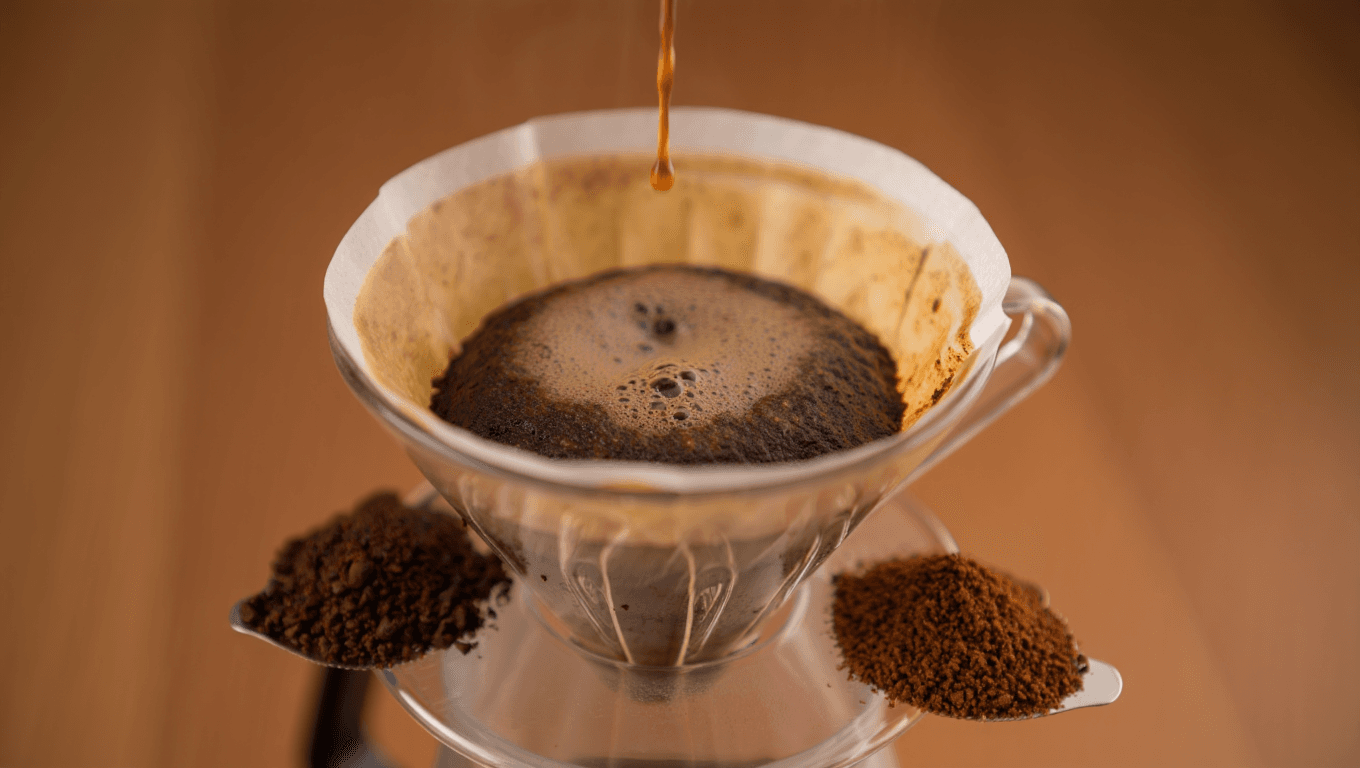
One of the most common frustrations for coffee enthusiasts attempting the traditional South Indian brew is the "clogged filter." You set up your brass or stainless steel filter, add your powder, pour boiling water, and... nothing happens. Or worse, the water sits there for thirty minutes, eventually producing a cold, over-extracted, and bitter liquid. This happens because the grind size is too fine. When coffee is ground to a flour-like consistency—often mistaken for "freshness"—it creates a compact, impermeable layer when wet. In a gravity-based brewing system like the Indian filter, the water lacks the pressure of an espresso machine to push through this "mud." Instead, the fine particles swell and lock together, trapping the water. To achieve the perfect drip, you need a specific "medium-fine" texture that allows water to pass through at a controlled rate, ensuring every drop carries the concentrated essence of the bean. At Coffee S10 Brews, we meticulously calibrate our industrial grinders to ensure the powder is granular enough to breathe but fine enough to yield a heavy decoction.
What is the best grind size for authentic South Indian filter coffee?
If you are searching for the best South Indian filter coffee powder, you must look beyond the brand name and examine the texture. The ideal grind for a traditional filter is often described as "slightly coarser than espresso but finer than pour-over." If you rub the powder between your fingers, it should feel like fine table salt, not like powdered sugar. A grind that is too coarse will result in "under-extraction," where the water rushes through too quickly, leaving you with a sour, thin, and watery liquid. Conversely, a grind that is too fine leads to the dreaded "muddy cup," where silty sediment passes through the filter holes and settles at the bottom of your tumbler. Coffee S10 Brews solves this by utilizing a standardized grinding process that accounts for the moisture content of the beans, ensuring that whether you are brewing your first cup or your hundredth, the resistance within the filter remains consistent.
Why an 80:20 coffee-chicory blend is the secret to a thick decoction
Many modern coffee drinkers ask, "why is chicory used in South Indian coffee?" while seeking a 100% Arabica experience. However, the soul of the traditional "hotel-style" coffee lies in the 80:20 coffee-chicory blend. Chicory is not just a filler; it is a functional ingredient that alters the physics of the brew. Chicory is more water-soluble than coffee. When hot water hits an 80:20 blend, the chicory extracts quickly, adding thickness (viscosity) and a deep, caramel-like sweetness to the decoction. This increased viscosity is what allows the coffee to "hold" the milk, creating that iconic frothy layer when poured from a height. More importantly, in the context of clogging, a well-balanced 80:20 blend like the one offered by Coffee S10 Brews prevents the coffee particles from clumping too tightly, acting as a natural spacer that facilitates a steady, rhythmic drip. Explore how our 80:20 blend enhances aroma and body without the harsh bitterness found in lower-quality commercial powders.
How to prevent sediment and "muddy" residue in your coffee cup
A "muddy" cup refers to that layer of fine silt that makes the last two sips of your coffee gritty and unpleasant. This usually occurs when the filter holes are either too large or the powder contains too many "fines" (microscopic dust particles created during poor grinding). To solve the muddy cup problem, you must master the use of the pressing disc (the plunger). After placing your Coffee S10 Brews powder into the upper chamber, gently level it. Do not "tamp" it with force as you would an espresso portafilter; instead, use the disc to apply light, even pressure. This creates a uniform "cake." When you pour the water over the disc, it disperses the liquid evenly, preventing the water from carving "channels" through the powder. Channeling is a major cause of sediment, as high-velocity water bypasses the filtration process and carries silt directly into the lower chamber. By using a consistent grind from a trusted brand, you ensure that the particle distribution is uniform, significantly reducing the chances of sediment leakage.
Table: Comparing South Indian Filter Coffee, Instant Coffee, and Espresso
Understanding where South Indian filter coffee sits in the global coffee landscape helps in mastering the technique. Use this table to understand the technical requirements of each brew type.
| Feature | South Indian Filter Coffee | Instant Coffee | Espresso |
| Grind Size | Medium-Fine (Salt-like) | Pre-extracted crystals | Fine (Flour-like) |
| Extraction Method | Gravity-based slow drip | Rapid dissolution in water | High-pressure extraction |
| Brew Time | 15–20 minutes | 10 seconds | 25–30 seconds |
| Body & Texture | Heavy, syrupy, viscous | Thin and watery | Intense, creamy (crema) |
| Best Use Case | Mixing with hot, frothed milk | Quick caffeine fix | Drinking black or in lattes |
Why "fine" espresso grinds fail in traditional brass filters
Many consumers who own high-end home grinders attempt to use their espresso setting for South Indian filter coffee, only to face a total blockage. Espresso grinds are designed for 9 bars of pressure. In a traditional South Indian filter, the only force acting on the water is gravity. A flour-fine grind creates too much surface tension for the weight of the water to overcome. Furthermore, because South Indian coffee often contains chicory, which is hygroscopic (it absorbs moisture and swells), an ultra-fine grind becomes a literal "plug" of dough inside your filter. Coffee S10 Brews emphasizes the importance of "brewing intelligence"—understanding that the tool must match the material. Our signature blends are specifically engineered for the gravity-drip method, ensuring that the water contacts each grain for the optimal duration to extract oils and caffeine without getting stuck.
The science of the "Decoction": How to get that thick hotel-style base
The goal of every South Indian coffee enthusiast is to replicate the thick, dark, and aromatic decoction found in the legendary cafes of Chennai and Bangalore. The secret isn't just the powder; it's the "bloom." When you first pour a small amount of hot water over the Coffee S10 Brews powder, wait for 30 seconds. This allows the gasses to escape (degassing) and the chicory to begin softening. After the bloom, pour the remaining water in a slow, circular motion. This technique ensures that the decoction is "saturated"—meaning it has reached its maximum capacity for dissolved solids. If the grind is too coarse, the water doesn't stay in contact with the powder long enough to become saturated. If it's too fine, it over-saturates and becomes bitter. Our 80:20 ratio is designed to provide that "syrupy" mouthfeel that is the hallmark of professional-grade filter coffee. Try an 80:20 blend to experience the traditional depth that pure coffee often lacks.
Table: 100% Pure Coffee vs. Coffee S10 Brews 80:20 Signature Blend
Choosing the right blend is the first step in avoiding a thin or clogged brew. This comparison explains why the 80:20 ratio is the gold standard for South Indian households.
| Attribute | 100% Pure Coffee | Coffee S10 Brews (80:20) |
| Visual Color | Medium brown | Deep, dark chocolate brown |
| Viscosity (Thickness) | Low; feels like tea | High; coats the back of a spoon |
| Milk Interaction | Can feel "diluted" with milk | Stays bold and "punched through" milk |
| Aroma Profile | Bright, acidic, fruity | Nutty, earthy, caramelized |
| Filter Performance | Drips quickly; requires more powder | Drips steadily; yields more decoction |
How Coffee S10 Brews ensures grind consistency for the perfect drip
In the world of coffee, consistency is the difference between a good morning and a frustrating one. Many local grinders use blades that shatter beans into uneven shards—some too big (under-extraction) and some like dust (clogging). Coffee S10 Brews utilizes precision burr-milling technology. By crushing the beans between two revolving surfaces rather than slicing them, we achieve a uniform particle size distribution. This uniformity means that every single grain of coffee in your filter is working at the same speed. There are no "fines" to clog the holes and no "boulders" to let water through too fast. This professional-grade consistency allows you to master the South Indian filter coffee ritual at home with the confidence that the variable of the "grind" is already optimized for you.
Common mistakes when tamping filter coffee powder
If you find your coffee is taking over 45 minutes to drip, you might be tamping too hard. Unlike espresso, where you apply 30 pounds of pressure to create a puck, the South Indian filter requires a "leveling" touch. If you press the powder down with all your strength, you collapse the air pockets between the grains. Water needs these pockets to travel through. The correct method is to pour the Coffee S10 Brews powder into the chamber, give it a gentle shake to level it, and then place the plunger on top. Press down only enough to ensure the surface is flat. This ensures that the water encounters uniform resistance across the entire surface area, preventing the "muddy" cup problem while maximizing flavor extraction. Discover brewing guides from Coffee S10 Brews to refine your tamping technique.
The role of water temperature in preventing over-extraction and bitterness
Temperature is the silent partner of grind size. If your water is "rolling boiling" (100°C) when it hits the powder, it can cause the chicory to become excessively gummy, leading to a clog. Additionally, boiling water can burn the delicate oils in the handpicked beans used in Coffee S10 Brews. The ideal temperature for brewing is approximately 92°C to 96°C. Let the water sit for about 30 seconds after boiling before pouring it into your filter. This slight drop in temperature ensures that the extraction is sweet and nutty rather than burnt and acrid. Proper temperature management, combined with our signature 80:20 grind, results in a decoction that has a natural "crema" on top—the golden-brown foam that signals a perfect brew.
Table: Hotel-Style Coffee vs. Average Home-Brewed Coffee
What makes the coffee at a high-end South Indian "Tiffin Center" different from what most people make at home? It usually comes down to these three factors.
| Factor | Average Home Brew | Hotel-Style (Coffee S10 Brews) |
| Powder Quality | Commercial, mass-produced | Small-batch roasted, specialty grade |
| Chicory Balance | Often too high or low | Precision 80:20 ratio for "bite" |
| Milk Preparation | Boiled milk added directly | Frothed, high-fat milk poured from height |
| Decoction Strength | Weak/Watery due to coarse grind | Thick/Syrupy due to calibrated grind |
Why freshness and small-batch roasting matter for aroma
The "muddy" cup isn't just a texture issue; it’s a flavor issue. When coffee is ground and sits on a shelf for months, the oils oxidize and the powder loses its structural integrity. Old coffee powder tends to "collapse" more easily in the filter, leading to clogs. Coffee S10 Brews prioritizes fresh, controlled roasting cycles. By roasting in small batches, we ensure that the beans retain their moisture and essential oils. When you open a packet of Coffee S10 Brews, the aroma is immediate and intoxicating because the volatile compounds are still trapped within the properly ground grains. Freshness ensures that the decoction is vibrant, with a long-lasting aftertaste that lingers on the palate, rather than the flat, dusty flavor of stale commercial brands.
Troubleshooting the "Watery Decoction" – why your coffee lacks body
If your filter drips in under five minutes, your decoction will likely be watery. This is the opposite of the clogging problem but just as common. A watery decoction happens when the powder is too coarse or if you haven't used enough powder. For a standard two-cup filter, you should use roughly 3 to 4 tablespoons of Coffee S10 Brews powder. The powder should fill at least 1/3rd to 1/2 of the upper chamber. If there isn't enough "bed depth," the water doesn't spend enough time in contact with the coffee. By ensuring a proper fill level and using our medium-fine 80:20 blend, you guarantee a decoction that is dark, opaque, and strong enough to stand up to the addition of milk and sugar.
Frequently Asked Questions about South Indian Filter Coffee
1. Why is my filter coffee powder so fine?
It shouldn't be flour-fine. If it is, it's likely meant for an espresso machine, not a traditional filter. Coffee S10 Brews provides a specifically calibrated medium-fine grind to prevent clogging while maintaining strength.
2. Does chicory make the coffee stronger?
Chicory doesn't have caffeine, but it adds "body" and "bitterness" (the good kind), which makes the coffee taste stronger and feel thicker when mixed with milk. This is why the 80:20 coffee-chicory blend is so popular.
3. How long should the decoction take to drip?
Ideally, for a standard home filter, the first drip should appear within 3-5 minutes, and the entire process should take 15-20 minutes. If it takes 2 minutes, it’s too coarse. If it takes 40 minutes, it’s too fine or tamped too hard.
4. Can I use Coffee S10 Brews in an electric drip maker?
Yes! While we are advocates for the traditional brass filter, our consistent grind size also works exceptionally well in modern electric drip machines, providing a much richer cup than standard store-bought brands.
5. Is South Indian filter coffee better than instant coffee?
In terms of flavor, aroma, and authenticity, yes. Instant coffee is pre-brewed and dehydrated, losing most of its soul in the process. Coffee S10 Brews offers the "cure" to the "pain" of instant coffee by providing an accessible way to enjoy real craftsmanship at home.
6. Why does my coffee taste bitter?
Bitterness usually comes from over-extraction (water sitting too long in the filter) or using water that is too hot. Ensuring a steady drip rate with the correct grind size is the best way to eliminate unwanted bitterness.
7. How do I get the "froth" in my filter coffee?
The froth is achieved by pouring the coffee and milk mixture back and forth between the Dabara and Tumbler. The height of the pour aerates the milk. The thick decoction from our 80:20 blend is essential to holding those bubbles in place.
Mastering the South Indian Filter Coffee ritual with Coffee S10 Brews
Brewing the perfect cup of South Indian filter coffee is a bridge between tradition and science. By understanding the relationship between grind size, chicory ratios, and water temperature, you move away from the frustration of clogged filters and muddy cups toward a daily ritual of excellence. Coffee S10 Brews is dedicated to providing you with the tools and the beans necessary to master this art. Our signature 80:20 blend is more than just a product; it is a commitment to the authentic craftsmanship of South India, delivered with modern consistency. Stop settling for watery home brews or the artificial taste of instant coffee. Explore our range of premium blends and brewing guides today to bring the soul of the South Indian coffee house into your kitchen.
Experience the perfect balance of aroma, body, and crema. Visit the Coffee S10 Brews store to find your perfect blend and start your journey toward coffee mastery.