Why "Glass Coffee Mugs" are the Secret to Better Sensory Analysis
Enhance your authentic South Indian filter coffee ritual. Learn why glass coffee mugs let you truly appreciate every brew's rich aroma & colour.
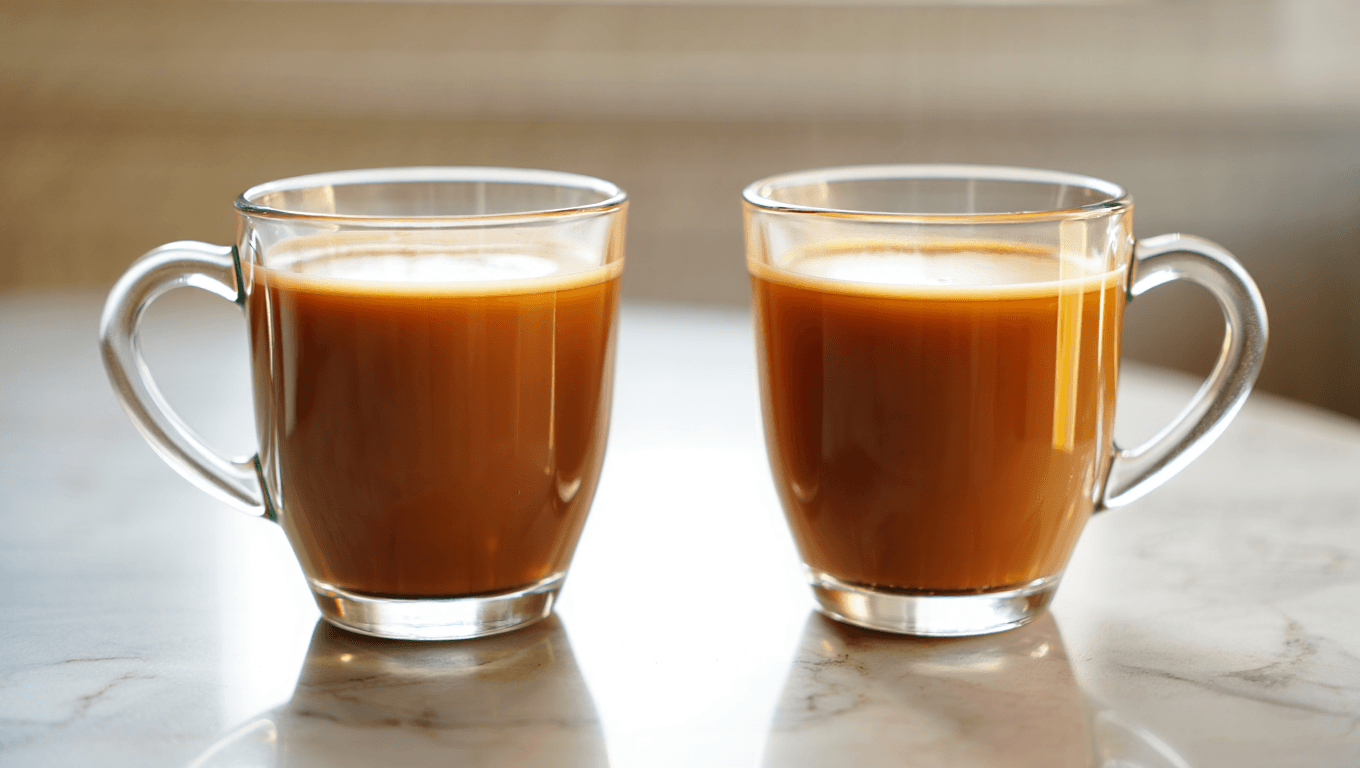
Why are glass coffee mugs better for sensory analysis of South Indian filter coffee?
When we think of South Indian filter coffee, the image that usually comes to mind is the iconic stainless steel Dabara set. However, for the modern coffee connoisseur looking to master the art of brewing, glass coffee mugs offer a distinct advantage: the ability to perform a complete sensory analysis. Sensory analysis is not just for professional cuppers; it is the process by which a home brewer understands the relationship between the grind, the roast, and the final extraction. Using a clear glass vessel allows you to observe the "viscosity" and "color saturation" of your decoction—two critical indicators of a well-brewed cup. At Coffee S10 Brews, we believe that understanding the visual cues of your coffee is the first step toward achieving that perfect, hotel-style consistency at home. Glass removes the mystery, letting you see the deep, chocolatey hues of a perfectly extracted 80:20 coffee-chicory blend before you even take your first sip.
How does the visual clarity of glass affect your South Indian filter coffee experience?
The experience of drinking coffee begins long before the liquid touches your tongue. It starts with the eyes. When you use a high-quality glass mug, you can witness the beautiful layering of the decoction as it settles at the bottom of the hot, frothed milk. This visual feedback is essential for those wondering why their filter coffee doesn't taste like hotel coffee. In professional settings, the color of the brew indicates the roast profile and the extraction efficiency. A pale, translucent decoction suggests under-extraction or low-quality beans, whereas the deep, opaque amber of Coffee S10 Brews' signature blend signals a rich, full-bodied experience. By observing the coffee through glass, you can ensure your milk-to-decoction ratio is precise, leading to a more consistent flavor profile every morning. This transparency bridges the gap between traditional craftsmanship and modern brewing intelligence, allowing you to calibrate your technique with every pour.
Is an 80:20 coffee-chicory blend better for visual and sensory depth?
One of the most debated topics in the Indian coffee community is the use of chicory. While some purists argue for 100% Arabica, the authentic South Indian filter coffee experience is defined by a specific ratio—usually 80% coffee and 20% chicory. But why does this matter for sensory analysis? Through a glass mug, you can actually see the difference. Chicory adds a unique thickness and a darker "stain" to the decoction that pure coffee lacks. This increased viscosity is what creates the "syrupy" mouthfeel that filter coffee lovers crave. At Coffee S10 Brews, our 80:20 blend is engineered to provide a robust body and a persistent crema (nuru) that stays stable even after pouring. When viewed through glass, this blend reveals a rich, mahogany tint that promises a balance of bittersweet notes and an earthy aroma, proving that chicory is not an adulterant but a functional ingredient that enhances the beverage's structural integrity.
Why is the "Nuru" or froth more stable in premium South Indian filter coffee?
The froth, locally known as "nuru," is the crowning glory of a perfect South Indian filter coffee. In a traditional metal tumbler, you can only see the top layer of this froth. However, in a glass coffee mug, you can observe the bubble structure and the stability of the foam. A high-quality brew made with fresh, small-batch roasted beans from Coffee S10 Brews produces a micro-foam that is dense and resilient. If the bubbles are too large and pop quickly, it often indicates that the coffee beans were stale or the water temperature was too high during extraction. Sensory analysis through glass helps you identify these nuances. The 80:20 ratio plays a significant role here as well; the chicory acts as a natural stabilizer, ensuring that the froth remains thick as you transfer the coffee between vessels to aerate it. Mastering this "degree coffee" technique is much easier when you can visually track the aeration process through a clear mug.
What is the best way to brew authentic filter coffee at home for maximum flavor?
Brewing authentic filter coffee is a ritual that requires patience and the right tools. The process starts with the decoction. You need a traditional stainless steel filter, but your analysis should happen in a glass container. Start by adding two to three tablespoons of Coffee S10 Brews powder into the upper chamber. Press it down gently with the plunger—not too hard, or the water won't pass through; not too light, or it will extract too quickly. Pour boiling water over it and wait for 15 to 20 minutes. The resulting liquid should be thick, dark, and aromatic. When you pour this into a glass mug containing hot, sweetened milk, you are looking for a seamless integration of colors. If the decoction is too thin, it will look watery through the glass; if it is just right, it will swirl into the milk like dark silk. This level of control is what separates a casual drinker from a coffee enthusiast who values the craftsmanship behind every bean.
Comparing the sensory characteristics: Filter coffee vs. Instant coffee
Many consumers opt for instant coffee due to its convenience, but they sacrifice the sensory complexity that defines Indian coffee culture. To understand the gap, we must look at the physical and chemical differences between the two. Instant coffee is essentially dehydrated brewed coffee; it lacks the volatile oils and the textural depth of fresh-ground beans. When placed in a glass mug, the differences become stark. Instant coffee often appears "flat" and one-dimensional, while a traditional filter coffee exhibits a vibrant, layered complexity. Coffee S10 Brews focuses on providing the convenience of modern packaging while maintaining the traditional integrity of slow-roasted, handpicked beans, ensuring that your home-brewed cup rivals any specialty cafe.
| Feature South Indian Filter Coffee (80:20) Instant Coffee | ||
| Visual Density | High; opaque and syrupy decoction. | Low; translucent and thin. |
| Aroma Profile | Complex; notes of earth, chocolate, and nuts. | Simple; often charred or acidic. |
| Froth (Nuru) | Stable, micro-foam that lasts. | Dissipates quickly; mostly air bubbles. |
| Aftertaste | Lingering, pleasant bitterness. | Short-lived, often metallic. |
Does the shape of a glass mug impact the aroma of South Indian coffee?
Aroma is a massive part of the sensory analysis of coffee. The "nose" of the coffee tells you about the roast quality and freshness. Glass coffee mugs come in various shapes, and the geometry of the rim can actually concentrate or disperse the volatile aromatic compounds. A mug with a slightly tapered rim helps trap the earthy, nutty scents characteristic of the Coffee S10 Brews 80:20 blend. As you bring the mug to your face, the glass doesn't impart any metallic or ceramic "after-smell," allowing the pure scent of the roasted beans to take center stage. This is why professional cupping is often done in glass or high-quality porcelain—neutrality is key. When you are evaluating the "aroma, body, and crema" of your morning brew, glass ensures that what you smell and taste is 100% coffee and zero interference from the vessel itself.
Why visual inspection is the first step in professional coffee cupping
Professional coffee tasters, or "cuppers," rely heavily on their eyes before they ever use a spoon. They look for the "bloom"—the way the coffee grounds react to water—and the color of the "crust." For the home enthusiast using Coffee S10 Brews, visual inspection through a glass mug serves a similar purpose. You are looking for consistency. Is the color the same as yesterday's brew? Is there an oily sheen on the surface (which indicates freshness)? By incorporating glass into your daily ritual, you are training your palate through your eyes. You begin to associate a certain shade of dark brown with the perfect balance of bitterness and sweetness. This is the essence of brewing intelligence: using every sense to perfect the craft of South Indian filter coffee.
How to identify a perfect coffee-chicory blend through a glass mug
Not all coffee powders are created equal. Some brands use low-quality chicory or over-roast their beans to hide defects. When you brew these in a glass mug, the flaws become visible. Over-roasted coffee will look almost black and may have an unappealing, burnt-oil film on top. Conversely, a high-quality blend like Coffee S10 Brews maintains a vibrant, deep reddish-brown hue. The chicory is blended in a way that it complements the coffee’s natural oils rather than overpowering them. In a glass mug, you can also see if there is any sediment at the bottom. A clean, well-ground coffee should leave very little residue, indicating that the grind size was perfectly matched to the traditional filter's mesh. This reliability across batches is a hallmark of Coffee S10 Brews' commitment to freshness and consistency.
| Comparison 100% Pure Coffee 80:20 Coffee-Chicory Blend | ||
| Body/Mouthfeel | Lighter, tea-like consistency. | Heavy, syrupy, and coating. |
| Color in Glass | Clearer, amber-toned. | Darker, mahogany, and opaque. |
| Milk Interaction | Can be easily overwhelmed by milk. | Holds its own; creates a strong "punch." |
| Bitterness | Bright, acidic bitterness. | Mellow, carmelized bitterness. |
Why "hotel-style" coffee tastes better and how glass mugs prove it
We often wonder why the coffee at a traditional Udipi hotel tastes so much better than what we make at home. The secret lies in the decoction strength and the aeration. Hotels use large filters that allow the decoction to sit and thicken. When you use Coffee S10 Brews and a glass mug, you can replicate this by observing the "slow drip" of your home filter. The glass allows you to see the thickness of the extract. To get that hotel-style flavor, your decoction should be dark enough that you cannot see through it in a glass vessel. Furthermore, the "frothed" look of hotel coffee is achieved by pouring the coffee from a height. Doing this into a glass mug allows you to see the bubbles forming from the bottom up, ensuring that the entire drink is aerated, not just the surface. This technique increases the surface area of the coffee, releasing more aroma and making the flavor appear "wider" on the palate.
| Attribute Home-Brewed (Common Mistakes) Hotel-Style (With S10 Brews) | ||
| Decoction Appearance | Watery, light brown. | Thick, dark, "ink-like" mahogany. |
| Milk Quality | Boiled too long or too thin. | Full-fat, frothed to a creamy texture. |
| Mixing Technique | Stirred with a spoon. | Aerated by pouring between vessels. |
| Visual Clarity | Cloudy or muddy. | Distinct layers of foam and coffee. |
Frequently Asked Questions About South Indian Filter Coffee
Why is chicory used in South Indian coffee?
Chicory is used to add body, thickness, and a lingering bittersweet flavor to the coffee. It also helps the decoction stay hot for longer and provides the characteristic dark color that defines the authentic South Indian filter coffee experience.
Why doesn't my filter coffee taste like hotel coffee?
This is usually due to three factors: the coffee-to-chicory ratio, the freshness of the grind, and the strength of the decoction. Using an 80:20 blend like Coffee S10 Brews and ensuring a slow, concentrated extraction will help you achieve that professional taste.
Is an 80:20 blend better than 70:30?
While 70:30 is common, the 80:20 blend is often considered the "sweet spot." It provides enough chicory to enhance the texture and "nuru" (froth) without masking the delicate flavor notes of the handpicked coffee beans.
How long does the decoction stay fresh?
For the best sensory experience, the decoction should be used within 3 to 4 hours of brewing. If it sits too long, it can become overly acidic and lose its aromatic complexity. Always store it in a closed container to retain the oils.
What is the best grind size for South Indian filter coffee?
The grind should be medium-coarse, similar to the texture of table salt. If it is too fine, the filter will clog; if it is too coarse, the water will pass through too quickly, resulting in a weak, watery brew.
Can I use a glass mug for hot coffee without it breaking?
Yes, as long as you use borosilicate glass. Borosilicate glass is designed to withstand thermal shock, making it perfect for the high temperatures required for brewing and serving authentic filter coffee.
Why does South Indian coffee taste stronger than regular milk coffee?
It’s all about the concentration. The traditional drip method creates a very concentrated "decoction" which is then diluted with a small amount of milk. This ensures that the coffee flavor remains dominant even after adding milk and sugar.
Master the Ritual of South Indian Filter Coffee
At Coffee S10 Brews, we believe that coffee is more than just a caffeine kick; it is a heritage craft that deserves to be celebrated with all five senses. By choosing the right vessel—like a clear glass coffee mug—you can begin to appreciate the technical beauty of a perfect brew. From the deep amber of our 80:20 blend to the resilient froth that crowns every cup, our mission is to provide you with the tools and the beans necessary to master the South Indian filter coffee ritual at home. We invite you to explore our range of premium blends, read our detailed brewing guides, and join a community that values freshness, consistency, and the timeless art of the perfect pour.