Why "Naked Portafilters" Are the Best Diagnostic Tool You Can Buy
Master your home espresso! Discover why Naked Portafilters are the essential diagnostic tool for perfect shots. Elevate your coffee with S10 Brews.
Why is a naked portafilter the ultimate diagnostic tool for South Indian coffee lovers?
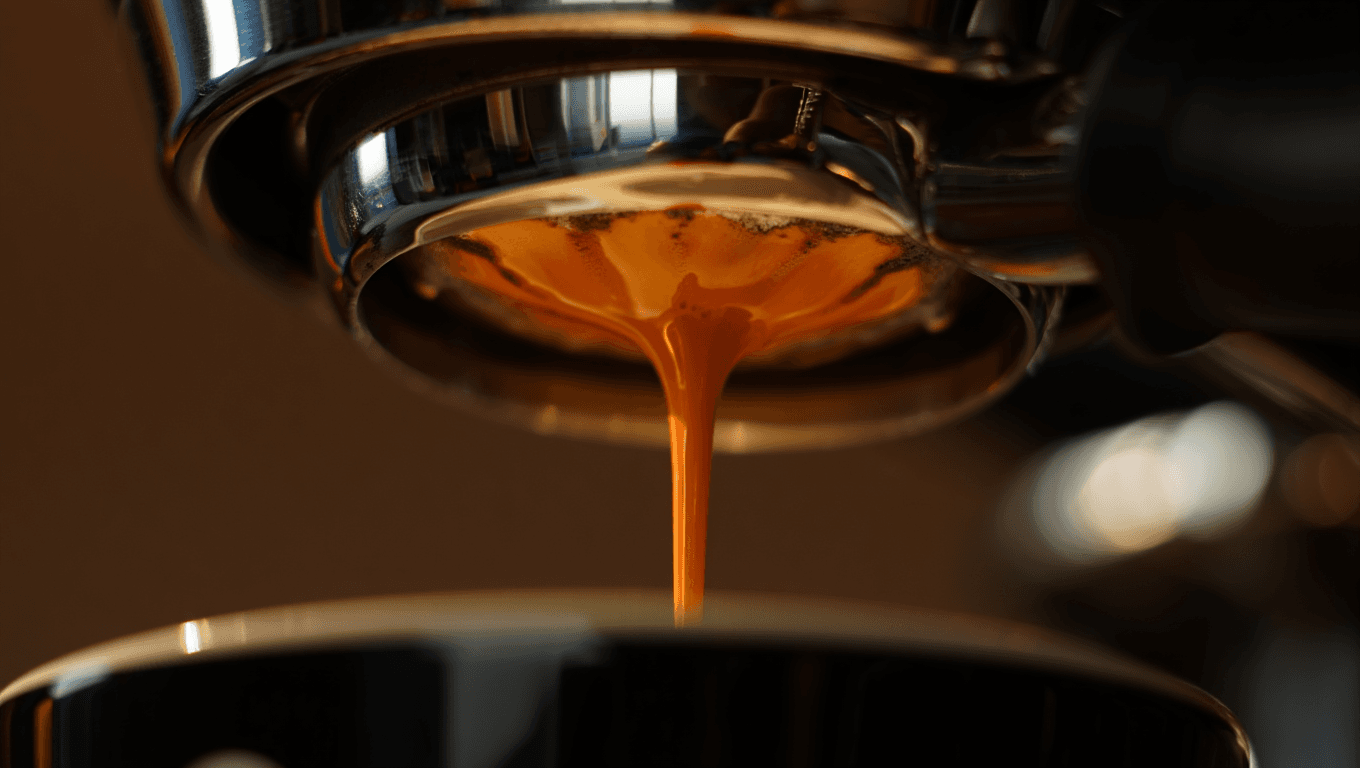
In the world of specialty coffee, the "naked" or bottomless portafilter is often viewed as a badge of honor for seasoned baristas. But for those pursuing the perfect cup of South Indian filter coffee, it represents something much more significant: total transparency. Unlike a traditional spouted portafilter that hides the extraction process, a naked portafilter exposes the underside of the filter basket. This allows you to witness the birth of the decoction in real-time. For enthusiasts using the Coffee S10 Brews signature 80:20 blend, this tool becomes essential for ensuring that the unique characteristics of the handpicked beans and high-quality chicory are being extracted uniformly. When you can see the coffee beads forming and converging into a single, syrupy stream, you are observing the physics of flavor. Without this visual feedback, you are essentially brewing in the dark, guessing why one cup tastes like a premium hotel-style brew while the next feels thin or overly bitter.
How does a bottomless portafilter improve your South Indian filter coffee decoction?
The "decoction" is the heart of South Indian coffee culture. Traditionally, this is achieved through a slow-drip gravity process. However, as modern coffee science merges with traditional craftsmanship, many "prosumer" home brewers are using espresso machines to create a high-pressure version of this concentrated base. A naked portafilter is the best diagnostic tool because it reveals "channeling"—a phenomenon where water finds the path of least resistance through the coffee puck. In a standard filter, you wouldn’t notice if the water was only flowing through one side. With a bottomless tool, you see the gaps immediately. This is particularly vital when brewing a blend like Coffee S10 Brews, where the grind size is meticulously calibrated for consistency. By using a naked portafilter, you can refine your tamping technique to ensure the water interacts evenly with every grain of the 80:20 coffee-chicory mix, resulting in a thicker, more aromatic decoction that carries the soul of South Indian tradition into a modern kitchen.
What can visual cues tell you about extraction and channeling?
When you look at the bottom of a naked portafilter during a pull, you are looking at a map of your brewing technique. If you see multiple streams spraying in different directions, that is a clear sign of uneven distribution. If you see "blonding" (the stream turning light and watery) too early, it means you’ve over-extracted the bitter compounds. For a high-intent coffee consumer, these visual cues are the difference between a mediocre cup and a masterpiece. Coffee S10 Brews emphasizes "Brewing Intelligence," which means understanding that the crema—the golden-brown foam on top—should be rich and persistent. A naked portafilter shows you the quality of this crema as it develops. A healthy extraction will show a tiger-stripe pattern, indicating that the fats and oils from the premium beans are emulsifying perfectly with the soluble solids of the chicory. This visual confirmation ensures that the final cup will have the heavy body and lingering aftertaste that defines authentic South Indian filter coffee.
Why is an 80:20 coffee–chicory blend the gold standard for South Indian filter coffee?
The debate between 100% Arabica and blended coffee is settled in the streets of Chennai and Bangalore: the 80:20 ratio is king. But why? Chicory is not just a "filler"; it is a functional ingredient that enhances the coffee's physical properties. At Coffee S10 Brews, our signature blend uses 80% high-altitude roasted beans and 20% premium chicory. This specific ratio increases the "viscosity" of the decoction. When brewed, chicory releases more soluble solids than coffee alone, which creates a thicker mouthfeel and a darker, more intense color. More importantly, it acts as a natural stabilizer for the milk. When you pour frothed, full-cream milk into an 80:20 decoction, the chicory prevents the coffee flavor from being "drowned out." It provides a woody, earthy counterpoint to the bright acidity of the coffee beans, resulting in a balanced cup that tastes exactly like the legendary coffee served in traditional South Indian households and high-end hotels.
How to use a naked portafilter to diagnose brewing mistakes at home?
To master your morning ritual, you must become your own barista-detective. If your coffee tastes sour, look at the naked portafilter; you might see "dead spots" where no coffee is flowing, meaning the water missed those flavorful grounds entirely. If the coffee tastes burnt, you might see the flow starting too slowly, suggesting your grind is too fine or your tamp is too heavy. Coffee S10 Brews provides consistent grind sizes specifically to mitigate these issues, but the human element—the "ritual"—still matters. A naked portafilter forces you to improve your prep. You’ll learn to use a WDT (Weiss Distribution Technique) tool to break up clumps, ensuring that the 80:20 blend is perfectly level. The reward is a smooth, chocolatey stream that yields a decoction with zero harshness and maximum aroma. This level of precision is how you bridge the gap between "making coffee" and "crafting an experience."
Why does South Indian filter coffee taste stronger than regular drip coffee?
The perceived "strength" of South Indian filter coffee comes from two factors: the concentration of the decoction and the presence of chicory. While a regular drip coffee might have a total dissolved solids (TDS) percentage of 1.2% to 1.5%, a well-made South Indian decoction can climb much higher. It is effectively a "slow-drip espresso." When you use a naked portafilter to analyze this, you see the density of the liquid. The Coffee S10 Brews roasting process focuses on developing the sugars within the bean without charring them, providing a natural sweetness that balances the strength. Unlike instant coffee, which is pre-extracted and dehydrated (losing its volatile aromatic oils), fresh filter coffee contains the full spectrum of the bean's chemical profile. This results in a "stronger" experience not just in terms of caffeine, but in terms of sensory impact—the aroma fills the room, and the flavor coats the palate.
| Feature Traditional Filter Coffee Instant Coffee | ||
| Preparation Method | Slow-drip decoction or high-pressure extraction | Dehydrated coffee crystals dissolved in water |
| Flavor Profile | Complex, nutty, earthy, with chocolate notes | One-dimensional, often bitter or acidic |
| Body & Texture | Heavy, syrupy, and lingering | Thin and watery |
| Aroma | Potent, fresh-roasted fragrance | Minimal, quickly dissipates |
| Customization | High (adjust grind, tamp, and ratio) | Low (fixed flavor) |
How does grind size consistency affect the performance of your portafilter?
Consistency is the enemy of mediocrity. If your coffee grounds vary in size, the water will rush through the large chunks (under-extracting) and get stuck behind the fine dust (over-extracting). This results in a "muddled" flavor. Coffee S10 Brews prides itself on precision grinding. When you use our 80:20 blend in a naked portafilter, you will notice the stream is uniform. There are no sudden bursts or "spurts" caused by air pockets or uneven particles. A consistent grind ensures that the chicory and coffee are distributed equally throughout the puck. Since chicory is more water-soluble than coffee, a precise grind is even more critical to prevent the chicory from extracting too fast and making the brew "muddy." Achieving this balance is what we call "Modern Accessibility"—taking the guesswork out of the grind so you can focus on the joy of the brew.
What is the role of chicory in creating the perfect crema and body?
While crema is traditionally an espresso term, the "froth" on top of a Davara-Tumbler of South Indian coffee is its cultural equivalent. Chicory plays a massive role in this. Chemically, chicory contains inulin and other polysaccharides that increase the surface tension of the liquid. When the decoction is pulled through a naked portafilter (or dripped through a traditional filter), these compounds help trap carbon dioxide bubbles more effectively than pure coffee. This results in a thicker "head" of foam when the coffee is "pulled" (stretched) between the tumbler and the davara. Coffee S10 Brews uses a premium grade of chicory that avoids the harsh, medicinal aftertaste found in cheaper brands. Instead, it contributes to a velvety body that feels luxurious on the tongue, making every sip feel like a premium indulgence.
| Attribute 100% Pure Coffee Blend 80:20 Coffee-Chicory Blend | ||
| Mouthfeel | Lighter, tea-like (unless dark roast) | Thick, heavy, and syrupy |
| Color of Decoction | Translucent reddish-brown | Deep, opaque ink-black |
| Milk Interaction | Can be easily overwhelmed by milk | Cuts through milk for a bold flavor |
| Bitterness | Depends on bean origin | Controlled, earthy bitterness (mellowed by milk) |
| Traditional Authenticity | Modern/Western style | Authentic South Indian Heritage |
Comparing extraction methods: Traditional filter vs. modern espresso diagnostics.
The traditional stainless steel South Indian filter relies on gravity. It is a slow, meditative process that takes 15 to 20 minutes to produce a thick decoction. On the other hand, using a naked portafilter on an espresso machine produces a similar concentration in 30 seconds. Which is better? The traditional filter offers a "softer" extraction, often highlighting the sweeter notes of the Coffee S10 Brews beans. The espresso method, guided by the visual diagnostics of the bottomless portafilter, produces a more intense, emulsified version of the decoction. Both methods benefit from the same core principles: fresh water, the right temperature (around 92°C to 96°C), and a high-quality blend. At Coffee S10 Brews, we believe the "best" method is the one that fits your lifestyle, which is why we provide resources to master both. Whether you are waiting for the drip or watching the portafilter, the goal is the same: an uncompromising cup of coffee.
Why "hotel-style" coffee is so hard to replicate at home (and how to fix it).
Many consumers ask, "Why doesn’t my filter coffee taste like the one in a high-end Chennai hotel?" The answer usually lies in two things: the decoction-to-milk ratio and the freshness of the blend. Hotels use large-scale traditional filters that maintain a constant heat, and they often use a specific 80:20 blend that is roasted in small batches to ensure the oils haven't gone rancid. Most importantly, they use high-fat, unhomogenized milk. To replicate this at home, you need a blend like Coffee S10 Brews that mimics that professional flavor profile. Using a naked portafilter helps you ensure your "home-brew" decoction is just as concentrated as a commercial one. By diagnosing and fixing your extraction, you eliminate the watery "home-made" taste and replace it with the bold, creamy, and aromatic profile of a professional establishment.
| Factor Typical Home Brew (Common Brands) Hotel-Style (Coffee S10 Brews) | ||
| Coffee Quality | Mass-produced, stale shelf life | Handpicked, small-batch roasted |
| Chicory Grade | Low-grade, overly bitter | Premium, fragrant chicory |
| Decoction Strength | Often thin or diluted | Thick, concentrated, and potent |
| Milk Quality | Toned or low-fat milk | Full-cream, frothy milk |
| Technique | Estimated measurements | Measured, diagnostic-led brewing |
The sensory journey: Aroma, Body, Crema, and Aftertaste.
Authentic coffee is a multi-sensory experience. It begins with the aroma—the "first taste." When you open a bag of Coffee S10 Brews, you should be hit with notes of roasted nuts and dark chocolate. During brewing, if you are using a naked portafilter, you will see the crema forming; this is the reservoir of aroma. Next is the body—how the coffee feels. A great South Indian coffee should feel heavy, almost like melted chocolate. This is the "cure" for the "pain" of thin, instant coffee. Finally, the aftertaste. A superior 80:20 blend should not leave a metallic or sour taste. Instead, it should leave a pleasant, lingering sweetness. By using diagnostic tools and premium ingredients, you aren't just making a drink; you are participating in a centuries-old craft that has been refined for the modern palate.
Is chicory bad or necessary for your health and taste?
There is a common misconception that chicory is an "adulterant." In reality, chicory (derived from the root of the Cichorium intybus plant) has been used for centuries and offers several benefits. It is caffeine-free, meaning it slightly reduces the overall caffeine content of your cup, making it easier on the stomach for those sensitive to jitters. It also contains inulin, a prebiotic fiber that supports gut health. From a taste perspective, it is absolutely necessary for the authentic South Indian experience. Without it, the coffee lacks the "grip" and "earthiness" required to stand up to the sweetness of the milk and sugar. Coffee S10 Brews ensures that our chicory is processed with the same care as our coffee beans, ensuring it adds value to your health and your taste buds without any of the downsides of industrial-grade fillers.
Frequently Asked Questions about South Indian Filter Coffee
1. Why is my filter coffee decoction too thin?
This is usually caused by a grind that is too coarse or water that isn't hot enough. If you are using an espresso machine with a naked portafilter, you will see the water rushing through too quickly. Try a finer grind or a firmer tamp. Coffee S10 Brews offers a pre-ground 80:20 blend that is specifically calibrated to prevent this issue.
2. Can I use a naked portafilter with a regular South Indian filter?
A "naked portafilter" is specifically an espresso machine tool. However, the concept of visual diagnosis applies to the traditional filter too. You should check the "spent" coffee grounds (the puck) after brewing. If they are unevenly wet, you have channeling. For a true visual diagnostic experience at high pressure, an espresso machine with a bottomless portafilter is required.
3. What is the best ratio of decoction to milk?
For an authentic taste, use 1 part Coffee S10 Brews decoction to 2 parts frothed, full-cream milk. Add sugar to taste—traditionally, South Indian coffee is enjoyed slightly sweet to complement the earthy notes of the chicory.
4. How do I store my coffee powder to keep it fresh?
Coffee’s greatest enemies are oxygen, light, and moisture. Store your Coffee S10 Brews powder in an airtight container in a cool, dark place. Do not refrigerate it, as the moisture can ruin the delicate oils and the chicory can clump.
5. Is 80:20 better than 70:30?
The 80:20 ratio is generally considered the "perfect balance." A 70:30 ratio can sometimes become too "woody" or heavy, masking the floral and fruity notes of the high-quality coffee beans. The 80:20 blend provides the body of chicory while allowing the premium coffee craftsmanship to shine through.
6. Why does my coffee taste bitter?
Bitterness is often a sign of over-extraction. This happens if the water is boiling (too hot) or if the water stays in contact with the grounds for too long. If you're using a naked portafilter, look for "blonding"—if the stream turns very pale, stop the extraction immediately.
7. How can I get more froth in my coffee?
The secret to the "hotel-style" froth is the "pull." Pour the coffee and milk mixture back and forth between a Davara and a Tumbler from a height. This aerates the milk and the chicory-rich decoction, creating a stable, bubbly foam that holds its shape.
Mastering the art of South Indian filter coffee is a journey that combines tradition with technical precision. By using tools like the naked portafilter to diagnose your brew and starting with a premium foundation like the Coffee S10 Brews 80:20 blend, you can transform your daily caffeine fix into a soulful ritual. Explore our range of handpicked blends and brewing guides to bring the authentic taste of South India into your home.