Why "Peaberries" Roast Differently: The Science of the Single Seed
Unlock the mystery of peaberries! Understand the science behind their unique roast profile & how it perfects your authentic South Indian filter coffee from Coffee S10 Brews.
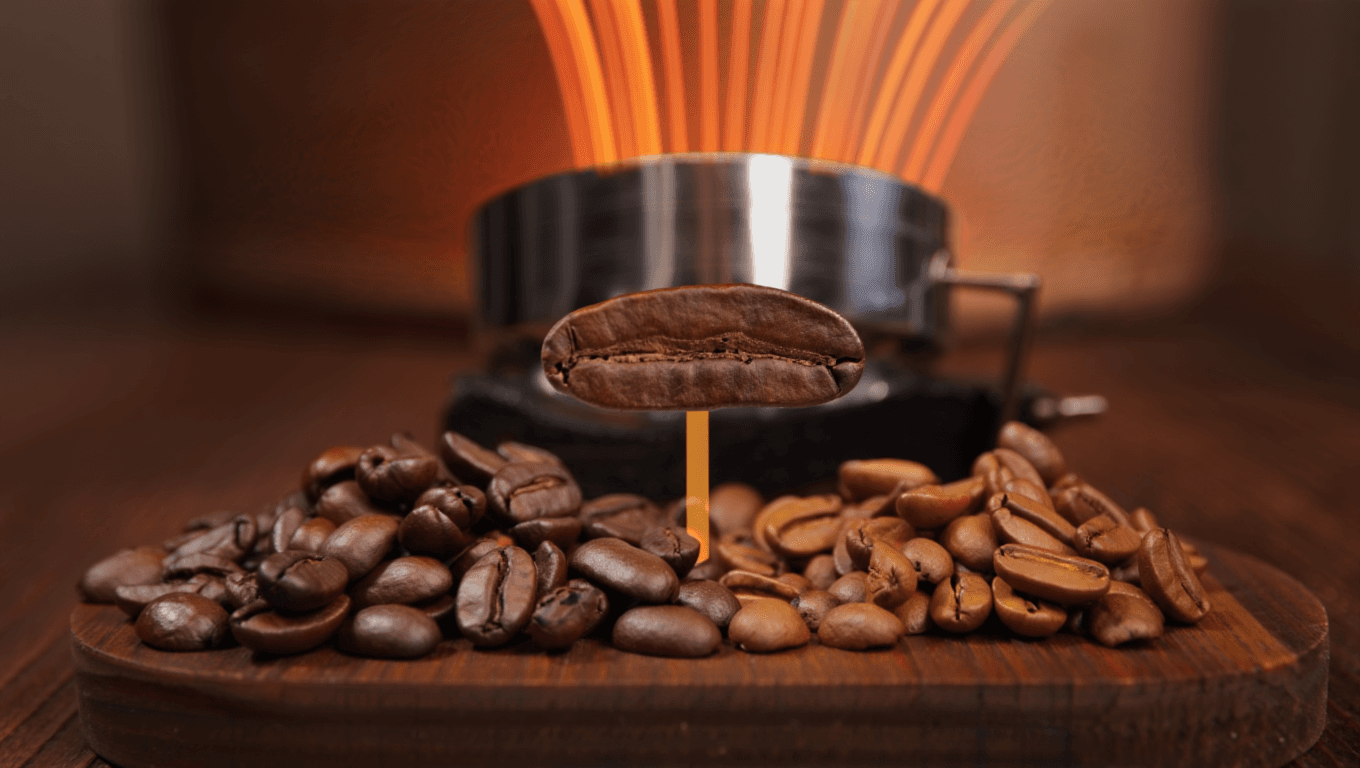
What is a Peaberry Coffee Bean and Why is it Considered a Rare Selection?
In the vast landscapes of the Western Ghats, where the misty hills of Chikmagalur and Coorg produce some of the world’s finest beans, a botanical anomaly occurs that defines the "champagne" of Indian coffee: the peaberry. Typically, a coffee cherry develops two seeds that press against each other, creating the familiar flat-sided coffee bean. However, in roughly 5% of any given harvest, only one ovule is fertilized. This single seed grows without resistance, taking on a dense, rounded, pea-like shape. This is the peaberry, known in botanical circles as "caracol" or "snail" beans.
For high-intent coffee consumers seeking the best South Indian filter coffee powder, the peaberry is not just a mutation; it is a concentration of flavor. Because the plant directs all its nutrients and sugars into a single seed rather than two, the peaberry often possesses a higher density and a more complex acid profile. At Coffee S10 Brews, we recognize that the rarity of the peaberry demands a specialized approach. While commercial brands often mass-process these with standard beans, authentic South Indian craftsmanship requires the careful separation of these "single seeds" to harness their unique chemical composition. This manual sorting process ensures that the inherent sweetness and concentrated oils of the peaberry are preserved, setting the stage for a superior decoction that standard flat beans simply cannot replicate.
Why Does the Physical Anatomy of a Peaberry Change the Roasting Process?
The science of roasting is fundamentally a study of heat transfer. When you roast standard flat-faced beans, the flat surface can sometimes lead to uneven charring or "tipping" if the heat is not perfectly managed. Peaberries, however, are nearly spherical. This shape allows them to roll more fluidly inside the roasting drum, ensuring that heat is distributed via convection and conduction with surgical precision. This physical advantage allows for a more uniform Maillard reaction—the chemical process that turns green coffee into aromatic, browned perfection.
Because peaberries are denser than their flat-faced counterparts, they require a different thermal profile. A roaster must apply heat more intensely at the start to penetrate the dense core without scorching the exterior. Coffee S10 Brews utilizes small-batch roasting cycles specifically calibrated for these single seeds. By controlling the "Rate of Rise" (RoR), we ensure that the internal moisture is evaporated evenly, preventing the bitterness associated with underdeveloped cores. This meticulous attention to roasting intelligence is why our blends offer a consistent, chocolatey profile that serves as the backbone of a traditional South Indian brew. If you’ve ever wondered why your home-brewed coffee lacks the "rounded" taste of professional hotel-style coffee, it often comes down to the lack of peaberry density in your roast.
How Does the Peaberry Seed Impact the Flavor Profile of South Indian Filter Coffee?
The flavor profile of a peaberry is often described as "brighter" and "cleaner" than standard beans. In the context of South Indian coffee culture, where the coffee is meant to stand up against hot, frothed milk and sugar, this brightness is essential. The concentrated sugars in the peaberry caramelize during the roast to create notes of dark cocoa and toasted nuts. When brewed through a traditional brass filter, these oils are extracted into a thick, viscous decoction.
High-intent consumers often ask, "Why does South Indian coffee taste stronger?" The answer lies in the combination of bean selection and the extraction method. The peaberry provides the "body"—the physical weight of the coffee on the tongue—while also offering a lingering aftertaste that isn't purely bitter. It provides a nuanced acidity that balances the richness of the milk. At Coffee S10 Brews, our handpicked peaberries are chosen specifically for their ability to maintain these sensory descriptors even after the addition of chicory, ensuring that the final cup remains "coffee-forward" and aromatic.
What is the Science Behind the 80:20 Coffee-Chicory Blend Benefits?
To understand the 80:20 coffee-chicory blend benefits, one must look at the synergy between the peaberry’s acidity and the chicory’s earthy depth. Chicory, derived from the roasted root of the Cichorium intybus plant, does not contain caffeine, but it is rich in inulin and natural fibers. When roasted, it develops a deep, balsamic sweetness and a dark color that enhances the visual appeal of the coffee.
The 80:20 ratio is the "Golden Ratio" of South Indian tradition. The 80% coffee portion, ideally rich in peaberry and premium Arabica/Robusta selections, provides the caffeine, aroma, and complex flavors. The 20% chicory acts as a natural flavor enhancer and a thickener. It increases the "solubility" of the blend, meaning it helps the water extract more solids from the coffee grounds during the slow-drip filtration process. This results in a decoction that is "syrupy" rather than watery. Coffee S10 Brews masterfully balances this ratio to ensure the chicory supports the peaberry’s profile without overpowering it, providing that signature "hotel-style" thickness that is impossible to achieve with 100% coffee or instant alternatives.
How to Brew Authentic Filter Coffee at Home Using Peaberry Blends?
Brewing the perfect cup is a ritual that requires patience and the right equipment. To master the South Indian filter coffee ritual, you must first understand the "gravity drip" method. Unlike an espresso machine that uses pressure, or a French press that uses immersion, the South Indian filter uses time and gravity. This slow extraction is necessary to pull the heavy oils and concentrated flavors from a dense peaberry grind.
Start with a high-quality stainless steel or brass filter. Add 2-3 tablespoons of Coffee S10 Brews 80:20 blend to the upper compartment. Press the powder down gently with the plunger—not too hard, or the water won't pass through, and not too light, or the decoction will be thin. Pour freshly boiled (but not bubbling) water over the plunger and let it sit for 15 to 20 minutes. The resulting "first decoction" is the heart of your coffee. Explore brewing guides from Coffee S10 Brews to learn how to adjust your water temperature and tamp pressure to achieve a crema-like froth on your final cup.
Why is Chicory Used in South Indian Coffee, and is it Necessary?
The use of chicory in South Indian coffee is often misunderstood as a "filler" or a way to reduce costs. However, in the world of premium Indian coffee, chicory is a functional ingredient. The question of "why chicory is used in South Indian coffee" boils down to the science of the decoction. Pure coffee decoction can sometimes be too thin to withstand the traditional 1:2 ratio of coffee to milk used in South India. Chicory adds "viscosity"—a thickness that allows the coffee flavor to coat the palate even when diluted with heavy milk.
Furthermore, chicory has a higher extraction rate than coffee. While coffee provides the top notes and aroma, chicory provides the "bass notes"—the deep, dark, lingering flavors. For someone accustomed to the "boldness" of Madras Filter Coffee, a cup without chicory often feels incomplete or "weak." Coffee S10 Brews uses only high-grade Jamnagar chicory, ensuring that the earthy notes are clean and chocolatey, rather than woody or medicinal. Try an 80:20 blend to experience traditional depth and see how the chicory elevates the peaberry's natural characteristics.
Comparison: Understanding the Texture and Performance of Coffee Blends
To help you choose the right experience for your morning ritual, we have compared the most common coffee types found in Indian households.
| Feature Instant Coffee 100% Pure Filter Coffee 80:20 Peaberry-Chicory Blend | |||
| Processing | Dehydrated coffee extract | Ground roasted beans | Small-batch roasted beans + chicory |
| Texture/Body | Thin and watery | Medium and aromatic | Heavy, syrupy, and viscous |
| Preparation Time | 30 seconds | 15-20 minutes | 15-20 minutes (Traditional Drip) |
| Flavor Profile | One-dimensional; bitter | Acidic, fruity, or nutty | Bold, chocolatey, and balanced |
| Best Consumed As | Quick caffeine fix | Black coffee or light milk | Traditional South Indian Milk Coffee |
Why Does My Filter Coffee Not Taste Like Hotel Coffee?
This is the most frequent pain point for home brewers. "Hotel coffee" or "Degree Coffee" has a specific punch and creaminess that is often missing at home. There are three main reasons for this: the grind size, the bean density, and the milk quality. Most commercial "supermarket" coffee is ground too coarsely or uses low-grade Robusta beans that provide bitterness without body. Hotels typically use a blend rich in peaberry because of its ability to produce a "strong" decoction without the harshness of burnt seeds.
The second secret is the freshness. Coffee begins to oxidize and lose its volatile aromatic compounds within minutes of being ground. Coffee S10 Brews solves this by maintaining a strictly controlled roasting and grinding schedule, ensuring that the powder you receive is as fresh as a professional kitchen’s supply. Finally, the "froth" is essential. The "meters" of pouring back and forth between the dabara and tumbler isn't just for show—it aerates the milk and coffee, creating a micro-foam that enhances the sensory experience. Discover how grind size impacts decoction strength by experimenting with our specialized "fine-medium" grind designed specifically for traditional filters.
The Difference Between Commercial Flat Beans and Premium Peaberries
When searching for the best South Indian filter coffee powder, understanding the "input" is vital. Not all beans are created equal, and the way they are harvested dictates the final quality in your cup.
| Metric Commercial Flat Beans Premium Peaberry Seeds | ||
| Seed Development | Two seeds per cherry (Standard) | Single seed per cherry (Mutation) |
| Flavor Concentration | Standardized | Higher sugar and acid concentration |
| Roast Consistency | Variable due to flat edges | Highly consistent due to round shape |
| Mouthfeel | Light to Medium | Full-bodied and heavy |
| Rarity | 95% of Global Harvest | ~5% of Global Harvest |
How Coffee S10 Brews Bridges Tradition with Modern Quality Control
At Coffee S10 Brews, we believe that tradition should not be an excuse for inconsistency. While we honor the age-old methods of South Indian coffee craftsmanship, we apply modern roasting intelligence to every batch. This means using data-driven roasting profiles to ensure that the peaberries reach their "first crack" at the exact second required for peak flavor. It means testing every batch for moisture content and grind consistency so that your 20-minute brewing ritual never results in a "fail."
We position ourselves as more than just a brand; we are a guide for the modern consumer who wants to reclaim their heritage. By providing clear instructions and educational resources, we make the "complex" art of filter coffee accessible to anyone with a kitchen. Whether you are a seasoned coffee aficionado or a curious beginner, our 80:20 signature blend offers a reliable, premium experience that honors the science of the single seed.
Frequently Asked Questions About South Indian Filter Coffee
Is peaberry coffee stronger than regular coffee?
In terms of caffeine content, peaberries are similar to regular beans. However, in terms of flavor intensity and body, they are perceived as "stronger" because they produce a more concentrated decoction with more oils and sugars.
What is the best coffee to chicory ratio for filter coffee?
While personal preference varies, the 80:20 coffee-chicory blend is widely considered the gold standard for South Indian filter coffee. It provides the perfect balance of aroma and thickness. Some prefer 70:30 for an even bolder, darker cup, but 80:20 preserves more of the bean's natural character.
Why is my filter coffee decoction watery?
A watery decoction usually results from three things: a grind that is too coarse, water that is not hot enough, or not tamping the powder down sufficiently in the filter. Ensure you are using a fine-medium grind specifically meant for South Indian filters.
Can I use a French Press to make South Indian filter coffee?
While you can use a French Press, the result will be different. A French Press uses immersion, which produces a different texture. The traditional drip filter uses gravity and a much finer grind, which is essential for that syrupy "hotel-style" decoction.
Is chicory bad for health?
No, chicory is a natural root that has been used for centuries. It is caffeine-free and contains inulin, a type of prebiotic fiber that can support digestive health. In coffee blends, it is used for its flavor and structural properties.
How should I store my filter coffee powder to keep it fresh?
Coffee’s greatest enemies are air, light, and moisture. Store your Coffee S10 Brews powder in an airtight container in a cool, dark place. Avoid storing it in the refrigerator as it can absorb odors and moisture.
Experience the Craftsmanship of Coffee S10 Brews
The journey from a single peaberry seed in the Western Ghats to the frothy tumbler in your hand is one of science, tradition, and passion. Don't settle for the thin, uninspired taste of instant coffee or the inconsistency of mass-market brands. Embrace the ritual of the South Indian filter and the superior science of the peaberry roast. Explore the signature 80:20 blends and professional brewing guides at Coffee S10 Brews today, and transform your daily caffeine habit into a celebration of Indian coffee culture.