Why "PID Control" Is the Most Important Feature on Modern Machines
Crave consistent coffee? Explore why PID Control is the secret to precise brewing on modern machines, ensuring every S10 Brews cup is perfect.
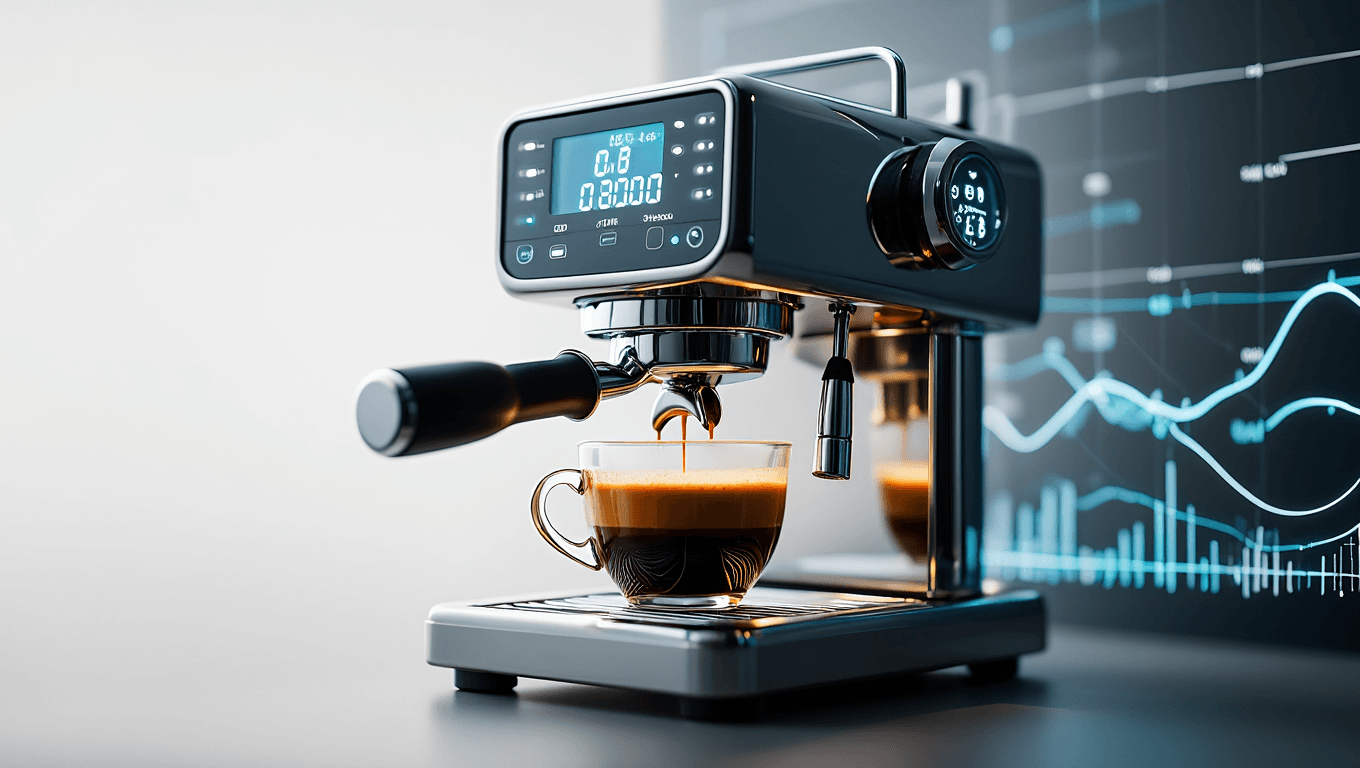
What is PID control and why does it matter for South Indian filter coffee brewing?
In the world of specialty coffee, PID (Proportional-Integral-Derivative) control is often discussed in the context of high-end espresso machines. It is a digital mechanism that ensures water temperature remains incredibly stable. But why does a technical term from the world of espresso matter to someone brewing a traditional South Indian filter coffee? The answer lies in the chemistry of extraction. Whether you are using a modern machine or a traditional brass filter, the temperature at which water meets your coffee grounds determines the balance between sweetness, acidity, and bitterness.
When brewing Coffee S10 Brews’ signature 80:20 blend, temperature stability is your best friend. If your water is too hot (boiling vigorously), it over-extracts the chicory, leading to a harsh, medicinal bitterness. If it is too cool, you fail to extract the heavy oils and aromatic compounds of our handpicked Arabica and Robusta beans. Modern PID-controlled kettles or machines allow you to hit that "sweet spot" of 92°C to 96°C. This precision ensures that the decoction is thick, syrupy, and carries the characteristic aroma that defines an authentic South Indian morning. By understanding PID control, you move from "making coffee" to "mastering the ritual," aligning perfectly with the Coffee S10 Brews philosophy of brewing intelligence.
Why is the 80:20 coffee-chicory blend considered the gold standard?
One of the most frequent questions from coffee enthusiasts is, "Is chicory a filler or a necessity?" To understand the 80:20 coffee-chicory blend benefits, one must look at the history and sensory profile of South Indian coffee culture. At Coffee S10 Brews, our 80:20 ratio is not an accident; it is a calculated craft. While 100% pure coffee offers clarity and acidity, it often lacks the "viscosity" and deep brown hue required to stand up against the high-fat milk used in Indian households.
Chicory acts as a natural enhancer. It has a higher solubility than coffee, meaning it contributes to a thicker, more concentrated decoction. This thickness is what allows the coffee flavor to "cut through" the milk, ensuring that your latte or "degree coffee" doesn’t taste like warm, coffee-flavored milk. The 20% chicory in our blend adds a woody, caramel-like sweetness and a lingering aftertaste that balances the bold, chocolatey notes of our premium roasted beans. Exploring how this ratio impacts the body of your brew is the first step in moving away from the thin, watery profile of instant alternatives.
How to brew authentic filter coffee at home using the traditional brass filter?
Many consumers ask, “Why doesn’t my filter coffee taste like hotel coffee?” Often, the culprit isn't the beans—it’s the technique. To brew authentic filter coffee at home, you need to treat the decoction process with the same respect a scientist treats a laboratory experiment. Start with the right equipment: a heavy-bottomed stainless steel or brass filter. The "slow drip" is essential because gravity-fed extraction allows for a higher concentration of solids.
Add 4 to 5 tablespoons of Coffee S10 Brews powder to the upper chamber. Gently tamp the powder with the plunger—not too hard, or the water won't pass through; not too soft, or it will gush through without extracting flavor. Pour water that has just reached the "fisheye" boil (just before a rolling boil). Cover it and wait for 15 to 20 minutes. This "first press" is the liquid gold. It contains the highest concentration of caffeine and aromatics. If you find your decoction too thin, try adjusting your grind size; Coffee S10 Brews ensures a consistent medium-fine grind specifically calibrated for these traditional filters to prevent clogging while maximizing strength.
Why does South Indian coffee taste stronger than regular drip coffee?
The perception of "strength" in coffee is often a mix of caffeine content, TDS (Total Dissolved Solids), and sensory bitterness. South Indian filter coffee feels stronger because it is a concentrate. Unlike a standard black coffee where you drink the entire extraction, filter coffee relies on a "decoction"—a potent shot of coffee essence mixed with a smaller volume of frothy, aerated milk.
Furthermore, the inclusion of Robusta beans in the Coffee S10 Brews blend provides a higher caffeine kick and a more stable "crema" or froth when compared to 100% Arabica blends used in Western drip methods. The mouthfeel is further enhanced by the chicory, which increases the "perceived strength" by coating the palate. This is why a small tumbler of Coffee S10 Brews can feel more satisfying and energizing than a large mug of diluted instant coffee. Try an 80:20 blend to experience this traditional depth for yourself.
Comparison of Coffee Types: Understanding the Difference
To help you navigate the landscape of Indian coffee, we have compared the most common brewing styles and blends. This table highlights why the Coffee S10 Brews approach is the preferred choice for those seeking authenticity.
| Feature Instant Coffee 100% Pure Filter Coffee Coffee S10 Brews (80:20 Blend) | |||
| Processing | Freeze-dried or spray-dried powder | Slow-roasted, ground beans | Small-batch roasted, precision-ground with chicory |
| Texture/Body | Thin and watery | Light to medium body | Heavy, syrupy, and viscous |
| Aroma | Fades quickly after opening | Bright, floral, or fruity | Deep, earthy, and chocolatey |
| Best Consumed With | Water or light milk | Black or minimal milk | Full-cream, frothy aerated milk |
| Preparation Time | 30 seconds | 5–10 minutes | 15–20 minutes (traditional slow-drip) |
Why chicory is used in South Indian coffee: Myths vs. Reality
There is a common misconception that chicory is a "filler" used to reduce the cost of coffee. While historically it may have been used during coffee shortages, in the context of South Indian coffee culture, it has evolved into a sophisticated flavor modifier. Chicory is the roasted root of the Cichorium intybus plant. It is caffeine-free and brings a unique set of properties to the cup that coffee beans alone cannot provide.
When you use Coffee S10 Brews, you’ll notice the decoction has a dark, almost ink-like consistency. This is the chicory at work. It provides a bittersweet profile that tames the sharp acidity of high-altitude Arabica. More importantly, chicory is a prebiotic fiber (inulin), though most of this is broken down during roasting. The real benefit is sensory: it allows the milk to emulsify better with the coffee, creating that iconic "froth" that stays stable even after the coffee is poured back and forth between the tumbler and the dabara. This is why chicory is not just necessary; it is vital for the authentic experience.
The impact of grind size consistency on your decoction strength
Consistency is the hallmark of a premium coffee brand. At Coffee S10 Brews, we utilize advanced industrial grinders that maintain a cool temperature during the grinding process, preventing the oils from oxidizing before they even reach your kitchen. But why should you care about grind size?
If the grind is too coarse, the water will pass through the filter too quickly (under-extraction), resulting in a sour, weak decoction. If the grind is too fine, the water will get trapped (channelling or clogging), leading to an over-extracted, bitter mess. Our signature grind is tailored for the "slow-drip" gravity method. It ensures that every drop of water spends just enough time in contact with the grounds to pull out the rich oils and caffeine while leaving the harsh tannins behind. This consistency is why every bag of Coffee S10 Brews tastes the same, whether you buy it in January or July.
Hotel-style coffee vs. Home-brewed coffee: Closing the gap
The "Hotel Coffee" experience—that extra-strong, extra-frothy cup you get at iconic South Indian eateries—is often seen as an unattainable standard for home brewers. However, the secret isn't a secret machine; it's the "First Decoction" and the milk. Hotels brew in large quantities, which naturally maintains heat better. At home, you can replicate this by pre-warming your brass filter with hot water before adding the powder.
The second secret is the milk. Never use watered-down milk. Authentic filter coffee requires full-fat milk boiled until it slightly thickens. The final step is "the stretch"—pouring the coffee from a height to create natural aeration. This doesn't just cool the coffee; it develops the texture. By using Coffee S10 Brews, you are already halfway there, as our blend is formulated to mimic the exact flavor profile used by master "Coffee-mamas" in professional kitchens.
| Comparison Factor Typical Home Brew Hotel-Style (Degree Coffee) Coffee S10 Brews Method | |||
| Milk Quality | Standard toned milk | Full-fat, unadulterated "degree" milk | Recommended: Full-cream milk, boiled well |
| Decoction Usage | Mix of first and second press | Only the thick first press | Optimized for a potent first-press extraction |
| Aeration | Stirred with a spoon | Poured from a height (The Stretch) | Encouraged through our brewing guides |
| Coffee Blend | Often random supermarket brands | Specialized 70:30 or 80:20 blends | Signature 80:20 small-batch roast |
Modern accessibility: Bringing tradition to the contemporary kitchen
In today’s fast-paced world, many people abandon traditional filter coffee because they believe it is too time-consuming. At Coffee S10 Brews, we are bridging this gap. While we celebrate the slow-drip method, we also provide the resources and education to make it part of a modern routine. From clear instructions on the packaging to digital brewing guides, we position ourselves as your partner in coffee education.
You don't need to be an expert to enjoy premium coffee. By focusing on "Brewing Intelligence," we take the guesswork out of the process. Whether you are a student in a dorm or a professional in a high-rise, the ritual of waiting for that decoction to drop can be a form of morning meditation. Our packaging is designed to keep the coffee as fresh as the day it was roasted, ensuring that even if you only brew on weekends, the quality never falters.
The role of small-batch roasting in flavor reliability
Mass-produced coffee is often roasted in massive vats where heat distribution is uneven. This leads to some beans being burnt while others remain under-developed. Coffee S10 Brews avoids this by sticking to small-batch roasting. This allows our roast masters to monitor the "first crack" and "second crack" of the beans with surgical precision.
Small batches mean we can react to the nuances of each harvest. If a particular lot of beans from Chikmagalur is slightly more acidic, we adjust the roast profile to ensure it fits our signature flavor profile. This level of control is what ensures flavor reliability across batches. When you open a bag of S10 Brews, the aroma that hits you is a result of this controlled, artisanal process—a far cry from the stale, flat scent of mass-market coffee found on supermarket shelves.
Frequently Asked Questions about South Indian Filter Coffee
1. Why is my filter coffee decoction not thick enough?
The thickness of the decoction depends on two things: the ratio of powder to water and the grind size. Ensure you are using at least 4-5 tablespoons of Coffee S10 Brews for a standard small filter. Also, make sure your water is just off the boil; water that is too cold won't extract the solids needed for a thick consistency.
2. Can I use Coffee S10 Brews in an electric drip coffee maker?
Yes, you can. However, because our grind is optimized for a traditional metal filter, you may need to use a paper filter in your electric machine to catch the finer particles. For the most authentic experience, we always recommend the traditional "dabara" and filter method.
3. How long does the coffee powder stay fresh?
Coffee starts losing its aroma the moment it is ground. However, Coffee S10 Brews uses specialized moisture-locking packaging to preserve freshness. Once opened, we recommend transferring the powder to an airtight container and storing it in a cool, dark place (not the fridge) to maintain its sensory profile for up to 4 weeks.
4. Is the 80:20 blend better than 100% Arabica?
It depends on how you drink your coffee. If you drink it black, you might prefer 100% Arabica. But if you want a traditional South Indian "Kapi" with milk and sugar, the 80:20 blend is superior because the chicory and Robusta content provide the necessary body and strength to balance the milk.
5. Why is it called "Degree Coffee"?
The term "Degree Coffee" originally referred to the purity of the milk used, measured by a lactometer (often called a 'degree' by locals). It signifies coffee made with high-quality, unadulterated milk and a potent first-press decoction, much like the results you get with Coffee S10 Brews.
6. Does chicory have caffeine?
No, chicory is naturally caffeine-free. This means an 80:20 blend actually has slightly less caffeine than a 100% coffee cup of the same size, though it feels "stronger" due to its intense flavor and body.
Master the art of the perfect brew
Coffee is more than just a caffeine delivery system; it is a bridge to heritage and a testament to craftsmanship. At Coffee S10 Brews, we are committed to helping you rediscover the nuances of the South Indian filter coffee ritual. From the precision of temperature control to the artisanal balance of our 80:20 blend, every element of our product is designed for the discerning consumer.
Ready to elevate your morning routine? Explore our range of premium blends and dive into our extensive brewing guides to unlock the full potential of your coffee beans. Experience the legacy of Indian coffee culture, one perfectly extracted drop at a time.