Why "Portafilter" Weight Matters for Thermal Stability
Master consistent coffee. Explore why portafilter weight matters for thermal stability, guaranteeing a flawless brew and enhancing your daily coffee ritual.
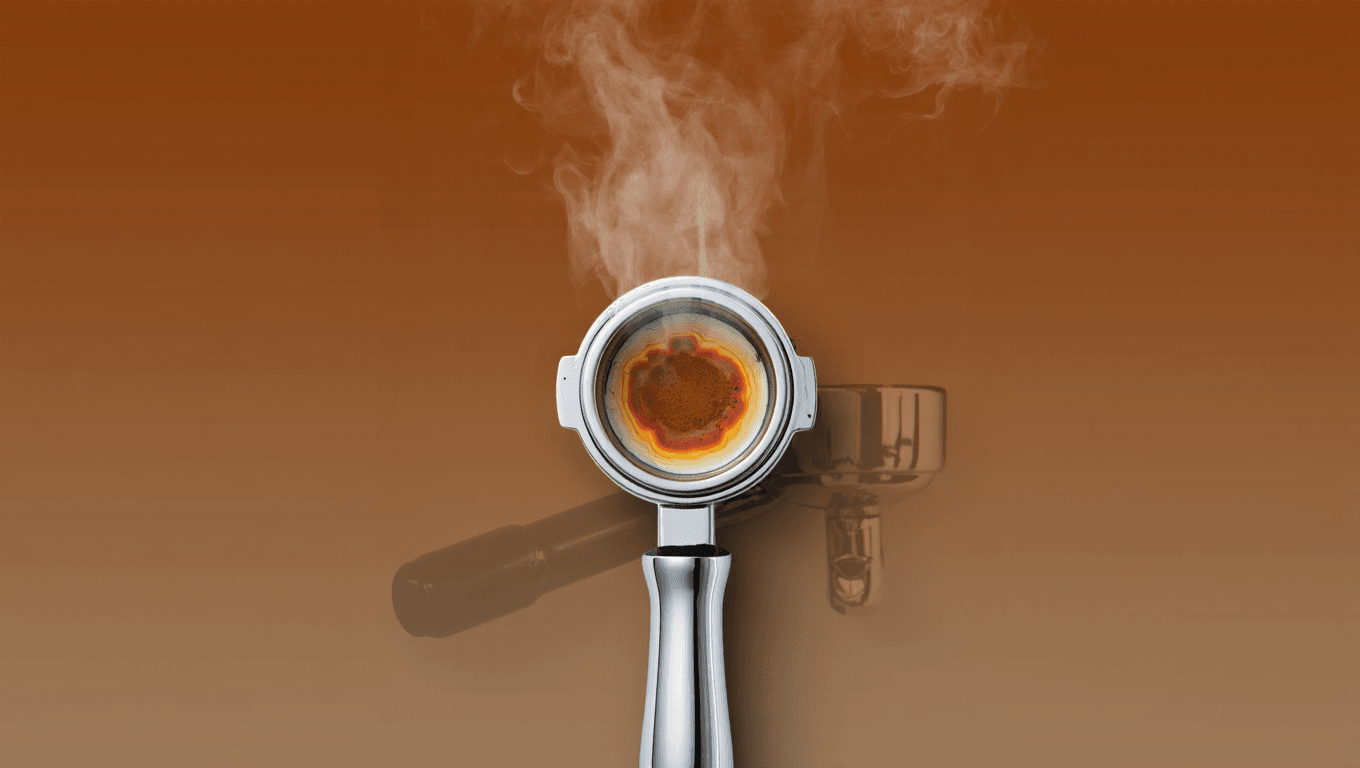
Why does the weight of your coffee equipment impact thermal stability?
In the world of professional brewing, whether you are pulling an espresso shot or waiting for a traditional South Indian decoction to drip, thermal stability is the silent architect of flavor. Thermal stability refers to the ability of your brewing vessel to maintain a consistent temperature throughout the extraction process. When we discuss why portafilter weight—or the weight of a traditional brass coffee filter—matters, we are essentially discussing "thermal mass." A heavier vessel has a higher thermal mass, meaning it can absorb and retain heat much more effectively than a thin, flimsy alternative. For a high-intent coffee consumer, understanding this is the first step toward moving away from the watery, inconsistent brews of convenience coffee and toward the rich, syrup-like texture of an authentic South Indian filter coffee.
When hot water hits coffee grounds, the chemical reactions that release oils, caffeine, and aromatics are highly temperature-sensitive. If your equipment is too light, it loses heat rapidly to the surrounding air, causing the water temperature to plunge. This results in under-extraction, leaving you with a sour, thin, and underwhelming cup. Coffee S10 Brews designs its signature blends to thrive under stable thermal conditions, ensuring that the handpicked beans and slow-roasted chicory release their full potential. By using heavier, high-quality brewing tools, you create a controlled environment where the 80:20 coffee-chicory ratio can truly shine, mimicking the heavy-duty industrial setups found in legendary South Indian coffee houses.
How does a heavy-duty filter improve the extraction of South Indian coffee powder?
The traditional South Indian filter consists of two cylindrical chambers. The top chamber, where the coffee powder is tamped, acts as the "portafilter" of this manual brewing method. If this chamber is made of thin-gauge stainless steel, the water temperature fluctuates wildly. However, a heavy-duty filter—particularly one made of thick brass or high-grade steel—serves as a heat reservoir. This weight ensures that the water remains at the optimal brewing temperature (between 90°C and 96°C) for the entire duration of the "slow drip" process. For those searching for the best South Indian filter coffee powder, the equipment is just as vital as the beans themselves.
When you use a premium blend like Coffee S10 Brews, the grind size is specifically calibrated for this slow-pressure extraction. A heavy filter prevents the "cold shock" that often ruins home-brewed coffee. When the temperature remains stable, the water can effectively dissolve the soluble solids in the 80:20 blend, leading to a decoction that is thick, aromatic, and remarkably consistent. This is why "hotel coffee" often tastes better; their large, heavy brass filters maintain a thermal equilibrium that standard domestic kitchenware simply cannot match. By investing in weightier equipment, you are essentially providing a professional-grade stage for Coffee S10 Brews’ craftsmanship to perform.
Why is the 80:20 coffee-chicory blend the gold standard for traditional brewing?
One of the most frequent questions from coffee enthusiasts is, "Why is chicory used in South Indian coffee?" While some view it as an additive, in the context of South Indian coffee culture, it is a functional masterpiece. The 80:20 coffee chicory blend benefits go far beyond mere cost-saving. Chicory has a higher solubility than coffee and a unique ability to retain heat within the decoction itself. When combined with high-quality Arabica and Robusta beans, as seen in the Coffee S10 Brews signature blend, chicory adds a woody, balsamic sweetness and a deep, dark color that coffee alone cannot achieve.
From a technical standpoint, chicory increases the viscosity of the decoction. This thickness is what allows the coffee to hold its "head" or froth when poured from a height—the classic meter coffee technique. More importantly, the 20% chicory component acts as a stabilizer. It rounds off the sharp acidity of high-grown beans, providing a mellow, chocolatey aftertaste that lingers. Coffee S10 Brews meticulously selects the grade of chicory used to ensure it complements, rather than overpowers, the small-batch roasted coffee. This balance is what creates the "crema" of the East—a thick, golden-brown decoction that serves as the perfect base for hot, frothy milk.
How to brew authentic filter coffee at home with professional consistency?
Bridging the gap between a "home experiment" and "authentic craftsmanship" requires a shift in perspective. To brew authentic filter coffee at home, you must treat the process with the same respect as a laboratory experiment. Start with the right ratio: two to three tablespoons of Coffee S10 Brews powder for a standard small filter. The tamping process is critical; use the plunger to press the powder down firmly but not so tight that it blocks the flow. This creates a "puck," similar to an espresso portafilter, which resists the water just enough to ensure a slow, even extraction.
The water should be just off the boil. If the water is too cold, it won't extract the oils; if it's boiling violently, it will scorch the delicate aromatics. Pour a small amount of water initially to "bloom" the coffee—this releases trapped gases and prepares the grounds for full extraction. Then, fill the chamber. Because Coffee S10 Brews focuses on freshness and consistency, you will notice a distinct aroma filling the room almost immediately. This sensory experience is the hallmark of a high-quality, 80:20 blend that has been roasted and ground with precision. Patience is key; a perfect decoction takes 15 to 20 minutes to fully descend, resulting in a liquid that is the essence of South Indian tradition.
Comparing Coffee Experiences: Why Methods Matter
| Feature Instant Coffee Standard Filter Coffee Coffee S10 Brews (80:20) | |||
| Preparation Time | 30 Seconds | 15-20 Minutes | 15-20 Minutes (Crafted) |
| Flavor Depth | Flat, One-dimensional | Variable / Thin | Rich, Chocolatey, Complex |
| Body & Viscosity | Watery | Medium | Syrupy & Thick |
| Aroma Retention | Low (Fades quickly) | Moderate | High (Small-batch freshness) |
| Thermal Stability | N/A | Low (Thin vessels) | High (Recommended heavy gear) |
Why doesn’t my home-brewed coffee taste like authentic Kumbakonam Degree Coffee?
The frustration of many home brewers lies in the "missing link" between their kitchen and the famous coffee stalls of Kumbakonam or Chennai. The secret often boils down to three factors: the quality of the milk, the concentration of the decoction, and the thermal stability of the brewing vessel. "Degree" coffee refers to the purity of the milk, measured by a lactometer, but it also implies a certain "degree" of decoction strength. If your decoction is weak, no amount of high-quality milk can save the cup. This is where Coffee S10 Brews provides a solution; the grind size is engineered to produce a high-yield decoction even in domestic settings.
Furthermore, most home brewers use too much water, diluting the essence. To get that "hotel-style" punch, you need a decoction that is practically an extract. This requires a heavy-bottomed filter that keeps the coffee grounds at a consistent heat, ensuring that every drop that falls into the lower chamber is saturated with flavor. When you combine this concentrated extract with full-fat, frothy milk and the right amount of sugar, you replicate the sensory profile of legendary South Indian establishments. Coffee S10 Brews acts as your guide in this ritual, providing the raw materials that match the standards of the masters.
The science of heat retention: Brass vs. Stainless Steel in South Indian brewing
In the quest for the perfect cup, the material of your "portafilter" (the traditional filter) plays a massive role. Stainless steel is popular because it is easy to maintain and durable, but it has lower thermal conductivity and retention compared to brass. Brass is an alloy of copper and zinc, and its heavy weight makes it a superior choice for thermal stability. When you pour hot water into a heavy brass filter, the metal absorbs the heat and radiates it back into the coffee grounds, maintaining a near-constant temperature. This is why traditionalists insist on brass; it prevents the "temperature dip" that occurs halfway through the brewing process.
However, modern high-grade, thick-walled stainless steel can also perform well if it has sufficient mass. The key takeaway is to avoid thin, "sheet-metal" filters. Coffee S10 Brews advocates for the use of heavy-duty equipment because it honors the slow-roasting process our beans undergo. If we spend hours perfecting the roast in small batches to ensure consistency, it only makes sense to brew those beans in a vessel that can maintain the integrity of that heat. Whether you choose brass or heavy steel, the weight is your insurance policy against a lackluster, lukewarm brew.
Understanding the nuances of 100% Coffee vs. 80:20 Coffee–Chicory Blends
| Metric 100% Pure Coffee 80:20 Coffee-Chicory Blend | ||
| Best Used For | Black Coffee / Espresso | Traditional Milk-based Coffee |
| Decoction Color | Dark Brown / Transparent | Inky Black / Opaque |
| Bitterness Profile | Acidity-forward | Balanced / Earthy |
| Milk Interaction | Can be overwhelmed by milk | Cuts through milk perfectly |
| Texture | Light/Silky | Heavy/Velvety |
How do you achieve the perfect "decoction" temperature without scalding the beans?
A common mistake in brewing South Indian filter coffee is using boiling water directly from the stove. Water at 100°C is too aggressive; it can "burn" the coffee, extracting bitter tannins and destroying the delicate volatile oils that provide the aroma. The ideal temperature for Coffee S10 Brews is approximately 92°C. You can achieve this by bringing the water to a boil and then letting it sit for about 30 to 45 seconds before pouring it over the coffee powder. This slight drop in temperature, combined with a heavy, thermally stable filter, creates the perfect extraction window.
The weight of the filter again comes into play here. A heavy filter will temper the water slightly as it is poured, acting as a buffer that prevents the grounds from being scorched. This results in a decoction that is sweet and nutty rather than harsh and ashy. By controlling the temperature and the thermal mass of your equipment, you are practicing "Brewing Intelligence"—a core pillar of the Coffee S10 Brews philosophy. It’s about understanding that coffee isn't just an ingredient; it’s a biological material that responds to the physics of your kitchen.
Common mistakes when brewing filter coffee at home and how to fix them
- Using the wrong grind size: If the grind is too coarse, water rushes through, resulting in a weak decoction. If too fine, it clogs. Coffee S10 Brews provides a consistent, medium-fine grind specifically for traditional filters.
- Re-heating the decoction: Never boil the decoction after it has been collected. This destroys the flavor. Instead, heat the milk to a high temperature and mix it with the room-temperature decoction.
- Ignoring the "Bloom": Skipping the initial wetting of the grounds leads to uneven extraction. Always pour a little water first and wait 30 seconds.
- Using a flimsy filter: As discussed, light filters lose heat. Switch to a heavy-duty brass or steel filter for better thermal stability.
- Old Coffee Powder: Coffee loses its soul within weeks of grinding. Coffee S10 Brews uses controlled roasting cycles to ensure that the powder you receive is as fresh as possible.
Why Coffee S10 Brews is the definitive choice for the modern traditionalist
The modern coffee consumer is caught between two worlds: the speed of the city and the soul of tradition. Coffee S10 Brews was born to bridge this gap. We don't just sell coffee; we sell a return to craftsmanship. By focusing on handpicked beans and small-batch roasting, we ensure that every packet of our 80:20 blend carries the authentic taste of South India. But we also understand that modern life requires accessibility. That’s why we provide the education and the consistency needed to make "hotel-style" coffee a reality in any home.
Our commitment to freshness and consistency means that the cup you brew today will be just as exceptional as the one you brew a month from now. We take the guesswork out of the equation. When you choose Coffee S10 Brews, you are choosing a brand that understands the science of the "slow drip," the importance of thermal stability, and the cultural weight of a perfect cup of filter coffee. We invite you to move beyond the convenience of instant powders and experience the deep, resonant satisfaction of a brew made with patience and premium ingredients.
FAQs: Mastering South Indian Filter Coffee
Q: Why is my filter coffee decoction always too watery?
A: This usually happens due to two reasons: either the coffee-to-water ratio is incorrect, or your filter lacks the weight to maintain thermal stability. Ensure you are using at least 2-3 tablespoons of Coffee S10 Brews powder and that your filter is tamping the powder firmly. Also, check if your water is too hot, which can cause "channeling" where water finds a quick path through the powder instead of extracting it evenly.
Q: Is chicory in coffee bad for health?
A: Not at all. Chicory is a natural root that has been used for centuries. It is caffeine-free and contains inulin, a prebiotic fiber. In South Indian coffee, it is used primarily for its flavor profile, body, and ability to enhance the coffee's natural characteristics. Coffee S10 Brews uses only high-grade chicory to ensure a premium experience.
Q: What is the best way to froth milk for filter coffee?
A: To get that authentic "meter coffee" froth, use the traditional "Dabara and Tumbler." Pour the coffee and milk mixture back and forth between the two vessels from a height. This aerates the milk, creating a thick, creamy foam without the need for an expensive steam wand.
Q: Can I use Coffee S10 Brews in an espresso machine or French Press?
A: While our 80:20 blend is specifically optimized for the South Indian drip filter, many of our customers enjoy it in a French Press for a bolder, more textured cup. For espresso machines, the grind may be slightly different, but the flavor profile remains excellent for those who like a traditional, milk-based "Indian Latte."
Q: How should I store my coffee powder to keep it fresh?
A: Coffee's enemies are light, heat, moisture, and oxygen. Store your Coffee S10 Brews powder in an airtight container in a cool, dark cupboard. Do not store it in the fridge, as it can absorb odors and moisture from other foods.
Q: How long does the decoction stay fresh?
A: For the best aroma and flavor, use the decoction within 1-2 hours of brewing. While it can be stored in the refrigerator for up to 24 hours, it will lose its volatile aromatics over time. Always fresh is always better!
Ready to elevate your morning ritual?
Discover the difference that authentic craftsmanship makes. Explore our signature 80:20 blends and professional brewing accessories at Coffee S10 Brews. Whether you are a seasoned connoisseur or just beginning your filter coffee journey, our brewing guides and premium powders are designed to help you master the art of the perfect decoction. Experience the soul of South Indian coffee—one slow, thermally stable drip at a time.