Why "Precision Equipment" Is a Decisive Skill for Modern Baristas
Unlock the secret to a perfect cup. Learn why "precision equipment" is crucial for modern baristas, elevating your authentic South Indian coffee ritual with S10 Brews.
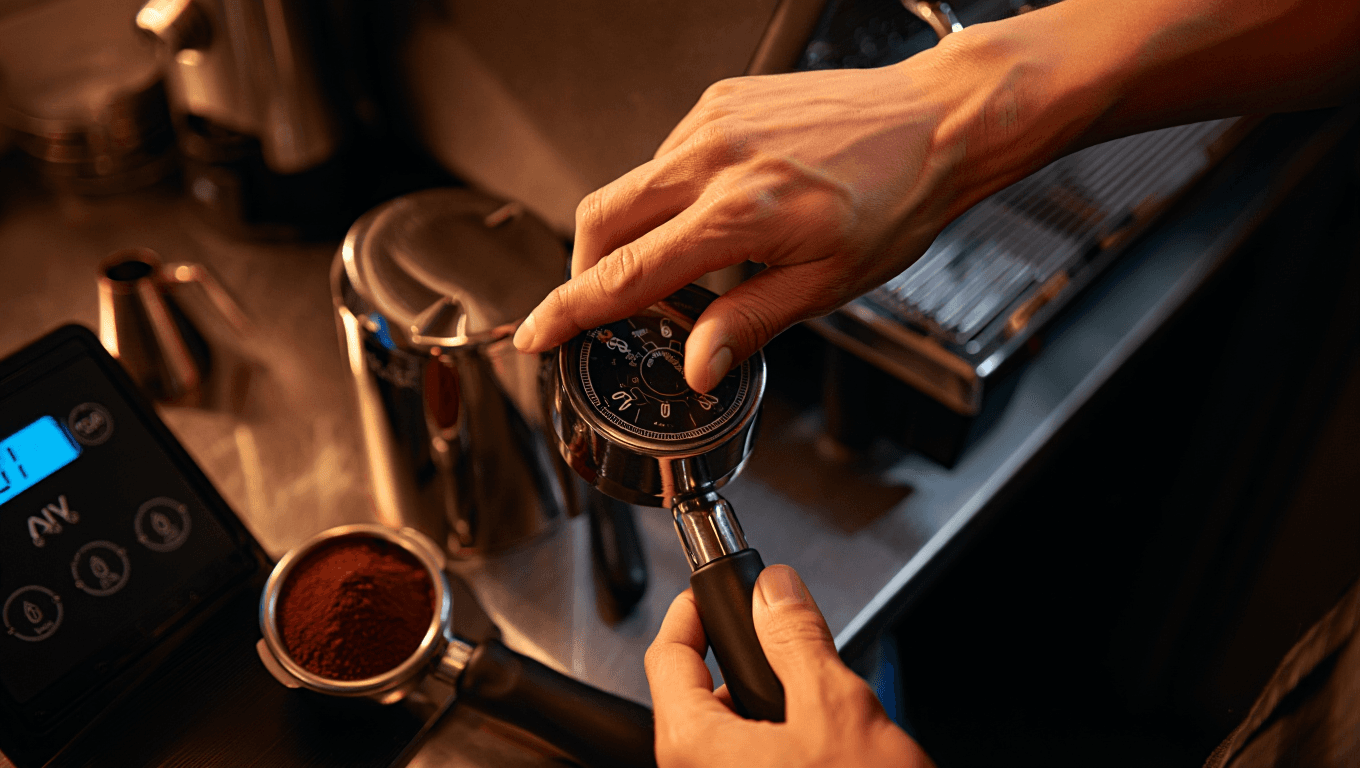
Why is precision equipment the secret behind authentic South Indian filter coffee?
In the world of specialty coffee, the term "precision" is often associated with high-end espresso machines or digital pour-over scales. However, for the modern barista—whether professional or a home enthusiast—the true test of precision lies in mastering the traditional South Indian filter. Achieving that elusive, thick, and aromatic decoction isn't a matter of luck; it is a calculated synergy between the equipment used and the technique applied. To move beyond the disappointment of watery, weak coffee and achieve the "hotel-style" richness, one must understand that the stainless steel filter is not just a container, but a precision tool. Coffee S10 Brews advocates for this technical mindfulness, ensuring that our premium 80:20 blends are paired with the right methodology to unlock their full potential.
How does the traditional stainless steel filter impact coffee decoction quality?
The traditional South Indian coffee filter consists of two cylindrical chambers. The top chamber has tiny perforations that act as a gravity-fed extraction system. Precision here is found in the size and distribution of these holes. If the holes are too large, the water passes through too quickly, resulting in under-extraction and a thin brew. If they are too small or clogged, the water stalls, leading to over-extraction and a burnt, bitter taste. A modern barista treats this equipment with the same respect an espresso specialist treats a portafilter. By using a high-quality stainless steel filter and ensuring the "umbrella" or plunger is used to tamp the powder evenly, you create the resistance necessary for a slow, steady drip. This slow extraction is what allows the complex oils and earthy notes of Coffee S10 Brews to migrate into the decoction, providing that signature syrupy mouthfeel.
Why is grind size precision critical for the perfect 80:20 coffee-chicory blend?
One of the most common questions from coffee lovers is: "Why doesn’t my filter coffee taste like the one in South Indian cafes?" The answer almost always lies in the grind size. Unlike the coarse grind used for French Press or the fine powder used for Espresso, South Indian filter coffee requires a specific "medium-fine" texture, often compared to the consistency of table salt. Precision in grinding is vital because the blend contains chicory. Chicory is more water-soluble than coffee; it absorbs moisture and expands. If the grind is too fine, the chicory will swell and block the filter holes entirely, a phenomenon known as "choking." Coffee S10 Brews addresses this by utilizing controlled roasting cycles and industrial-grade grinders to ensure every batch has a consistent particle size, allowing for a balanced flow rate that extracts the best of both the Arabica/Robusta beans and the premium chicory.
What are the benefits of an 80:20 coffee-chicory blend for body and aroma?
The debate between 100% pure coffee and chicory blends is common among coffee purists. However, the authentic South Indian filter coffee experience is defined by the 80:20 ratio. In this configuration, 80% high-quality coffee provides the caffeine kick and the nuanced aromatics, while 20% chicory adds a woody sweetness, a deep chocolatey color, and—most importantly—viscosity. This ratio is a precision choice. The chicory acts as a natural emulsifier, helping the decoction hold its "body" even when mixed with hot, frothed milk. Without this precision blend, the coffee can feel "thin" against the fats of the milk. Coffee S10 Brews prides itself on this signature 80:20 ratio, handpicking beans that complement the chicory rather than being overpowered by it, resulting in a cup that has a lingering aftertaste and a rich, golden crema.
How does water temperature influence the extraction of South Indian coffee powder?
Precision equipment extends beyond the filter to the kettle. Many make the mistake of using boiling water (100°C) directly on the coffee powder. This scorched approach destroys the delicate aromatic compounds of the roasted beans and highlights the bitter notes of the chicory. A modern barista knows that the "sweet spot" for filter coffee extraction is between 92°C and 96°C. Using a thermometer or a temperature-controlled kettle ensures that you are extracting the sugars and oils without burning the grounds. When you pour this precisely heated water over Coffee S10 Brews powder, it triggers a controlled "bloom," where gases are released, and the water begins its slow journey through the coffee bed, picking up the maximum flavor profile along the way.
Why is the "tamping" technique essential for a thick decoction?
In the world of espresso, tamping is a science. In South Indian brewing, it is an art of precision. After placing the coffee powder in the upper chamber, it must be leveled and slightly pressed using the pressing disc (plunger). If the powder is too loose, the water will find "channels" and rush through, leaving much of the flavor behind. If pressed too hard, the water won't pass at all. Mastering the pressure applied to the pressing disc is a decisive skill. A perfectly leveled bed of Coffee S10 Brews ensures that every drop of water interacts with an equal amount of coffee, leading to a consistent decoction strength every single morning. This level of control is what separates a casual drinker from a connoisseur of the South Indian coffee ritual.
How does the Dabara and Cup set enhance the sensory experience?
The Dabara and Cup (Tumbler) are not just for aesthetics; they are functional precision tools designed for thermal regulation and aeration. The act of "throwing" the coffee—pouring it back and forth from a height between the Dabara and the cup—serves two purposes. First, it cools the coffee to the perfect drinking temperature without the need for ice or waiting. Second, it aerates the mixture, creating a thick, frothy head (the "froth") that enhances the aroma as you take a sip. This traditional technique is the final step in the barista’s journey. By mastering the height and speed of the pour, you unlock the full sensory profile of Coffee S10 Brews, ensuring that the aroma of the fresh roast hits the nose before the first sip even touches the tongue.
Comparison: Understanding the Differences in Coffee Brewing
To understand why precision in South Indian brewing is so valued, it is helpful to compare it with other popular methods. The following table highlights why the 80:20 filter method stands out for those seeking depth and tradition.
| Feature Instant Coffee 100% Pure Filter Coffee 80:20 Coffee-Chicory (S10 Brews) | |||
| Preparation Time | 1 minute | 15–20 minutes | 15–20 minutes |
| Body & Viscosity | Thin / Watery | Medium | Thick & Syrupy |
| Aroma Profile | Faint / Artificial | Bright / Acidic | Deep / Caramel-like |
| Best Served With | Water or Milk | Black or Light Milk | Heavy, Frothed Milk |
| Bitterness Level | High (Chemical) | Moderate (Acidity) | Low (Balanced Sweetness) |
How does small-batch roasting ensure consistency in every cup of Coffee S10 Brews?
Precision is not only the responsibility of the person brewing the coffee but also the brand roasting it. Mass-produced coffee often suffers from "uneven roasts," where some beans are charred and others under-developed. At Coffee S10 Brews, we utilize small-batch roasting. This allows for meticulous control over the roasting curve—monitoring the time and temperature to the second. By roasting in smaller quantities, we ensure that the heat reaches the center of every bean consistently. This precision results in a uniform flavor profile, so the bag of Coffee S10 Brews you buy today tastes exactly like the one you'll buy six months from now. For the modern barista, this consistency is vital; it means they don't have to constantly readjust their brewing parameters to get the same great taste.
Can modern brewing equipment replicate the authentic South Indian coffee house experience?
While the traditional stainless steel filter is the gold standard, modern baristas often wonder if they can use AeroPress or Moka Pots to achieve similar results. While these tools can produce strong coffee, they lack the specific gravity-fed percolation that defines South Indian decoction. The Moka Pot uses pressure, which can over-extract the chicory and create a harsh taste. The AeroPress is too fast. To truly replicate the "hotel-style" coffee at home, the precision of the traditional gravity filter remains unmatched. Coffee S10 Brews bridges this gap by providing clear, modern instructions for traditional equipment, making the heritage of South Indian coffee accessible to the contemporary kitchen without losing the soul of the craft.
Comparing Home-Brewed Precision vs. Commercial Hotel Coffee
Why does coffee at a traditional "Darshini" or "Bhavan" often taste better than home-brewed versions? It comes down to the volume and the equipment maintenance.
| Factor Hotel-Style Coffee Standard Home Brew Coffee S10 Brews (Home Barista) | |||
| Decoction Quantity | Large batches (keeps heat better) | Single/Double servings | Optimized for small-batch richness |
| Milk Quality | High-fat, steamed milk | Standard boiled milk | Detailed frothing guides provided |
| Freshness | Ground daily | Often pre-ground/stored long-term | Small-batch roasted & vacuum sealed |
| Equipment | Industrial large filters | Varies in quality | Pairs with high-grade steel filters |
Why is the "second decoction" a mistake for those seeking premium flavor?
A common practice in many households is to pour more water over the coffee grounds after the first decoction has been collected, creating a "second decoction." While this is economical, it is the enemy of precision. The first decoction contains all the essential oils, the best of the caffeine, and the primary flavor compounds. The second decoction is mostly tannins and bitter cellulose. A precision-focused barista knows that for the ultimate cup, only the first, thick extract should be used. Coffee S10 Brews is designed for high yield in that first pass, ensuring that you don't feel the need to dilute the experience with inferior second-pass extractions. Quality over quantity is a brand pillar that ensures every sip is a premium experience.
FAQs: Mastering the Art of South Indian Filter Coffee
1. Why is my filter coffee decoction too thin?
This usually happens if the grind size is too coarse or if you haven't pressed the powder down firmly enough with the plunger. Ensure you are using a medium-fine grind, like the one provided by Coffee S10 Brews, and apply even pressure to create a compact bed of coffee.
2. Is chicory bad for my health or does it change the coffee taste?
Chicory is a natural root and is not harmful. In fact, it has prebiotic properties. In an 80:20 blend, it is used strategically to enhance the body and reduce the acidity of the coffee, creating the traditional taste profile that South Indians have loved for generations.
3. How long should it take for the decoction to drip?
For a standard small filter, it should take between 15 to 25 minutes. If it happens in 5 minutes, your grind is too coarse. If it takes an hour, your grind is too fine or you have over-tamped the powder.
4. Can I use a French Press to make South Indian filter coffee?
While you can make strong coffee in a French Press, the mesh is not fine enough to handle the 80:20 blend’s chicory content, and the resulting coffee will lack the concentrated "syrup" consistency of a traditional filter decoction.
5. Why does my coffee taste bitter even with an 80:20 blend?
Bitterness usually comes from using boiling water (100°C) or letting the decoction sit for too many hours. Try using water just off the boil (94°C) and consume the decoction while it is fresh for the best flavor profile.
6. How should I store Coffee S10 Brews powder to keep it fresh?
Coffee’s greatest enemies are air, moisture, and light. Store your Coffee S10 Brews powder in an airtight container in a cool, dark cupboard. Avoid the refrigerator as it can introduce moisture into the powder.
7. Why is the 80:20 ratio considered the "gold standard"?
Through decades of coffee culture in India, the 80:20 ratio has been found to be the perfect balance where the coffee's flavor is prominent, but the chicory provides enough "weight" to stand up to the addition of milk and sugar.
Elevate Your Ritual with Coffee S10 Brews
Becoming a modern barista isn't about owning the most expensive gadgets; it’s about mastering the precision of the tools you have. By understanding the relationship between grind size, water temperature, and the unique properties of an 80:20 blend, you can transform your morning routine into a professional-grade coffee experience. Coffee S10 Brews is committed to providing you with the highest quality beans, expertly roasted and blended to honor the craftsmanship of South Indian tradition. Whether you are a beginner or a seasoned brewer, our resources and premium blends are here to guide you toward the perfect cup. Explore our range of authentic filter coffee powders and discover our comprehensive brewing guides to start your journey into the heart of Indian coffee culture today.