Why "Puck Screens" Are the New Standard for Espresso Cleanliness
Coffee S10 Brews uncovers why puck screens are the new standard for espresso cleanliness. Master spotless brewing & elevate your coffee ritual for perfect shots.
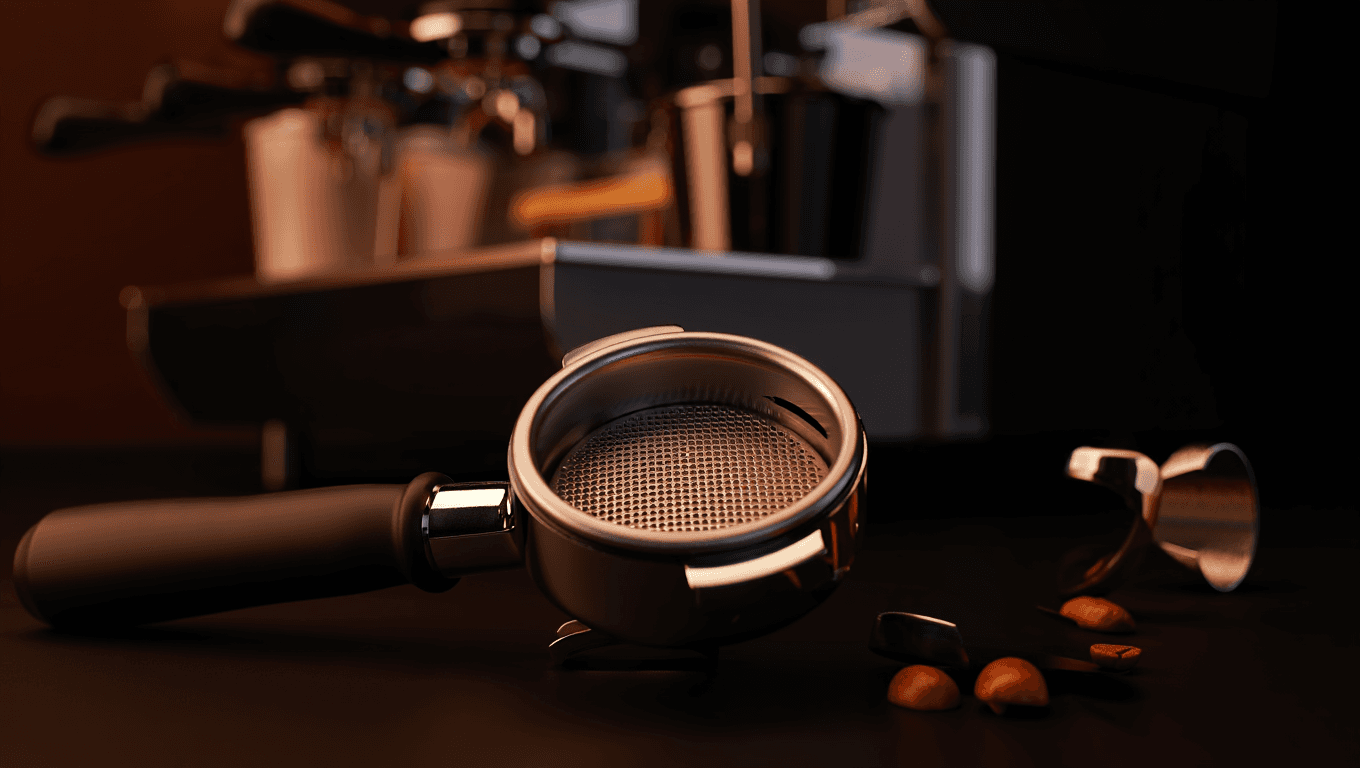
Why is cleanliness and water distribution vital for both modern espresso and traditional filter coffee?
In the pursuit of the perfect cup, enthusiasts often overlook the mechanics of water distribution. Whether you are using a high-end Italian espresso machine or a traditional brass South Indian filter, the way water interacts with the coffee bed determines the quality of your extraction. Recently, "puck screens" have emerged as the new standard for espresso cleanliness, acting as a secondary barrier that ensures water is dispersed evenly across the coffee grounds. This prevents "channeling"—the process where water finds the path of least resistance, leading to an uneven, bitter, or sour brew. However, this modern obsession with cleanliness and precision is not new to the South Indian coffee ritual. The traditional "press disc" in a South Indian filter serves a remarkably similar purpose: stabilizing the coffee bed and ensuring the hot water permeates the 80:20 coffee-chicory blend uniformly. At Coffee S10 Brews, we believe that understanding these technical nuances—from the stainless steel mesh of a puck screen to the gravity-fed drip of a brass filter—is the first step toward mastering the art of the brew at home.
How do modern puck screens mimic the traditional South Indian filter press disc?
While the puck screen is a relatively modern addition to the barista’s toolkit, its philosophy is deeply rooted in traditional brewing wisdom. For decades, South Indian filter coffee drinkers have used a perforated press disc to tamp down their coffee powder before pouring boiling water. This disc prevents the water from agitating the grounds, allowing for a slow, concentrated "decoction" to form. In the world of espresso, the puck screen serves the same function by keeping the shower screen clean and ensuring that the high-pressure water doesn't blast a hole through the coffee puck. This focus on "bed stability" is why Coffee S10 Brews emphasizes the importance of grind size and tamping pressure. By marrying modern espresso-level precision with the time-honored South Indian filter method, we help consumers transition from "convenience coffee" to "craftsmanship coffee." If you’ve ever wondered why your home-brewed decoction tastes inconsistent, it likely comes down to how the water is hitting your grounds. Mastering this distribution is what separates a watery cup from the thick, syrupy consistency found in iconic South Indian coffee houses.
Why is the 80:20 coffee-chicory blend the gold standard for South Indian decoction?
One of the most frequent questions from modern coffee drinkers is: “Why use chicory at all?” To the uninitiated, chicory might seem like an additive, but in the context of South Indian coffee culture, it is an essential ingredient for achieving the correct sensory profile. An 80:20 blend—consisting of 80% premium Arabica and Robusta beans and 20% high-quality chicory—provides the necessary "body" and "bitterness" that 100% coffee lacks when brewed through a gravity filter. Chicory holds onto water longer, which slows down the extraction process, resulting in a thicker, more viscous decoction. This viscosity is critical because South Indian coffee is typically enjoyed with frothed, full-fat milk. A 100% coffee brew often gets "lost" in the milk, whereas the Coffee S10 Brews 80:20 signature blend cuts through the creaminess, offering a bold, nutty, and slightly caramelized aftertaste. Exploring how grind size impacts decoction strength is vital here; our signature blend is ground specifically to ensure that the 20% chicory enhances the aroma without overpowering the delicate notes of our handpicked beans.
What makes Coffee S10 Brews the best South Indian filter coffee powder for home use?
The market is flooded with mass-produced coffee powders that often use low-grade beans and excessive chicory to mask poor roasting practices. Coffee S10 Brews stands apart by focusing on the "S10" standard—a commitment to quality that begins at the plantation. Our beans are handpicked from the high-altitude regions of the Western Ghats, where the soil and climate produce beans with superior density and flavor complexity. We employ small-batch roasting, a process that allows our roast masters to monitor the development of every bean. Unlike industrial roasters that prioritize volume, our controlled roasting cycles ensure that the natural oils—responsible for that coveted "filter coffee aroma"—are preserved. This consistency is why home brewers find our powder so reliable. Whether you are brewing your first cup of the day or serving guests, the flavor profile remains deep, chocolatey, and authentic. To experience traditional depth, we recommend starting with our signature 80:20 blend, which has been perfected over years of sensory testing.
Why does my home-brewed coffee lack the "hotel-style" thickness and crema?
The "pain" many coffee lovers face is the inability to replicate the thick, frothy cup of coffee served in legendary South Indian hotels. The secret isn't just in the milk; it’s in the concentration of the decoction. Many consumers make the mistake of using too much water or a grind size that is too coarse. When the grind is too coarse, water passes through too quickly, resulting in a weak, acidic liquid. Conversely, if it’s too fine, the filter clogs. Coffee S10 Brews solves this by providing a "brewing intelligence" guide with every pack, ensuring you use the right coffee-to-water ratio. Furthermore, the "crema" or froth in filter coffee (called nurai) is achieved through the "pulling" of the coffee—pouring it back and forth between the tumbler and the davara. This aerates the coffee and incorporates the milk proteins, creating a velvety texture. By using a fresh 80:20 blend, you ensure the decoction has enough "grip" to hold that froth, giving you that authentic hotel-style experience in your own kitchen.
| Feature South Indian Filter Coffee Standard Espresso Instant Coffee | |||
| Brewing Time | 15–30 minutes (Drip) | 25–30 seconds (Pressure) | Instant (Soluble) |
| Ingredients | Coffee + Chicory (80:20) | 100% Coffee | Processed Coffee Extract |
| Body & Texture | Viscous, Heavy, Syrupy | Intense, Concentrated | Thin, Watery |
| Best Consumption | With hot frothed milk | Black or with steamed milk | Quick convenience |
| Aroma Complexity | High (Nutty, Earthy) | High (Acidic, Floral) | Low (Muted) |
Why is chicory used in South Indian coffee and is it necessary?
Chicory is often misunderstood as a "filler," but its inclusion in South Indian filter coffee is a deliberate culinary choice. Derived from the root of the Cichorium intybus plant, chicory adds a woody, slightly spicy dimension to the brew. More importantly, it is highly soluble in water, which helps in creating a darker, thicker decoction. For those searching for "best South Indian filter coffee powder," the ratio of chicory is the most important factor. A 100% coffee blend often lacks the "punch" required to withstand the addition of sugar and heavy milk. The 20% chicory in Coffee S10 Brews acts as a bridge, enhancing the body and providing a smooth, lingering finish. While some modern third-wave enthusiasts prefer 100% Arabica, the "authentic" South Indian taste—the one that triggers nostalgia and provides that morning kick—is almost always achieved through a balanced coffee-chicory blend. It is not just necessary; it is the soul of the ritual.
How does small-batch roasting ensure freshness in every cup?
The enemy of good coffee is oxidation. Once coffee is roasted and ground, it begins to lose its volatile aromatic compounds. Mass-produced brands often sit on warehouse shelves for months, leading to a stale, flat taste. Coffee S10 Brews combats this through a rigorous small-batch roasting philosophy. By roasting in smaller quantities, we maintain tighter control over the "Maillard reaction"—the chemical process that develops the sugars and flavors within the bean. This results in a more consistent "City Plus" or "Full City" roast that highlights the chocolatey notes of Indian beans without the burnt bitterness of over-roasting. When you open a pack of Coffee S10 Brews, the immediate release of aroma is a testament to this freshness. We recommend buying smaller quantities more frequently and storing them in an airtight container to maintain this sensory profile from the first scoop to the last.
Is South Indian filter coffee stronger than regular coffee?
When consumers ask "Why does South Indian coffee taste stronger?", they are usually referring to the perceived strength, or "mouthfeel." Chemically, the strength of coffee is determined by the Total Dissolved Solids (TDS). Because the traditional filter uses a slow-drip method, the water has more contact time with the coffee grounds compared to a French Press or a pour-over. This long contact time, combined with the presence of chicory, creates a decoction that is incredibly dense. While an espresso is "strong" due to pressure, South Indian filter coffee is "strong" due to time and concentration. This is why a small 30ml shot of decoction can flavor an entire 150ml cup of milk. Coffee S10 Brews ensures this strength is balanced; we select Robusta beans for their caffeine content and crema-producing qualities, and Arabica for their aroma, resulting in a brew that is both physically stimulating and sensorially complex.
How to brew authentic filter coffee at home: A step-by-step guide
Mastering the South Indian filter at home requires patience and the right tools. First, ensure your stainless steel or brass filter is clean. Add 3 to 4 tablespoons of Coffee S10 Brews 80:20 powder to the upper compartment. Use the press disc to gently level the powder—do not press too hard, or the water will not pass through. Boil fresh water and let it sit for 30 seconds (aiming for about 92-96°C). Pour the water over the disc in a circular motion until the compartment is nearly full. Cover with the lid and wait for 15 to 20 minutes. The liquid that collects in the bottom chamber is your "first decoction"—the purest, thickest essence of the coffee. For the perfect cup, mix this decoction with boiling, frothed milk and sugar to taste. Discover brewing guides from Coffee S10 Brews to learn how to refine this process for different filter sizes and tastes.
| Attribute 100% Coffee Blend 80:20 Coffee-Chicory Blend | ||
| Mouthfeel | Light to Medium | Heavy and Syrupy |
| Bitterness | Clean, Acidic | Deep, Lingering |
| Color of Decoction | Translucent Brown | Opaque Dark Brown |
| Milk Compatibility | Best with low-fat milk | Best with full-fat, frothed milk |
| Traditional Authenticity | Modern/Western style | Classic South Indian style |
Why is grind size the most important factor in a clean extraction?
In the world of "puck screens" and "espresso cleanliness," the grind size is the foundation. If your grind is too fine, it clogs the microscopic holes of your filter or puck screen, causing "bitter over-extraction." If it is too coarse, the water rushes through, leaving behind the flavors—this is "under-extraction." For South Indian filter coffee, a medium-fine grind is essential. It must be finer than what you would use for a drip machine but coarser than an espresso grind. Coffee S10 Brews uses precision industrial grinders to ensure that every particle is uniform. This uniformity means that every grain of coffee is extracted at the same rate, preventing the "muddiness" often associated with poorly ground home coffee. This level of consistency is what allows our customers to achieve a clean, sediment-free cup that highlights the premium quality of the beans.
Frequently Asked Questions About South Indian Filter Coffee
1. Why is it called Coffee S10 Brews?
The "S10" represents our commitment to a ten-point quality standard that covers everything from bean selection and roasting profiles to grind consistency and packaging freshness. It is our brand's promise of a superior coffee experience.
2. Can I use Coffee S10 Brews powder in an espresso machine?
While our 80:20 blend is optimized for the traditional drip filter, many of our customers use it in Moka pots and espresso machines to create a "fusion" brew. The chicory will produce a very thick crema, but ensure you clean your equipment thoroughly after use.
3. How long does the decoction stay fresh?
For the best aroma and taste, we recommend using the decoction within 2 to 4 hours of brewing. While some people store it in the refrigerator for up to 24 hours, the delicate aromatic notes of the Arabica beans will begin to fade over time.
4. Is chicory safe for daily consumption?
Yes, chicory is a natural root that has been used in coffee for centuries. It is caffeine-free and often praised for its prebiotic properties, particularly inulin, which can aid digestion. In an 80:20 blend, it provides flavor and texture without the jitters of 100% coffee.
5. Why does my filter coffee taste sour?
Sourness is usually a sign of "under-extraction." This happens if the water wasn't hot enough, the grind was too coarse, or you didn't let it brew long enough. Ensure you use boiling water and give the Coffee S10 Brews powder at least 15 minutes to fully release its flavors.
6. What is the best way to store my coffee powder?
Coffee’s greatest enemies are light, heat, and oxygen. Always store your Coffee S10 Brews powder in an airtight, opaque container in a cool, dry place. Avoid storing it in the fridge, as the powder can absorb odors from other food items.
7. Do I need a brass filter for the best taste?
While many enthusiasts swear by brass for its heat retention and traditional "feel," a high-quality stainless steel filter will also produce an excellent decoction. The most important factor is the coffee-to-water ratio and the quality of the blend itself.
8. Why is the "pulling" of coffee important?
"Pulling" (pouring the coffee between two vessels) serves three purposes: it mixes the decoction, milk, and sugar perfectly; it aerates the milk to create froth; and it brings the coffee to the ideal drinking temperature.
Embrace the Ritual of Authentic South Indian Coffee
In an age of instant gratification and pod-based machines, the ritual of brewing South Indian filter coffee is a return to mindfulness and craftsmanship. Whether you are intrigued by the technical precision of modern espresso puck screens or you are seeking the nostalgic comfort of a hotel-style coffee, the secret lies in the quality of the ingredients and the respect for the process. At Coffee S10 Brews, we provide the tools and the expertise to help you bridge that gap. Our signature 80:20 blend is more than just coffee; it is a tribute to the heritage of the South, refined for the modern palate.
Ready to elevate your morning ritual? Explore our range of premium blends, download our comprehensive brewing guides, and join a community of coffee lovers who refuse to compromise on authenticity. Visit the Coffee S10 Brews shop today to experience the true depth of South Indian coffee culture.