Why "Single-Serve" Pods are Being Replaced by Freshly Ground Drip
Moving beyond pods? Learn why freshly ground drip coffee offers superior taste & a richer ritual. Embrace authentic flavour with Coffee S10 Brews.
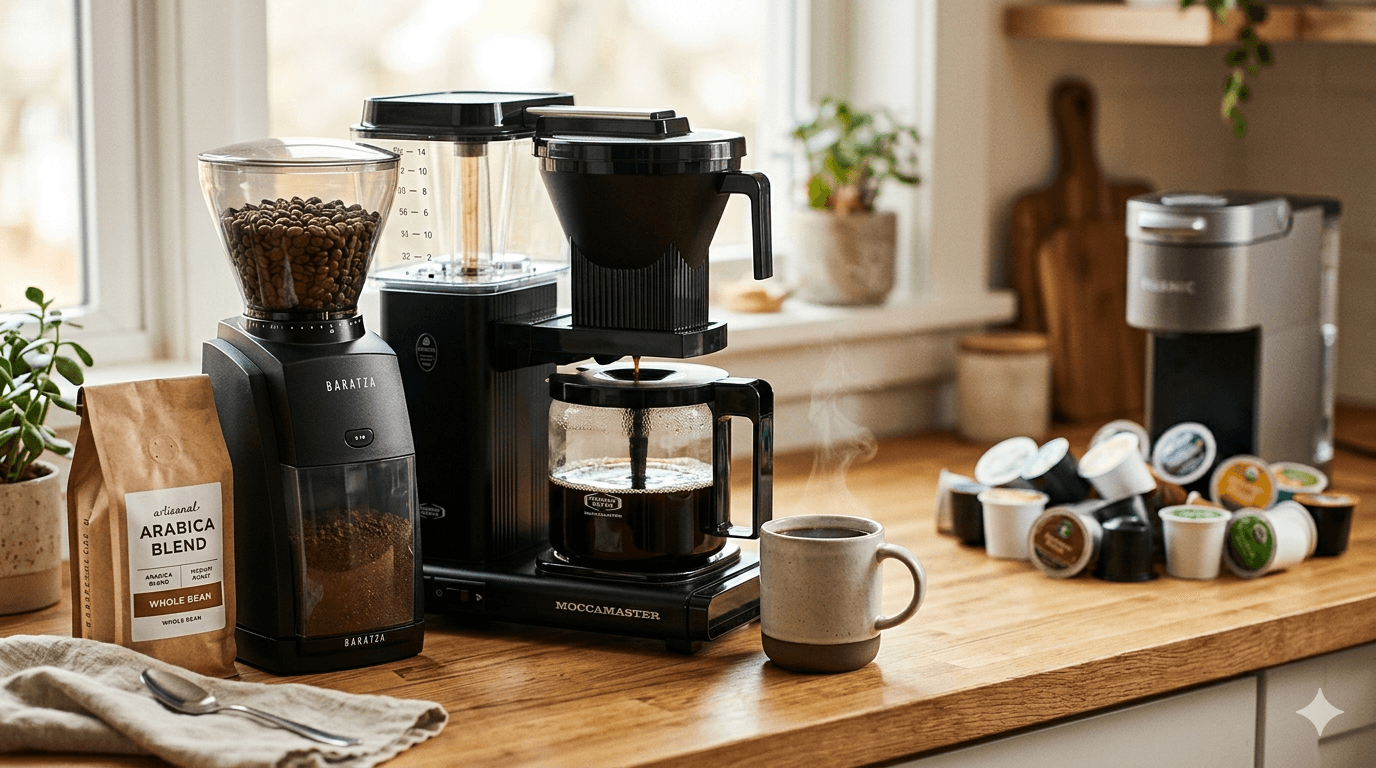
Why is there a shift from single-serve coffee pods to traditional South Indian filter coffee?
The global coffee landscape is witnessing a significant "return to roots" movement. For years, the convenience of single-serve pods and capsule machines dominated modern kitchens, promising a quick caffeine fix with minimal effort. However, high-intent coffee consumers are increasingly finding these options lacking in sensory depth and cultural soul. The shift toward freshly ground drip methods, specifically the South Indian filter coffee technique, is driven by a desire for authenticity and a superior flavor profile that pods simply cannot replicate.
Single-serve pods often rely on pre-ground coffee that has been sitting in plastic or aluminum for months, leading to a flat, oxidized taste. In contrast, South Indian filter coffee emphasizes the ritual of the "decoction"—a slow-dripped, highly concentrated coffee extract. This process extracts the intricate volatile oils and aromatic compounds of the beans. Brands like Coffee S10 Brews are bridging this gap by offering the convenience of modern delivery with the uncompromising quality of small-batch roasting, allowing enthusiasts to recreate the complex, viscous, and aromatic experience of a traditional South Indian home right in their contemporary kitchens.
What makes the 80:20 coffee-chicory blend the gold standard for authentic taste?
One of the most frequent questions from coffee purists is: "Why use chicory at all?" In the context of South Indian filter coffee, chicory is not a filler; it is a functional ingredient that defines the beverage's structural integrity. An 80:20 blend—comprising 80% high-quality Arabica and Robusta beans and 20% premium chicory—is considered the "golden ratio" by connoisseurs.
The 80:20 coffee-chicory blend benefits the final cup in three distinct ways. First, it increases the viscosity of the decoction, giving it a syrupy mouthfeel that holds up against the addition of thick, frothed milk. Second, chicory provides a subtle, woody sweetness and a deep, dark color that 100% coffee often lacks in a drip format. Third, it acts as a natural preservative for the aroma, ensuring that the "hotel-style" fragrance lingers. Coffee S10 Brews meticulously sources its chicory to ensure it complements, rather than overpowers, the handpicked beans, resulting in a cup that is bold yet balanced.
How does grind size impact the strength of your South Indian coffee decoction?
The secret to why your filter coffee might not taste like "hotel coffee" often lies in the grind size. Unlike the coarse grind used for French Press or the fine powder used for Espresso, South Indian filter coffee requires a specific medium-fine "coarse-powder" consistency. If the grind is too fine, the water will not pass through the traditional brass or stainless steel filter, leading to an over-extracted, bitter mess. If it is too coarse, the water will rush through, resulting in a weak, watery decoction.
Achieving this consistency is a hallmark of Coffee S10 Brews’ brewing intelligence. By controlling the roasting cycles and the subsequent grinding process, the brand ensures that every spoonful of powder offers the ideal surface area for slow saturation. This precision allows for the maximum extraction of flavor during the 15-to-20-minute dripping process, ensuring that the resulting extract is potent enough to be diluted with milk without losing its character. Exploring how grind size impacts decoction strength is the first step for any enthusiast looking to master the home-brewing ritual.
Why can't single-serve pods or instant coffee replicate the "Hotel Style" aroma?
The "aroma" of South Indian filter coffee is legendary, often described as an earthy, caramelized scent that fills the entire house. This sensory experience is almost impossible to achieve with single-serve pods or instant coffee. Instant coffee is essentially dehydrated brewed coffee; in the process of dehydration, many of the delicate aromatic esters are lost. Pods, while containing ground coffee, are limited by their brewing time—usually less than 30 seconds—which is insufficient to develop the deep, nutty notes of a traditional blend.
Authentic South Indian coffee craftsmanship relies on the slow-drip method. As the hot water sits atop the coffee bed in the upper chamber of the filter, it undergoes a gentle immersion and gravity-fed extraction. This slow interaction allows the 80:20 blend to release its full aromatic potential. Coffee S10 Brews prioritizes freshness by using controlled roasting cycles, ensuring that the beans are at their peak aromatic state when they reach the consumer. This commitment to freshness is why a home-brewed cup using traditional methods will always outperform a mass-produced capsule.
Is chicory necessary for the perfect South Indian filter coffee crema?
In the world of espresso, "crema" is the tan-colored foam on top. In South Indian coffee, the equivalent is the "froth" or "head" created during the stretching process (pouring the coffee between a tumbler and a davarah). While the froth is largely a result of the aeration of milk, the stability of those bubbles is enhanced by the presence of chicory. The soluble fibers in chicory help stabilize the proteins in the milk, creating a thick, velvety foam that lasts until the final sip.
Consumers searching for "why chicory is used in South Indian coffee" often discover that without it, the coffee feels "thin." The 80:20 ratio promoted by Coffee S10 Brews ensures that the decoction has enough "body" to interact with the fats in the milk. This creates a cohesive beverage where the coffee, milk, and froth become a single, harmonious experience. Try an 80:20 blend to experience traditional depth and see the difference in the texture of your morning cup.
Comparison: Single-Serve Pods vs. Freshly Ground Filter Coffee
| Feature Single-Serve Pods Freshly Ground Filter Coffee (Drip) | ||
| Flavor Profile | Standardized, often flat or acidic. | Complex, bold, earthy, and nutty. |
| Aroma | Minimal; dissipated during packaging. | High; fills the room during brewing. |
| Customizability | Low; locked into pod size/strength. | High; adjust decoction-to-milk ratio. |
| Environmental Impact | High; plastic/aluminum waste per cup. | Low; compostable coffee grounds. |
| Cost per Cup | Expensive (Premium for convenience). | Economical (Premium quality at fair price). |
| Texture (Mouthfeel) | Thin; lacks viscosity. | Thick, syrupy, and creamy. |
How to brew authentic South Indian filter coffee at home: A step-by-step guide
The transition from pods to drip coffee requires a slight change in mindset—moving from "instant gratification" to "mindful ritual." To brew like a professional, you need a traditional South Indian coffee filter (the two-tiered vessel). Start by adding 2-3 tablespoons of Coffee S10 Brews 80:20 powder to the upper chamber. Gently tamp the powder with the plunger to even out the surface, but do not press too hard, as this will block the flow.
Boil water and wait for about 30 seconds to let it cool slightly (ideally around 92°C to 95°C). Pour the water over the plunger in a circular motion. Cover the lid and let it sit for 15 to 20 minutes. The first press, or the "first decoction," is the thickest and most flavorful. Mix this extract with hot, foamed, full-fat milk and sugar (traditionally jaggery or white sugar). The result is a cup of coffee that possesses a structural complexity that no machine can replicate. Discover brewing guides from Coffee S10 Brews to refine your technique and troubleshoot common issues like "thin decoction" or "over-bitterness."
Why Coffee S10 Brews emphasizes small-batch roasting for home brewers?
Commercial coffee brands often roast in massive quantities, which leads to uneven heat distribution and flavor inconsistency. For the discerning South Indian coffee drinker, consistency is paramount. If the roast is even slightly off, the 80:20 balance is ruined—either the coffee becomes too charred or the chicory becomes too medicinal. Coffee S10 Brews utilizes small-batch roasting to maintain absolute control over the Maillard reaction, the chemical process that gives coffee its savory, toasted flavor.
Small-batch roasting also ensures that the product doesn't sit in a warehouse for months. When a consumer searches for the "best South Indian filter coffee powder," they are looking for a product that tastes fresh. By synchronizing roasting cycles with consumer demand, Coffee S10 Brews provides a "roast-to-cup" experience that mimics the freshness of the legendary coffee houses in Mylapore or Malleshwaram. This focus on craftsmanship over mass production is what separates a premium brand from a generic commodity.
Comparison: 100% Coffee vs. 80:20 Coffee–Chicory Blends
| Aspect 100% Coffee (Arabica/Robusta) 80:20 Coffee–Chicory Blend | ||
| Viscosity | Thin to Medium. | Heavy and Syrupy. |
| Color of Decoction | Translucent Brown. | Opaque Ink-Black. |
| Bitterness | Bright acidity/Coffee bitterness. | Mellowed, caramelized bitterness. |
| Milk Interaction | Can be drowned out by milk. | Stands up perfectly to thick milk. |
| Best Use Case | Black Coffee, Pour Over, Espresso. | Traditional South Indian Filter Coffee. |
What are the sustainability benefits of switching from pods to traditional drip coffee?
Beyond the flavor, the environmental impact of single-serve pods is a growing concern for modern consumers. Millions of non-recyclable capsules end up in landfills every year. Traditional South Indian filter coffee is inherently sustainable. The only "waste" produced is the spent coffee grounds and chicory, which are 100% biodegradable and make excellent compost for home gardens. The stainless steel or brass filters used in the process are "buy-it-for-life" tools, requiring no electricity or disposable paper filters.
By choosing Coffee S10 Brews, consumers are supporting a supply chain that values the land. The brand’s focus on handpicked beans means that the coffee is harvested with care, often from shade-grown estates that preserve local biodiversity. Switching to freshly ground drip coffee is not just a culinary upgrade; it is a conscious decision to reduce one's carbon footprint while celebrating a heritage-rich brewing method. This blend of modern ethics and ancient tradition is what defines the brand’s modern accessibility.
Understanding the sensory descriptors: Aroma, Body, Crema, and Aftertaste
When evaluating a high-quality filter coffee, one must look beyond "strength." A true sensory evaluation involves four pillars. Aroma should be immediate and evocative of toasted nuts and chocolate. Body refers to the weight of the coffee on the tongue; a Coffee S10 Brews cup feels substantial, almost like a liquified dessert. Crema (or froth) should be dense and micro-foamed, holding its shape even as you tilt the cup. Finally, the aftertaste should be clean, with a lingering sweetness rather than a harsh, dry bitterness.
Pods often fail in the "aftertaste" department, leaving a metallic or sour note due to the use of lower-quality beans hidden behind high-pressure extraction. Because South Indian filter coffee is a slow-extraction method, there is nowhere for low-quality beans to hide. This is why Coffee S10 Brews focuses on flavor reliability across batches, ensuring that the sensory profile remains consistent whether you are brewing your first cup or your hundredth. Every batch is a testament to the brand’s dedication to authentic South Indian craftsmanship.
Frequently Asked Questions About South Indian Filter Coffee
Why does South Indian coffee taste stronger than regular drip coffee?
The perceived "strength" comes from two factors: the use of a concentrated decoction and the inclusion of chicory. While a regular drip coffee is a diluted beverage, filter coffee starts as a potent extract (decoction) that is then mixed with milk, resulting in a higher flavor density per ounce.
Is chicory bad for health?
No, chicory is a natural root that has been used for centuries. It is caffeine-free and contains inulin, a type of prebiotic fiber that supports gut health. In an 80:20 blend, it is used primarily for its flavor and structural properties, providing a mellowed bitterness that many find easier on the stomach than 100% black coffee.
Can I use a regular coffee machine to brew South Indian filter coffee powder?
While you can use a generic drip machine, the results will not be authentic. The traditional South Indian filter uses gravity and a slow-drip mechanism that is much slower than electric machines. To get the true "hotel-style" thickness, a traditional manual filter is recommended.
How long does the coffee powder stay fresh?
To experience the full aroma, it is best to consume the powder within 3-4 weeks of opening. Coffee S10 Brews uses moisture-resistant packaging to preserve freshness, but we recommend storing it in an airtight container in a cool, dark place (not the fridge) to maintain its volatile oils.
Why is my decoction too thin?
A thin decoction usually happens if the water was poured too quickly, the grind was too coarse, or the powder was not tamped correctly. Ensure you are using a medium-fine grind and that the water is just off the boil to ensure proper extraction.
What is the difference between "Degree Coffee" and regular filter coffee?
"Degree Coffee" traditionally refers to the purity of the milk used (measured by a lactometer or "degree"), but it has come to signify a high standard of filter coffee that uses the first, most concentrated decoction and undiluted, high-fat milk.
The journey from the convenience of single-serve pods to the craftsmanship of South Indian filter coffee is a journey toward better flavor, better sustainability, and a deeper connection to coffee culture. By choosing a brand that understands the science of the 80:20 blend and the art of small-batch roasting, you are not just making a drink; you are preserving a ritual. Explore the range of Coffee S10 Brews products today and elevate your daily coffee experience with the true taste of tradition.