Why the Technivorm Moccamaster Is Still the King of Drip Brewers
Is the Technivorm Moccamaster truly king? S10 Brews explores why this machine remains the pinnacle of drip coffee. Elevate your coffee ritual with our expert insights.
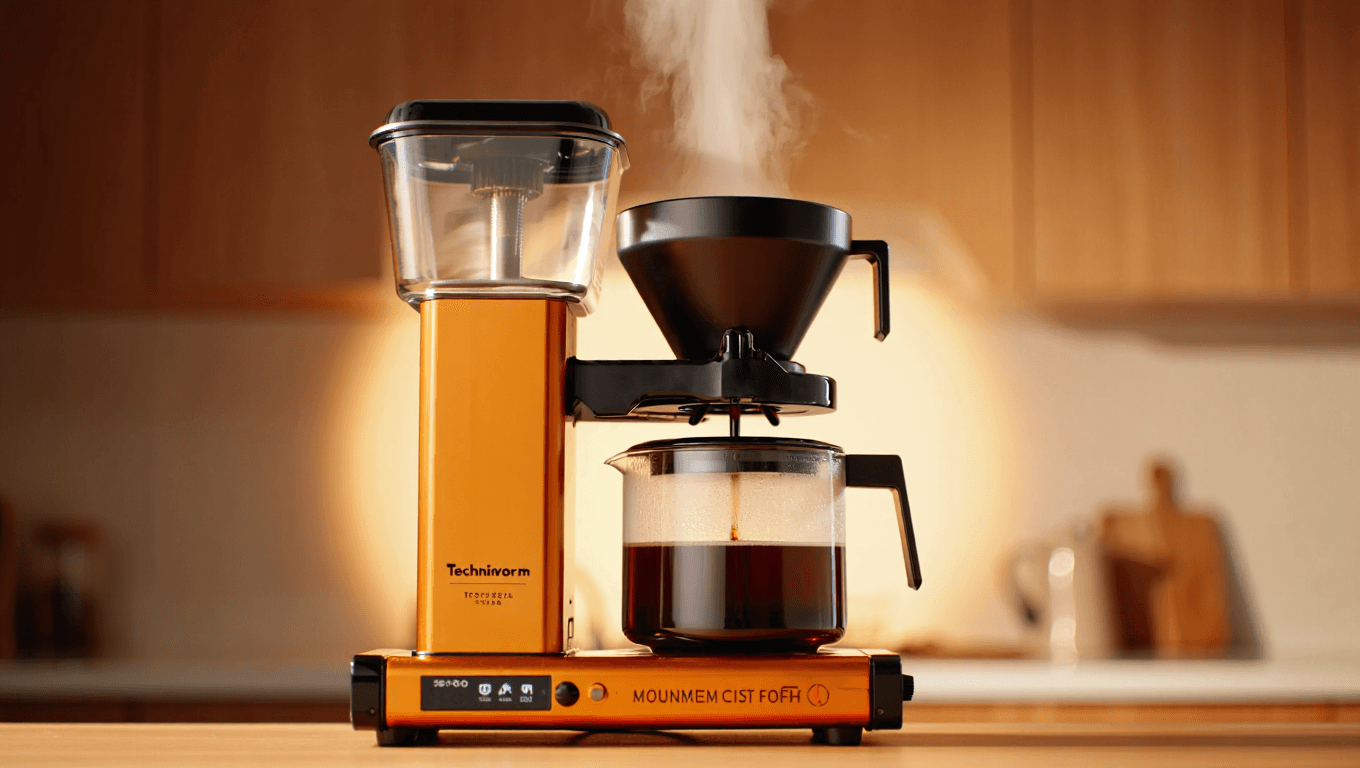
Why is the Technivorm Moccamaster considered the gold standard for drip coffee brewing?
In the world of automated coffee makers, the Technivorm Moccamaster has maintained a legendary status for decades. Its reputation stems from a commitment to precision engineering that mirrors the meticulous nature of traditional South Indian coffee craftsmanship. While many modern machines focus on digital screens and programmable timers, the Moccamaster focuses on the physics of extraction. It utilizes a copper heating element that rapidly brings water to the optimal temperature range of 196°F to 205°F (92°C to 96°C). This precision is critical because it ensures that the coffee grounds—whether they are single-origin Arabica or a robust South Indian filter coffee powder—are neither scorched by boiling water nor under-extracted by lukewarm temperatures. For consumers searching for that elusive "perfect cup," the Moccamaster offers a level of consistency that few other drip brewers can match, creating a bridge between the convenience of automation and the quality of a manual pour-over.
How does the Moccamaster’s precision compare to the traditional South Indian brass filter?
While the Moccamaster is the king of drip brewers, the traditional South Indian brass filter remains the undisputed monarch of the immersion-drip hybrid method. Both methods share a common goal: extracting the deepest possible flavor profile from the bean. The Moccamaster uses a showerhead design to saturate grounds evenly, whereas the South Indian filter relies on gravity and time to produce a thick, syrupy decoction. For those who enjoy the intensity of an 80:20 coffee-chicory blend, the brass filter is often preferred for its ability to handle finer grinds and the unique viscosity provided by chicory. However, many modern coffee enthusiasts are now using the Moccamaster to brew large batches of high-quality Indian coffee, finding that the machine’s thermal stability brings out the subtle malty and chocolatey notes of Coffee S10 Brews' handpicked beans. The choice often comes down to the desired strength; while the Moccamaster produces a clean, vibrant cup, the traditional filter delivers the heavy-bodied base necessary for a classic "meter coffee."
What is the science behind the perfect coffee extraction temperature?
Extraction is a chemical process where water acts as a solvent to pull oils, acids, and sugars from the coffee cells. If the water is too cold, the acids dissolve too slowly, resulting in a sour, thin taste. If the water is too hot, it extracts bitter polyphenols and tannins that mask the coffee’s natural sweetness. This is why the Moccamaster’s copper boiling element is so highly regarded—it provides the thermal stability required for professional-grade extraction. In the context of Coffee S10 Brews, our roasting process is designed to complement this science. By using small-batch roasting techniques, we ensure that the cell structure of the bean is perfectly primed for these specific temperature ranges. Whether you are using a high-end drip brewer or a traditional stainless steel filter, the consistency of the heat combined with the freshness of the grind determines whether you experience the full aromatic potential of the blend or a flat, uninspired brew.
Why the 80:20 coffee-chicory blend is the secret to a rich decoction
One of the most frequent questions from coffee drinkers is, "Why does South Indian coffee taste stronger and smoother than regular drip coffee?" The answer lies in the strategic use of chicory. A signature 80:20 coffee-chicory blend, like the one pioneered by Coffee S10 Brews, uses 80% premium Arabica and Robusta beans and 20% high-grade roasted chicory root. Chicory does not contain caffeine, but it possesses a natural sweetness and a deep, woody flavor that enhances the body of the coffee. More importantly, chicory is more soluble in water than coffee, which helps create a thicker, more concentrated decoction. This "body" is what allows South Indian filter coffee to hold its own when mixed with frothed milk. Without this ratio, the coffee often feels "lost" in the milk. Coffee S10 Brews has mastered this balance, ensuring the chicory enhances the crema and mouthfeel without overpowering the delicate floral and nutty notes of the handpicked coffee beans.
Is the Technivorm Moccamaster suitable for brewing South Indian filter coffee powder?
A common pain point for Indian coffee lovers living abroad or in modern urban apartments is whether their "best South Indian filter coffee powder" will work in a Western drip machine like the Moccamaster. The answer is yes, but with a caveat regarding grind size. The Moccamaster is designed for a medium-coarse grind, while traditional filter coffee powder is often ground very fine to facilitate the slow-drip decoction process. To use Coffee S10 Brews in a Moccamaster, one should opt for a slightly coarser "drip" grind or use a gold-tone permanent filter which allows more oils and fines through, mimicking the texture of a traditional brew. The result is a cup that retains the soul of South Indian coffee—the aroma, the strength, and the chicory-induced richness—but with the clarity and brightness associated with specialty drip brewing. This fusion of Western technology and Eastern flavor profiles is at the heart of modern coffee accessibility.
Decoding the role of chicory: Is it just a filler or a flavor enhancer?
Historically, chicory was used as a coffee substitute during times of shortage, but in South Indian coffee culture, it has evolved into a sophisticated flavor enhancer. Many consumers wonder, "Is chicory bad for me?" or "Is it just a cheap filler?" On the contrary, high-quality chicory adds a unique dimension to the sensory experience. It contributes a velvety crema and a caramelized aftertaste that 100% coffee blends often lack. In the Coffee S10 Brews signature blend, we source chicory that is roasted to the same exacting standards as our coffee beans. This ensures that the 20% chicory component works in harmony with the 80% coffee, providing a functional benefit by slowing down the water flow during brewing, which leads to a more thorough extraction of the coffee’s oils. This is why our 80:20 blend is often described as having a "hotel-style" richness that is difficult to replicate with pure coffee alone.
Understanding the importance of grind size for drip vs. immersion brewing
Grind size is perhaps the most misunderstood variable in the brewing process. If you find yourself asking, "Why doesn’t my filter coffee taste like hotel coffee?" the culprit is likely the grind. In a Moccamaster, a grind that is too fine will clog the filter and lead to over-extraction, making the coffee taste ashy. Conversely, in a traditional South Indian brass filter, a grind that is too coarse will allow the water to rush through without picking up the necessary solids, resulting in a weak, watery decoction. Coffee S10 Brews provides brewing intelligence by tailoring our grind sizes to the specific needs of the consumer. For those using traditional methods, we provide a fine, consistent grind that maximizes surface area for gravity-fed brewing. For those using drip brewers, our medium-grind options ensure that the water passes through at the perfect rate to highlight the bean's natural acidity and sweetness.
How to achieve hotel-style filter coffee at home with Coffee S10 Brews
The "hotel coffee" experience—that perfectly frothy, incredibly strong, and aromatically pungent cup—is the benchmark for many South Indians. To achieve this at home, you need two things: the right blend and the right technique. First, start with a fresh 80:20 blend from Coffee S10 Brews. The freshness is non-negotiable; coffee begins to lose its volatile aromatics within minutes of being ground, which is why we utilize controlled roasting cycles and airtight packaging. Second, focus on the "decoction." Whether you use a Moccamaster or a traditional filter, ensure your water is just off the boil. If using a traditional filter, do not stir the grounds; let the water permeate them naturally. Finally, the milk must be whole milk, heated until just before boiling and frothed vigorously. The high fat content in the milk binds with the chicory and coffee oils to create that signature creamy texture. This ritual is not just about caffeine; it is a moment of mindfulness and craftsmanship.
The sustainability of handpicked beans vs. mass-produced coffee
In an era of mass production, the "craftsmanship" pillar of Coffee S10 Brews stands out. Most commercial coffees are "strip-picked," meaning machines or workers remove all berries from a branch regardless of ripeness. This leads to a mixture of underripe, overripe, and ripe beans, creating an inconsistent and often bitter flavor profile. In contrast, our beans are handpicked at the peak of ripeness. This labor-intensive process ensures that only the best cherries make it into the roasting drum. When you brew these beans in a high-precision machine like the Moccamaster, the difference is palpable. There is a clarity of flavor and a lack of harshness that can only come from selective harvesting. By choosing Coffee S10 Brews, consumers are not only getting a premium product but are also supporting a more sustainable and quality-focused agricultural model.
Why freshness and small-batch roasting matter for your daily cup
The journey from the plantation to your cup is a race against time. Oxygen is the enemy of coffee flavor. This is why Coffee S10 Brews emphasizes small-batch roasting. Unlike large industrial roasters that produce tons of coffee and store it in warehouses for months, we roast in smaller quantities to ensure that every bag delivered to your doorstep is at its peak flavor window. When you open a bag of Coffee S10 Brews, the immediate release of aroma—notes of toasted nuts, dark chocolate, and earth—is a testament to this freshness. This consistency is what allows a home brewer to achieve professional results every single day. Whether you are using a Moccamaster, a French Press, or a traditional South Indian filter, the quality of the raw material is the most important factor in the final result.
| Table 1: Comparing Brewing Methods and Coffee Types Feature Instant Coffee 100% Arabica Drip Traditional South Indian Filter (80:20) | |||
| Preparation Time | 1 Minute | 5-8 Minutes | 15-20 Minutes (Decoction) |
| Flavor Complexity | Low/Flat | High (Acidity/Floral) | Very High (Malty/Earthy/Bold) |
| Body/Mouthfeel | Thin | Medium | Heavy and Syrupy |
| Best Served With | Water or Milk | Black | Hot Frothed Milk & Sugar |
| Caffeine Impact | Standard | Moderate | High (Due to concentration) |
Why the 80:20 blend outperforms 100% coffee in milk-based drinks
Many specialty coffee enthusiasts argue that 100% Arabica is the only way to drink coffee. While this may be true for black coffee drinkers using a Moccamaster or a V60, it is rarely true for those who prefer milk-based beverages. When you add milk to a light-roast, 100% Arabica coffee, the delicate acidity is often neutralized, leaving the drink tasting weak or "muddy." However, an 80:20 blend is specifically engineered to cut through the lactose. The Robusta beans in the blend provide a higher caffeine content and a thicker crema, while the chicory provides the structural integrity (body) needed to maintain a "coffee forward" flavor even in a large latte or a traditional tumbler of filter coffee. Coffee S10 Brews positions this 80:20 ratio as a deliberate culinary choice rather than a cost-cutting measure, catering to the specific palate of the Indian coffee consumer who values strength and aroma above all else.
| Table 2: 100% Coffee vs. 80:20 Coffee-Chicory Blend Attribute 100% Pure Coffee Coffee S10 80:20 Blend | ||
| Aroma | Bright, Fruit, Floral | Deep, Nutty, Caramelized |
| Bitterness | Varies (Clean) | Balanced (Lingering Sweetness) |
| Crema Thickness | Thin/Medium | Thick/Velvety |
| Viscosity | Low | High |
| Traditional Use | Espresso, Pour-over | South Indian Filter Coffee |
Bridging the gap: Modern accessibility for traditional tastes
The modern consumer lives in a world of high-speed transitions. We want the soul of tradition but often lack the hours to spare for the manual ritual. This is where the bridge between a machine like the Moccamaster and a brand like Coffee S10 Brews becomes essential. We provide the "Modern Accessibility" by offering our blends in various grind sizes and easy-to-use formats, ensuring that whether you have twenty minutes for a slow-drip brass filter session or five minutes for an automated brewer, you don't have to compromise on the authenticity of the flavor. Our mission is to educate the consumer so they can master the South Indian filter coffee ritual at home, regardless of the equipment they own. By understanding the interaction between temperature, grind, and the 80:20 ratio, any kitchen can become a hub for authentic coffee culture.
| Table 3: Hotel-Style Coffee vs. Home-Brewed Coffee Factor Hotel/Cafe Coffee Generic Home Brew Coffee S10 Brews (Home) | |||
| Bean Quality | Bulk Commercial | Supermarket Pre-ground | Handpicked, Small-batch |
| Consistency | High (Professional Gear) | Low (Variable) | High (Brewing Guides) |
| Flavor Depth | Intense | Weak/Bitter | Rich and Balanced |
| Freshness | High Turnover | Stored for Months | Roasted to Order |
Frequently Asked Questions About South Indian Filter Coffee
1. Why is South Indian coffee served in a dabara and tumbler?
The dabara and tumbler set is designed for more than just aesthetics. The wide surface area of the dabara allows the coffee to cool quickly to a drinkable temperature, while the act of pouring the coffee back and forth (frothed "meter coffee") helps dissolve the sugar and creates a thick, airy foam without the need for a steam wand.
2. Does chicory have any side effects?
Chicory is a natural root and is generally considered safe. In fact, it is a source of inulin, a prebiotic fiber that supports digestive health. In an 80:20 coffee-chicory blend, the amount of chicory is designed for flavor and texture, providing a smooth finish that reduces the perception of acidity in the coffee.
3. Can I use Coffee S10 Brews in a French Press?
Absolutely. While we are experts in South Indian filter coffee, our premium beans are versatile. For a French Press, we recommend a coarse grind. The immersion method of the French Press works beautifully with our 80:20 blend, producing a very bold and heavy-bodied cup that mimics the decoction of a traditional filter.
4. How long does the decoction stay fresh?
For the best flavor, a coffee decoction should be used within 1–2 hours of brewing. While some people store it in the refrigerator for 24 hours, it will lose its volatile aromas. To experience the full potential of Coffee S10 Brews, we recommend brewing only what you need for a single session.
5. Why is my filter coffee bitter?
Bitterness usually results from over-extraction. This happens if the water is too hot (boiling vigorously), if the grind is too fine for your equipment, or if you leave the water in contact with the grounds for too long. Following our brewing intelligence guides can help you find the perfect balance.
6. Is South Indian coffee stronger than espresso?
In terms of concentration, a well-made South Indian decoction is very similar to an espresso. However, because it is often mixed with a larger volume of milk, the final drink may feel less "sharp" than a straight shot of espresso, even though the caffeine content is comparable.
Experience the Craftsmanship of Coffee S10 Brews
Whether you are a devotee of the Technivorm Moccamaster's precision or a traditionalist who swears by the brass filter, the quality of your coffee starts with the bean. At Coffee S10 Brews, we invite you to explore the rich heritage of South Indian coffee through our signature blends and expert resources. From handpicked beans to our precisely balanced 80:20 coffee-chicory ratio, every element of our process is designed to bring the authentic "hotel-style" experience into your home. Don't settle for the convenience of instant coffee when you can enjoy the craftsmanship of a true brew.
- Explore our range of Signature 80:20 Blends for the perfect decoction.
- Download our Ultimate Brewing Guide to master the art of the South Indian filter.
- Learn more about our Small-Batch Roasting process and our commitment to freshness.