Why "Third Wave Water" Packets are the Secret to Specialty Flavor
Elevate your authentic South Indian filter coffee! Learn how Third Wave Water packets unlock specialty flavor, even for your S10 Brews blend.
Why is the water quality so important for brewing South Indian filter coffee?
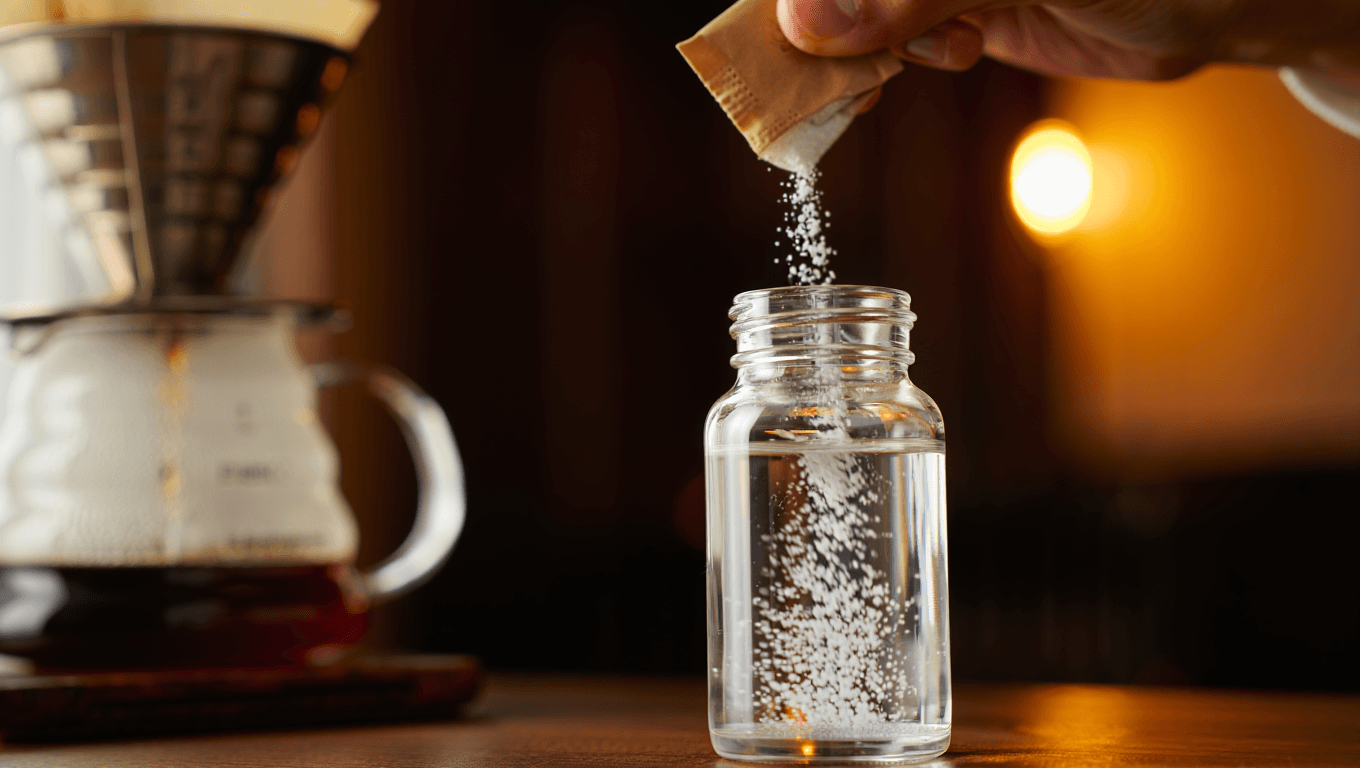
Many coffee enthusiasts focus exclusively on the beans, often overlooking the most significant ingredient in their cup: water. Since a standard cup of coffee is approximately 98% water, the chemical composition of your tap or bottled water acts as the primary solvent responsible for pulling flavors out of the coffee grounds. When brewing a traditional South Indian filter coffee, the goal is a thick, syrupy decoction. If your water contains too many minerals (hard water) or too few (distilled water), the extraction process becomes unbalanced. Hard water often results in a flat, chalky taste, while overly soft water can lead to a sharp, unpleasantly acidic brew. Utilizing mineral-optimized solutions like Third Wave Water packets ensures that the water profile is perfectly calibrated to highlight the nuanced notes of the Coffee S10 Brews signature blends, rather than masking them with metallic or chlorine-heavy undertones.
How does water chemistry impact the authentic South Indian coffee aroma?
The first thing you notice about a fresh brew of Coffee S10 Brews is the intoxicating aroma that fills the room—a sensory hallmark of authentic South Indian craftsmanship. This aroma is composed of volatile organic compounds that are highly sensitive to water chemistry. Bicarbonates in water act as a buffer; if they are too high, they neutralize the delicate acids that contribute to the bright, floral, and nutty aromas found in high-quality Arabica and Robusta beans. By using a controlled mineral profile, you ensure that these aromatic compounds are effectively released during the slow-drip filtration process. This is why "Third Wave Water" and similar mineral-balancing techniques are becoming the secret weapon for home baristas who want to replicate the sensory experience of a traditional South Indian household or a premium heritage hotel.
Why do most home brewers struggle to replicate the iconic hotel-style coffee?
The "hotel-style" coffee, often found in the legendary tiffin centers of Bangalore and Chennai, is characterized by its incredible depth, thick froth (foam), and a lingering sweetness. Many home brewers ask, "Why doesn’t my filter coffee taste like hotel coffee?" The answer usually lies in two factors: the coffee-to-chicory ratio and the water temperature combined with mineral content. Professional establishments often use large-scale filtration systems that maintain a specific mineral balance. At home, using the Coffee S10 Brews 80:20 blend provides the correct structural foundation, but the water must be able to carry those flavors. If your decoction feels "thin" despite using plenty of powder, your water likely lacks the magnesium and calcium ions necessary to bind with the coffee oils and chicory solids, which are essential for that heavy mouthfeel and persistent crema.
What is the science behind the 80:20 coffee-chicory blend and water hardness?
The 80:20 ratio—comprising 80% high-quality coffee beans and 20% chicory—is considered the "Golden Ratio" of South Indian coffee. Chicory is more soluble than coffee and adds a woody, caramelized depth and a thicker viscosity to the decoction. However, chicory is also highly sensitive to the pH level of your water. In an alkaline environment (common in hard water areas), chicory can become overly bitter and astringent. Coffee S10 Brews carefully roasts its small-batch beans to complement this ratio, ensuring that when brewed with optimized water, the chicory enhances the body without overwhelming the palate. Using mineral packets helps maintain a neutral pH, allowing the 80:20 blend to produce a balanced, chocolatey, and smooth finish that represents the pinnacle of traditional blending.
Can Third Wave Water packets solve the problem of inconsistent filter coffee batches?
Consistency is the hallmark of a master brewer. One day your coffee tastes divine, and the next, it’s strangely bitter—this "flavor drift" is often caused by fluctuations in municipal water supplies. Third Wave Water packets provide a standardized mineral profile (typically a mix of magnesium sulfate, calcium citrate, and sodium chloride) that you add to distilled or reverse osmosis (RO) water. This creates a "blank canvas" for your Coffee S10 Brews powder. When you remove the variables of chlorine, fluoride, and fluctuating mineral levels, you unlock the ability to taste the consistent roasting profile of our handpicked beans. For the modern consumer, this bridges the gap between the unpredictability of home brewing and the reliable excellence of a premium brand.
Understanding the role of mineral balance in your filter coffee decoction
To master the South Indian filter coffee ritual, one must understand that extraction is a chemical reaction. Magnesium ions are particularly effective at pulling out "sharp" and "fruitier" flavors, while calcium helps emphasize the "heavy" and "creamy" notes. A traditional South Indian brew thrives on the latter. If you are searching for the "best South Indian filter coffee powder," you are likely looking for a product that can stand up to milk and sugar. The mineral balance in your water ensures that the decoction is concentrated enough to maintain its identity even after being stretched with hot, frothy milk. Coffee S10 Brews’ roasting process is designed to work in harmony with these minerals, providing a reliable foundation for a cup that is both strong and soul-warming.
How to achieve the perfect crema in your South Indian coffee using optimized water
The "crema" or the fine layer of bubbles on top of a poured filter coffee isn't just for aesthetics; it’s an indicator of freshness and proper extraction. This foam is created by the interaction of coffee oils, proteins, and CO2. Water with a high surface tension—often caused by an excess of certain minerals—can prevent this foam from forming correctly or cause it to dissipate instantly. By using water optimized for specialty coffee, you reduce the surface tension, allowing the Coffee S10 Brews decoction to aerate beautifully when poured from a height (the "meter coffee" technique). This results in a persistent, velvety froth that carries the aroma directly to your senses with every sip.
Why chicory is used in South Indian coffee: More than just a filler
There is a common misconception that chicory is a cheap substitute for coffee. In reality, in the context of South Indian coffee culture, chicory is a functional ingredient. It raises the boiling point of the water in the filter, allowing for a more thorough extraction of the coffee compounds. It also provides the "bitter-sweet" contrast that defines the region's palate. However, to truly appreciate the benefits of an 80:20 coffee-chicory blend, the water must not interfere with the delicate sugars present in the chicory root. Coffee S10 Brews emphasizes a premium grade of chicory that, when paired with the right water chemistry, adds a silky texture and a deep amber color to the decoction that 100% coffee simply cannot replicate.
Comparing traditional brewing techniques with modern water science
The traditional brass filter (dabara set) has been used for generations to create the perfect brew. While the vessel remains a symbol of heritage, the science of what happens inside the filter is evolving. Modern accessibility means we can now control variables that our ancestors could only manage through intuition. Using Coffee S10 Brews’ small-batch roasted grounds in a traditional filter, combined with the precision of mineral-balanced water, represents the ultimate fusion of old-world soul and new-world accuracy. This approach ensures that whether you are in London, New York, or Bangalore, the cup of coffee you brew is an authentic representation of South Indian craftsmanship.
How to brew authentic filter coffee at home: A step-by-step guide with Coffee S10 Brews
To brew the perfect cup, start with 2-3 tablespoons of Coffee S10 Brews 80:20 blend in the upper chamber of your filter. Lightly press the powder with the plunger—not too hard, or the water won't pass through. Add water that has been treated with a mineral packet and heated to just off the boil (about 92-96°C). Allow the decoction to drip slowly for 15-20 minutes. The result should be a thick, dark liquid. Combine this with full-fat, frothy milk and jaggery or sugar to taste. By paying attention to the water quality, you ensure that every gram of our premium powder is utilized to its full potential, resulting in a cup that is rich, aromatic, and deeply satisfying.
The impact of grind size and water flow on your coffee's flavor profile
The grind size of Coffee S10 Brews is specifically engineered for the slow-drip gravity method. If the grind is too fine, the water (even if mineral-optimized) will over-extract, leading to a burnt taste. If it is too coarse, the water will rush through, leaving you with a weak, tea-like liquid. When you use the "secret" of specialty water, the flow rate becomes even more critical because the water is "hungrier" for minerals. Our consistent grind size ensures that the water-to-coffee contact time is ideal for pulling out the heavy body and chocolate notes without the bitterness associated with mass-produced alternatives.
Comparing Coffee Types: Finding Your Perfect Brew
| Feature Filter Coffee (Coffee S10 Brews) Instant Coffee | ||
| Ingredients | Freshly roasted beans & premium chicory | Processed coffee extract and stabilizers |
| Preparation Time | 15–20 minutes (Slow-drip) | 30 seconds |
| Flavor Profile | Complex, bold, earthy, and aromatic | One-dimensional, often bitter or acidic |
| Texture/Body | Syrupy and thick decoction | Thin and watery |
| Cultural Authenticity | High – Traditional South Indian Ritual | Low – Modern Convenience |
Understanding the Blend: 100% Coffee vs. 80:20 Blend
| Attribute 100% Pure Coffee 80:20 Coffee-Chicory Blend | ||
| Aroma | Bright, floral, and acidic | Deep, nutty, and caramelized |
| Body/Mouthfeel | Light to medium | Heavy, syrupy, and dense |
| Color of Decoction | Dark brown / Translucent | Opaque / Deep Amber-Black |
| Best Served As | Black coffee or light milk | Traditional frothy milk coffee |
| Caffeine Content | Higher per gram | Slightly lower due to chicory portion |
Replicating the Experience: Hotel Style vs. Standard Home Brew
| Characteristic Hotel-Style (Professional) Standard Home Brew (Unoptimized) Coffee S10 Brews + Mineral Water | |||
| Water Quality | Industrial Filtration | Tap / Unfiltered Water | Mineral-Optimized (Specialty Grade) |
| Coffee Quality | Commercial Grade (Bulk) | Store-bought / Stale | Handpicked / Small-batch Roast |
| Consistency | High (Standardized SOPs) | Low (Variable) | Exceptional (Controlled variables) |
| Froth (Crema) | Thick and persistent | Thin / Dissipates quickly | Rich, velvety, and lasting |
Frequently Asked Questions About South Indian Filter Coffee
Why does South Indian coffee taste stronger than regular drip coffee?
South Indian coffee is brewed as a concentrated decoction using a slow-drip method. The inclusion of chicory in blends like Coffee S10 Brews 80:20 increases the solubility and body, making it taste much bolder and more substantial than standard drip or pour-over coffee, especially when mixed with milk.
Is chicory bad for health or necessary for the flavor?
Chicory is a natural root that has been used for centuries. It is not "bad" for health; in fact, it is caffeine-free and contains inulin, a prebiotic fiber. In South Indian coffee, it is essential for achieving the specific thickness and bittersweet flavor profile that characterizes the tradition.
Can I use an Espresso machine to make South Indian filter coffee?
While you can use the beans, the result will not be the same. An espresso machine uses high pressure for rapid extraction, whereas a South Indian filter relies on gravity and time. To get the authentic "Coffee S10 Brews" experience, the traditional metal filter is highly recommended.
What is the best way to store Coffee S10 Brews powder to keep it fresh?
Coffee’s greatest enemies are light, air, and moisture. Store your powder in an airtight container in a cool, dark cupboard. Avoid the refrigerator, as coffee can absorb odors from other foods and moisture can ruin the oils.
How do I know if my water is too hard for brewing coffee?
If you notice white scale buildup in your kettle, or if your coffee tastes dull and lacks aroma despite using premium grounds, your water is likely hard. Using a mineral-optimized solution or a high-quality water filter can immediately improve the taste of your brew.
Why is the "pour" from a height so important?
Pouring the coffee between the tumbler and the dabara from a height aerates the milk and decoction. This creates a natural froth, cools the coffee to the perfect drinking temperature, and releases the volatile aromatic compounds, enhancing the overall flavor.
Does the 80:20 blend work for black coffee?
While you can drink it black, the 80:20 blend is specifically designed to be enjoyed with milk. For those who prefer black coffee, a 100% Arabica or a pure coffee blend might be more suitable as the chicory notes are specifically balanced for dairy or plant-based milks.
Mastering the art of South Indian filter coffee is a journey of precision, tradition, and sensory exploration. By understanding the critical role of water chemistry and choosing a brand committed to the highest standards of roasting and blending, you can transform a daily habit into a sacred ritual. Explore the world of Coffee S10 Brews and discover how our commitment to authenticity can elevate your morning cup. Whether you are a seasoned connoisseur or a curious newcomer, our brewing guides and premium collections are designed to help you experience the true soul of Indian coffee culture.
Ready to experience the difference that craftsmanship makes? Explore our signature 80:20 blends and start your journey toward the perfect cup today.