Why "Vietnam" is the Undisputed King of Global Robusta
Uncover why Vietnam Robusta is the global king. Learn its impact on crafting that truly bold, authentic South Indian filter coffee you love.
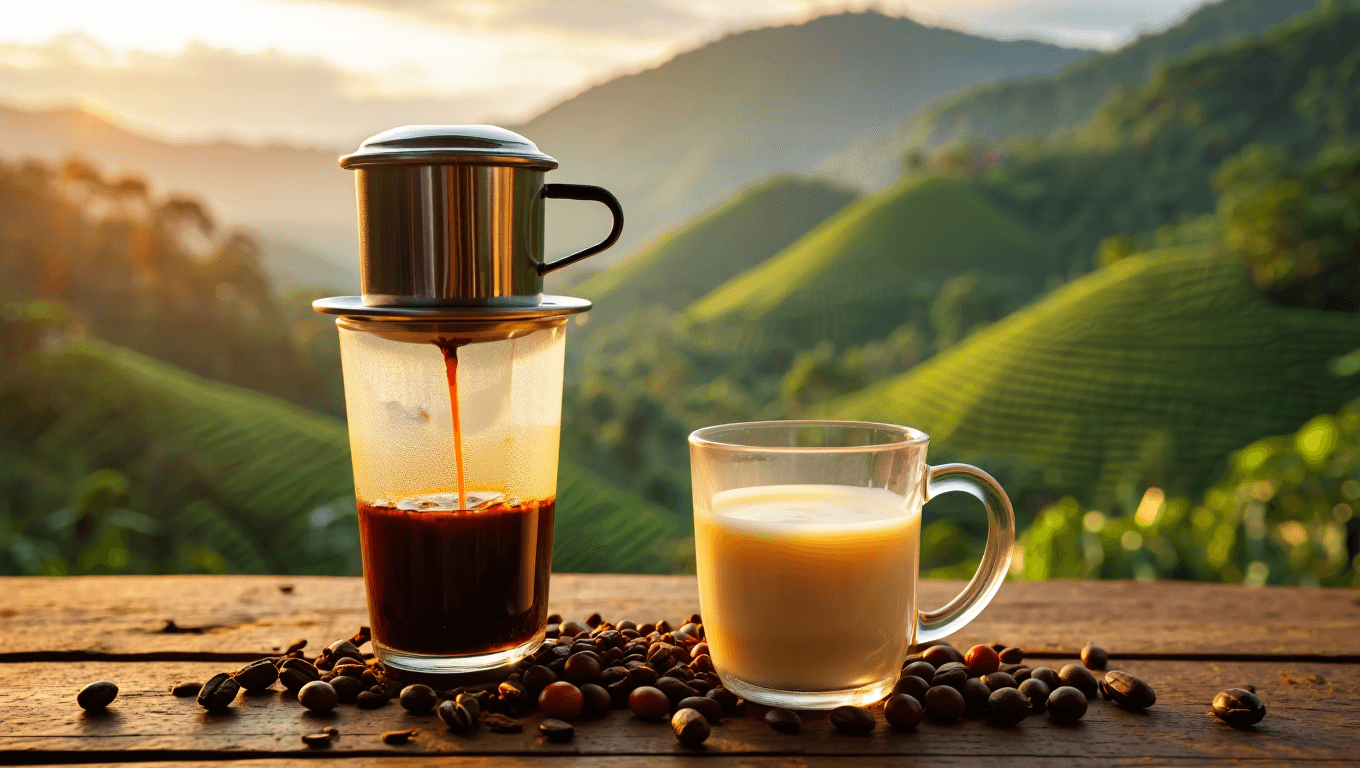
What makes Vietnamese Robusta the secret ingredient for authentic South Indian filter coffee?
When you walk into a traditional South Indian home or a bustling tiffin room in Chennai, the aroma that greets you isn't just "coffee"—it is a complex, deep, and earthy fragrance that promises a thick, velvety cup. This specific sensory experience owes much of its soul to the Robusta bean, of which Vietnam is the undisputed global king. For high-intent coffee consumers seeking that elusive "hotel-style" taste, understanding the dominance of Vietnamese Robusta is essential. Unlike Arabica, which is prized for its acidity and delicate floral notes, Robusta is the powerhouse of caffeine, body, and crema. Vietnam’s unique terroir in the Central Highlands provides the perfect conditions for producing beans that offer a nutty, chocolatey profile with low acidity. Coffee S10 Brews leverages this understanding of bean profile to ensure our blends replicate the traditional strength that South Indian coffee lovers crave. By sourcing beans that mirror the bold characteristics of top-tier Robusta, we provide a foundation that stands up to the addition of hot, frothy milk without losing its identity.
How does the 80:20 coffee chicory blend create the perfect hotel-style filter coffee?
One of the most frequent questions from coffee enthusiasts is: "Why does my home-brewed coffee lack the thickness of professional hotel coffee?" The answer lies in the ratio. In the world of premium South Indian coffee, the 80:20 coffee-to-chicory blend is considered the gold standard. Chicory, derived from the roasted root of the Cichorium intybus plant, is not merely a filler. When paired with high-quality Robusta—the kind Vietnam has mastered—chicory acts as a flavor enhancer and a texturizer. At Coffee S10 Brews, our Signature 80:20 blend is engineered to maximize the "decoction" strength. The 20% chicory portion helps hold the water in the filter for a longer duration, ensuring a slow, pressurized extraction that pulls every bit of oil and flavor from the 80% coffee portion. This results in a thick, syrupy decoction that provides the characteristic bittersweet finish and dark color that defines the South Indian ritual. Without this precise balance, the coffee often feels thin or overly acidic, failing to capture the "heritage" feel of a true brass-filter brew.
Why is Vietnamese Robusta preferred for heavy-bodied coffee decoction?
Body is a sensory descriptor that refers to the "weight" of the coffee on your tongue. In South Indian filter coffee, a "thin" coffee is a failed coffee. Vietnam’s Robusta beans are the undisputed kings of body because they contain significantly more soluble solids than other varieties. This means when you brew them, more of the coffee's physical matter ends up in your cup. For the South Indian consumer, this translates to a decoction that doesn't get "lost" when mixed with milk and sugar. Coffee S10 Brews focuses on small-batch roasting to ensure these soluble solids are preserved. By controlling the roast profile, we ensure the beans develop deep caramelization without entering the territory of burnt bitterness. This "brewing intelligence" allows the home brewer to achieve a professional-grade consistency where the coffee feels creamy even before the milk is added. The robustness of these beans is what allows the decoction to remain potent, even after the second or third "pour" from the traditional stainless steel filter.
What is the difference between filter coffee and instant coffee?
To truly appreciate the craftsmanship of a brand like Coffee S10 Brews, one must understand the fundamental difference between the "convenience" of instant coffee and the "ritual" of filter coffee. Instant coffee is essentially pre-brewed coffee that has been dehydrated into powder or granules. In the process, most of the volatile aromatic compounds—the "smell" of fresh coffee—are lost. Authentic South Indian filter coffee, on the other hand, is a fresh extraction. It relies on the physics of gravity and time. The following table highlights why high-intent consumers are moving away from instant alternatives in favor of the traditional brew.
| Feature Instant Coffee South Indian Filter Coffee (S10 Brews) | ||
| Ingredients | Often low-grade beans, stabilizers, and acidity regulators. | Premium handpicked Robusta/Arabica and high-grade chicory. |
| Preparation Time | 30 seconds. | 15–20 minutes (for the perfect decoction). |
| Aroma Profile | Muted and flat. | Intense, earthy, and room-filling. |
| Body/Texture | Thin and watery. | Thick, syrupy, and viscous. |
| Caffeine Kick | Mild and short-lived. | Strong, sustained energy due to Robusta dominance. |
Why chicory is used in South Indian coffee and is it necessary?
The debate over chicory is long-standing, but for the authentic South Indian palate, it is non-negotiable. Many consumers ask, "Is chicory bad for health?" or "Am I being cheated by not getting 100% coffee?" The reality is that chicory is a caffeine-free root that has been used for centuries to complement coffee. In the context of the bold Robusta beans that Vietnam pioneered on the global stage, chicory provides a necessary counterbalance. While Robusta provides the "punch" and the caffeine, chicory provides the "length" and the "sweetness." It tempers the natural bitterness of the coffee beans, adding a woody, nutty depth that sugar alone cannot provide. At Coffee S10 Brews, we treat chicory as a premium ingredient, sourcing only the highest quality roasted roots to ensure it enhances rather than distracts. The 80:20 ratio is not about cost-cutting; it is about the chemistry of the perfect decoction. Without chicory, the decoction would lack the surface tension required to create that beautiful, frothy "crema" when the coffee is "pulled" between the tumbler and the dabara.
Is Vietnamese Robusta better than Arabica for traditional milk-based coffee?
In global specialty coffee circles, Arabica is often touted as "superior." However, for the specific application of South Indian filter coffee, Arabica can often be a poor choice. Arabica beans are delicate; their subtle notes of citrus or jasmine are completely obliterated the moment you add boiling milk and sugar. This is why Vietnam’s Robusta has become the industry standard for strength. Robusta contains nearly double the caffeine of Arabica and significantly less sugar, which gives it a "harder" taste that cuts through the fat of the milk. Coffee S10 Brews blends prioritize this functional superiority. Our roasting process targets the "second crack" of the bean, ensuring that the oils are brought to the surface. When you use an 80:20 blend of high-quality Robusta and chicory, you are getting a cup that has more antioxidants and a more powerful stimulant effect than a standard Arabica cup. This makes it the ideal morning brew for those who need a functional, flavorful start to their day.
Comparing 100% Coffee vs. 80:20 Coffee–Chicory Blends
For the modern consumer, choosing between a "pure" coffee and a "blended" coffee can be confusing. The choice depends entirely on how you intend to consume the drink. If you are drinking black coffee (like an Americano), 100% coffee is preferred. But if you are making traditional filter coffee, the blend is superior. Here is how they compare:
| Criteria 100% Pure Coffee 80:20 Coffee–Chicory Blend | ||
| Best Served As | Black coffee, Espresso, Pour-over. | With hot milk and sugar (Filter Kaapi). |
| Viscosity | Lower (Liquid flows easily). | Higher (Syrup-like consistency). |
| Flavor Notes | Acidic, fruity, or floral. | Caramel, malty, and earthy. |
| Milk Compatibility | May taste "sour" when mixed with milk. | Perfectly balanced and bold with milk. |
| Extraction Style | Fast extraction. | Slow dripping for maximum strength. |
How to brew authentic filter coffee at home using premium blends?
Mastering the South Indian filter is a rite of passage. Even with the best beans from Coffee S10 Brews, technique matters. The "Brewing Intelligence" pillar of our brand aims to turn every kitchen into a professional coffee house. First, ensure your stainless steel filter is clean and dry. Add 2-3 tablespoons of Coffee S10 Brews 80:20 powder to the upper compartment. Use the plunger to lightly press the powder down—not too hard, or the water won't pass through; not too light, or the water will run through without extracting flavor. Pour freshly boiled water (just off the boil) over the powder and close the lid. The "magic" happens over the next 15 minutes as gravity pulls the water through the tightly packed grounds. This first decoction is the "soul" of your coffee. At Coffee S10 Brews, we recommend using a 1:2 ratio of decoction to milk for that perfect hotel-style strength. Always use whole milk and froth it using the "pulling" method to aerate the drink, which enhances the perception of sweetness and aroma.
Why does South Indian coffee taste stronger than Western espresso?
Many travelers and coffee connoisseurs notice that a small cup of South Indian filter coffee feels "stronger" than a double shot of espresso. This isn't just an illusion. The strength comes from two factors: the bean variety and the brewing time. Espresso is a high-pressure, fast extraction (25–30 seconds). Filter coffee is a zero-pressure, slow extraction (15–20 minutes). The extended contact time between the water and the finely ground Robusta beans allows for a higher concentration of caffeine and bitter compounds to be pulled into the decoction. Furthermore, the use of Vietnamese-style Robusta, which is naturally higher in caffeine, creates a physiological "kick" that espresso—usually made with Arabica—cannot match. Coffee S10 Brews ensures that our grind size is perfectly calibrated for this slow drip. Too fine, and the filter clogs; too coarse, and you lose that "strong" hotel-style punch. We provide the consistency that allows you to wake up to the same powerful cup every single morning.
Hotel-style Coffee vs. Home-brewed Coffee: Bridging the Gap
The "pain point" for most consumers is the inability to replicate the frothy, thick, and aromatic experience of a high-end South Indian restaurant. The following table identifies why Coffee S10 Brews is the solution to this problem.
| The "Hotel" Secret Common "Home" Mistake The Coffee S10 Brews Fix | ||
| High-grade Robusta blends. | Using generic or "instant" powders. | Authentic small-batch 80:20 blends. |
| Slow, gravity-based dripping. | Rushing the process or using cold water. | Educational guides on proper "decoction" timing. |
| Freshly roasted, oily beans. | Using stale powder sitting on a shelf. | Controlled roasting cycles for maximum freshness. |
| Aerated "pulled" froth. | Simply stirring milk into coffee. | Brewing tools and techniques for modern homes. |
Why freshness and consistency are the hallmarks of a premium coffee brand?
In the coffee industry, oxygen is the enemy. Once coffee is roasted and ground, it begins to lose its aromatic oils almost immediately. This is why many "supermarket" brands taste flat—they have been sitting in warehouses for months. Coffee S10 Brews tackles this by focusing on freshness and consistency. We treat every batch with the same level of craftsmanship, ensuring that the handpicked beans are roasted to the exact degree required to highlight their natural Robusta sweetness. Our packaging is designed to lock in the "bloom" of the coffee. For the South Indian consumer, consistency is key because the morning coffee is a ritual. You want the same strength, the same color, and the same aroma every day. By bridging the gap between traditional craftsmanship and modern quality control, Coffee S10 Brews ensures that the "Vietnam-level" quality of Robusta is delivered straight to your doorstep, fresh and full of life.
Frequently Asked Questions about South Indian Filter Coffee
1. Why is Vietnamese Robusta so popular in South Indian coffee blends?
Vietnam is the world's largest producer of Robusta, offering a bean that is exceptionally consistent in its bold, chocolatey, and earthy profile. This fits perfectly with the South Indian preference for a "strong" coffee that maintains its character even when mixed with milk and sugar.
2. Can I make South Indian filter coffee without a traditional brass filter?
While the traditional filter is best for the authentic "slow-drip" experience, you can use a French Press or an AeroPress with a Coffee S10 Brews blend. However, the thickness of the decoction may vary. For the true hotel-style taste, the traditional gravity filter is highly recommended.
3. How long does the decoction stay fresh?
For the best aroma and taste, the decoction should be used within 3 to 4 hours of brewing. While you can store it in the refrigerator for up to 24 hours, it will lose some of the volatile aromatics that provide that "fresh-brewed" smell.
4. Is chicory safe for daily consumption?
Yes, chicory is a natural root and is completely caffeine-free. It has been consumed for centuries and is even known for having prebiotic properties (inulin) that can aid digestion. In an 80:20 blend, it serves purely to enhance the texture and flavor of the coffee.
5. Why is my coffee decoction too thin?
This usually happens if the water is added too quickly, the powder is ground too coarsely, or the powder isn't tamped (pressed) down sufficiently in the filter. Using a precision-ground blend like Coffee S10 Brews ensures the grind size is optimal for a thick extraction.
6. Does filter coffee have more caffeine than instant coffee?
Generally, yes. Because filter coffee uses a higher volume of ground beans (especially Robusta) and involves a longer extraction time, it typically delivers a more potent caffeine kick than a standard teaspoon of instant coffee.
7. What is the best milk to use for filter coffee?
Full-fat or whole milk is the traditional choice. The fats in the milk carry the flavors of the coffee and chicory, creating a creamy mouthfeel that balances the robustness of the 80:20 blend.
Experience the Craftsmanship of Coffee S10 Brews
Transform your daily coffee ritual from a mundane task into a celebration of South Indian heritage. At Coffee S10 Brews, we don’t just sell coffee; we provide the keys to mastering the perfect brew. Explore our signature 80:20 blends, dive into our comprehensive brewing guides, and discover why we are the trusted choice for those who refuse to compromise on authenticity. Visit our education resource center to learn more about the journey from the highlands of Vietnam to your kitchen table.