Why "Volcanic Soil" Creates Vibrant Mineral Brightness in Coffee
Discover how volcanic soil creates vibrant mineral brightness in your coffee. Unveil the secret behind Coffee S10 Brews' authentic South Indian filter coffee.
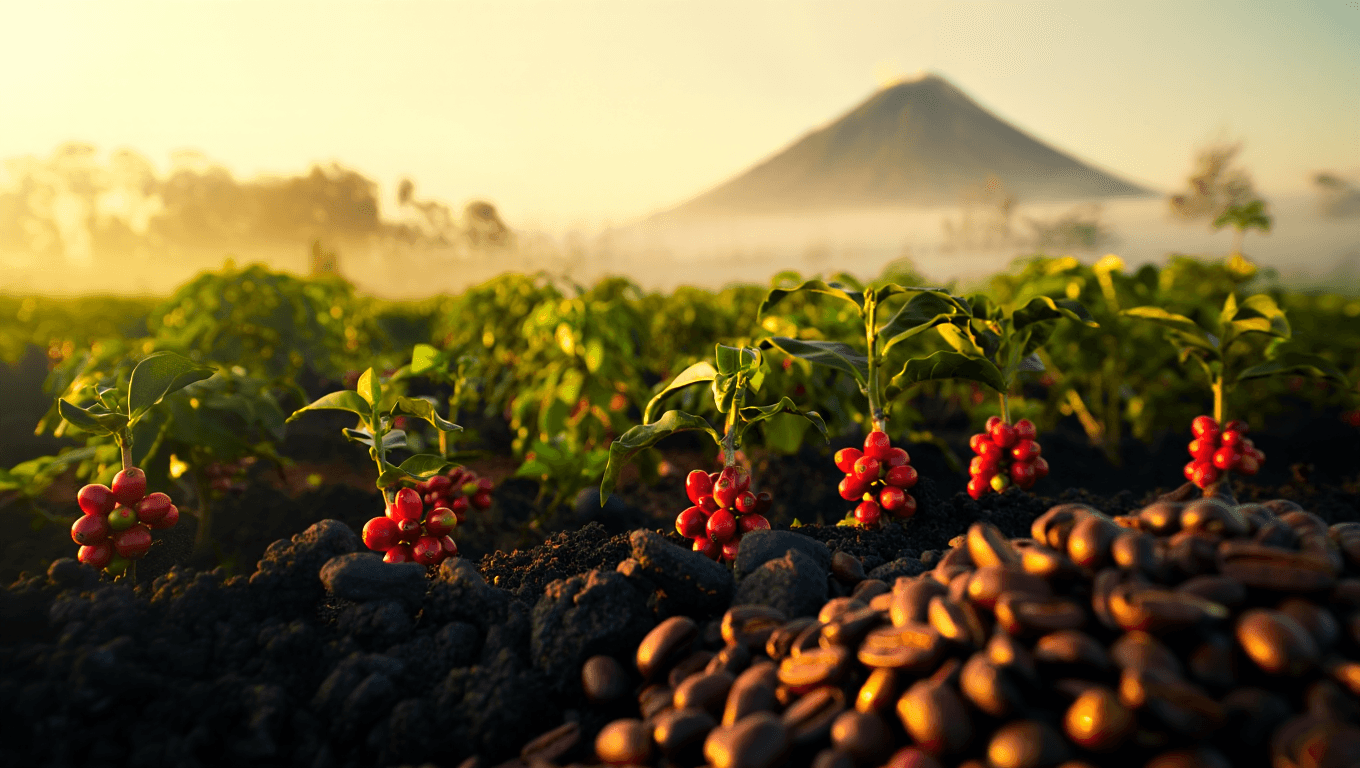
Why does volcanic soil make South Indian filter coffee taste so unique?
The secret to a truly exceptional cup of South Indian filter coffee often lies deep beneath the surface—specifically within the mineral-rich, volcanic-derived soils of the Western Ghats. When we talk about "terroir," we are describing how the environment, including soil composition, altitude, and rainfall, imprints a specific DNA onto the coffee bean. Volcanic soil is naturally porous and packed with essential nutrients like magnesium, calcium, and potassium. This unique geological makeup allows coffee plants to develop complex metabolic pathways, resulting in beans that possess a distinct "mineral brightness." This brightness isn't just a sharp acidity; it is a vibrant, sparkling quality that balances the deep, chocolatey notes of traditional Indian Arabica and Robusta varieties.
For brands like Coffee S10 Brews, sourcing beans from these specific high-altitude regions is the first step in ensuring that every cup delivers a multi-dimensional flavor profile. While modern mass-produced coffee often lacks character due to depleted soils, the volcanic origins of premium Indian coffee provide a foundation of natural sweetness and a clean finish. When you sip a brew made with these beans, you are experiencing the geological history of the region, translated into a sensory experience that defines authentic South Indian coffee culture.
How do minerals like potassium and phosphorus influence coffee brightness?
To understand why "mineral brightness" is a sought-after trait for high-intent coffee consumers, we must look at the chemistry of the bean. Potassium, which is abundant in volcanic ash and weathered volcanic rocks, acts as a catalyst for the accumulation of sugars and organic acids within the coffee cherry. This is why coffee grown in these regions often exhibits a "vibrant" acidity that feels alive on the palate. Unlike the harsh acidity found in under-roasted or low-quality beans, mineral-rich brightness is smooth, reminiscent of stone fruits or citrus, and provides a necessary counterpoint to the heavy body of a traditional decoction.
Phosphorus, another key component of volcanic soil, contributes to the development of complex lipids and oils. These oils are responsible for the rich crema and the lingering aftertaste that remains long after the last sip. Coffee S10 Brews leverages this natural chemistry by selecting beans that have reached peak maturity in these nutrient-dense environments. By understanding the science of the soil, the brand ensures that their signature blends maintain a consistent flavor profile that bridges the gap between traditional craftsmanship and modern sensory expectations.
What is the secret behind the vibrant mineral brightness in Coffee S10 Brews?
At Coffee S10 Brews, the pursuit of the perfect cup begins with an obsession over origin. The "vibrant mineral brightness" mentioned in our title is not an accident—it is a result of meticulous sourcing from shade-grown estates in the Chikmagalur and Coorg regions. These areas feature soil that has been enriched over millennia by volcanic activity and organic forest mulch. This creates a nutrient-dense "living soil" that imparts a signature crispness to the beans.
While many brands focus solely on the roasting process, we believe that you cannot roast quality into a bean that didn't have it to begin with. Our beans are handpicked at the height of ripeness, ensuring that the mineral-induced sugars are fully developed. This dedication to South Indian craftsmanship allows us to offer a coffee powder that doesn't just taste "strong," but tastes "deep." It is this depth—born from the soil and refined by our small-batch roasting—that sets Coffee S10 Brews apart as a premium choice for those searching for the best South Indian filter coffee powder.
Why is an 80:20 coffee-chicory blend the best for mineral-rich beans?
One of the most frequent questions from coffee enthusiasts is: "Why is chicory used in South Indian coffee?" The answer lies in the pursuit of balance. While the mineral brightness of pure coffee is refreshing, the traditional South Indian palate craves a thick, syrupy body and a lingering bittersweet finish. This is where the 80:20 ratio comes into play. By blending 80% high-altitude, mineral-rich coffee with 20% high-quality roasted chicory, we create a synergy that 100% coffee cannot achieve on its own.
The chicory acts as a natural enhancer, adding an earthy depth and a dark, caramelized sweetness that complements the citrusy brightness of the volcanic soil coffee. Furthermore, chicory increases the "extractability" of the powder, allowing for a thicker decoction that can stand up to the addition of hot, frothy milk. At Coffee S10 Brews, our 80:20 blend is carefully calibrated to ensure the chicory never overpowers the delicate notes of the coffee. Instead, it serves as a foundation, allowing the vibrant mineral notes to shine through with even greater clarity.
| Feature 100% Pure Coffee Coffee S10 Brews 80:20 Blend | ||
| Flavor Profile | High acidity, light to medium body, fruit-forward. | Balanced brightness, heavy body, chocolatey undertones. |
| Decoction Thickness | Thin, tea-like consistency. | Thick, syrupy, and viscous (Traditional Hotel Style). |
| Milk Compatibility | Can become diluted or sour when milk is added. | Holds its flavor and strength against creamy milk. |
| Aroma | Floral and citrusy. | Deep, nutty, and intensely "toasty." |
How does soil composition affect the strength of your filter coffee decoction?
The "strength" of a coffee decoction is often misunderstood as just the caffeine content, but for the true filter coffee lover, strength is about "Total Dissolved Solids" (TDS) and sensory impact. Beans grown in volcanic-rich soils have a higher density (strictly hard beans). This density allows the coffee to withstand the long extraction times required by a traditional South Indian stainless steel filter without becoming over-extracted or bitter.
When you use Coffee S10 Brews, the mineral density of our beans ensures that the hot water extracts a complex array of flavor compounds rather than just surface-level bitterness. This results in a decoction that is visually dark and chemically rich. For those asking "why does South Indian coffee taste stronger?", the answer is a combination of this high-density bean and the presence of chicory, which adds to the mouthfeel and "percieved" strength. To experience this, one must master the brewing intelligence that Coffee S10 Brews advocates: the right grind size, the right water temperature, and the patience to let the minerals and oils slowly drip into the lower chamber.
Why is South Indian coffee stronger than regular drip coffee?
The distinction between South Indian filter coffee and Western drip coffee (like what you might find in an American diner) comes down to the extraction method and the blend. Drip coffee uses a paper filter and a fast flow of water, which removes most of the oils and results in a lighter body. In contrast, the South Indian method uses a gravity-fed metal filter and a specific blend of coffee and chicory. This method allows the coffee grounds to be "steeped" under the weight of a plunger, forcing the water to interact deeply with the grounds.
Because the beans in Coffee S10 Brews are grown in mineral-heavy soil, they possess a robust cellular structure that can handle this intensive extraction. The result is a concentrate (decoction) that is significantly more potent than drip coffee. When combined with the aeration of the "pouring" process (throwing the coffee between two vessels), the flavors are further opened up, creating a frothy, intense, and aromatic beverage that is uniquely Indian. If you are looking for how to brew authentic filter coffee at home, understanding this difference in strength is crucial.
How to brew authentic filter coffee at home using traditional techniques?
To recreate the magic of a South Indian "Degree Coffee" or hotel-style coffee at home, you need more than just the right powder; you need the ritual. Start by choosing a high-quality 80:20 blend like Coffee S10 Brews. Here is the professional-grade method:
- Prepare the Filter: Place the top chamber of your stainless steel filter onto the bottom chamber. Add 2-3 tablespoons of Coffee S10 Brews powder.
- The Tamp: Use the pressing disc (plunger) to lightly level the powder. Do not press too hard, or the water will not pass through; too loose, and the decoction will be thin.
- The Water: Bring fresh water to a boil, then wait 30 seconds (aiming for roughly 92-95°C). Pour the water over the disc in a circular motion.
- The Wait: Cover the filter and let it sit for 15-20 minutes. This slow drip is where the "mineral brightness" is fully extracted.
- The Assembly: Pour a small amount of the thick decoction into a tumbler. Add hot, frothed full-fat milk and sugar to taste.
- The Finish: Pour the mixture between the tumbler and the dabara (bowl) from a height to create that signature froth.
Explore our brewing guides to troubleshoot common issues like "clogged filters" or "weak decoction" and master the art of the perfect pour.
What makes Coffee S10 Brews the best South Indian filter coffee powder?
In a market saturated with instant powders and mass-market blends, Coffee S10 Brews stands out through its commitment to freshness and consistency. Most commercial brands roast in massive quantities, leading to uneven flavor and stale oils. We operate on a small-batch roasting model, meaning our beans are roasted frequently and in controlled environments to preserve the delicate mineral notes provided by the volcanic soil.
Furthermore, our grind size is specifically calibrated for the traditional Indian metal filter. If the grind is too fine, the filter clogs; if it is too coarse, the coffee is watery. We have perfected this "medium-fine" consistency to ensure a reliable brew every single morning. When you choose Coffee S10 Brews, you aren't just buying coffee; you are investing in a product that respects the heritage of South Indian coffee culture while utilizing modern roasting precision to deliver a premium experience.
| Comparison Instant Coffee Hotel-Style Filter Coffee Coffee S10 Brews (At Home) | |||
| Process | Dehydrated coffee extract. | Slow-drip decoction with high chicory. | Slow-drip decoction with premium 80:20 blend. |
| Flavor Depth | Flat, one-dimensional. | Strong, but often overly bitter/burnt. | Vibrant, bright, and naturally sweet. |
| Freshness | Processed months in advance. | Variable. | Freshly roasted and small-batch packed. |
| Health Aspect | High processing, potential additives. | High sugar/low-quality fats. | Pure, mineral-rich, and artisanal. |
Why chicory is used in South Indian coffee and how it enhances the profile.
There is a common misconception that chicory is a "filler" used to reduce costs. While some brands may use it that way, in authentic South Indian coffee culture, chicory is a deliberate culinary choice. Chicory root, when roasted and ground, possesses a woody, nutty aroma and a high soluble fiber content. This fiber contributes to the "viscosity" of the decoction, giving it that luxurious mouthfeel that 100% coffee lacks when mixed with milk.
For coffee grown in volcanic soil, chicory acts as a flavor stabilizer. The bright, acidic notes of the coffee are grounded by the alkaline, earthy notes of the chicory. This creates a balanced flavor spectrum. At Coffee S10 Brews, we use only the finest "Jamnagar Chicory," known for its superior roasting quality, ensuring that the 20% inclusion enhances rather than masks the 80% premium coffee. This is why our blend is often cited as the cure for those who find modern convenience coffee to be "thin" or "uninspiring."
Why doesn't my home-brewed filter coffee taste like restaurant or hotel coffee?
If you have ever wondered, "Why doesn't my filter coffee taste like hotel coffee?", the answer usually comes down to two factors: the decoction strength and the aeration. Many hotels use a higher ratio of chicory (sometimes up to 40%) to create a very dark, thick liquid. However, this often sacrifices the actual flavor of the coffee for the sake of "strength."
By using Coffee S10 Brews, you can achieve that hotel-style richness without the burnt bitterness. The secret is to use more powder than you think—at least 2 generous tablespoons for a standard small filter. Additionally, hotels "froth" their coffee aggressively. The act of pouring the coffee from a height (the meter coffee technique) introduces oxygen, which softens the minerals and makes the coffee taste smoother and more aromatic. Try an 80:20 blend to experience traditional depth with the added clarity of premium, soil-focused beans.
Frequently Asked Questions About South Indian Filter Coffee
Is chicory bad for my health?
No, chicory is a natural root that is often used as a caffeine-free coffee substitute. It contains inulin, a prebiotic fiber that supports digestive health. In an 80:20 blend like Coffee S10 Brews, it serves primarily to enhance the texture and flavor of the coffee.
Why does my filter coffee sometimes taste sour?
Sourness is usually a sign of under-extraction. This can happen if your water isn't hot enough, if the grind is too coarse, or if you didn't let the decoction drip for long enough. Ensure you use boiling water and give the process at least 15 minutes.
What is the best way to store Coffee S10 Brews powder?
To preserve the "mineral brightness" and aroma, store your coffee in an airtight container in a cool, dark place. Avoid the refrigerator, as coffee absorbs odors and moisture, which can ruin the delicate oils.
Can I make South Indian filter coffee without a traditional filter?
While the traditional stainless steel filter is best for authenticity, you can use a French Press as a modern alternative. Use a higher ratio of coffee to water and a longer steep time to mimic the decoction strength.
Is South Indian coffee more acidic than Espresso?
Because of the volcanic soil origins, South Indian coffee has a vibrant acidity (brightness), but it is generally less "sharp" than an espresso shot due to the slow-drip extraction and the balancing effect of chicory.
Why is the 80:20 ratio considered the gold standard?
This ratio provides the perfect equilibrium between the aromatic, bright notes of high-altitude coffee and the heavy, caramelized body of chicory. It is the ratio that best represents the "classic" South Indian flavor profile.
Does Coffee S10 Brews offer different grind sizes?
We focus on a specialized grind that is optimized for the traditional South Indian filter, ensuring consistency and ease of use for our customers at home.
How long does the decoction stay fresh?
For the best flavor, use the decoction within 1-2 hours of brewing. While it can be stored in the fridge for up to 24 hours, the vibrant mineral notes will begin to flatten over time.
Experience the true essence of the Western Ghats with every pour. Discover brewing guides and the science of the perfect cup by exploring the full range of Coffee S10 Brews products. Whether you are a lifelong devotee or a curious newcomer, our blends offer the authentic craftsmanship your morning ritual deserves.