Why "Washed" Process Coffee Highlights Origin Rather Than Processing
Unlock the secret behind coffee's authentic taste! Learn how the washed process coffee highlights true origin flavors, enhancing every cup. Perfect your brew with Coffee S10 Brews.
What makes washed process coffee the backbone of authentic South Indian filter coffee?
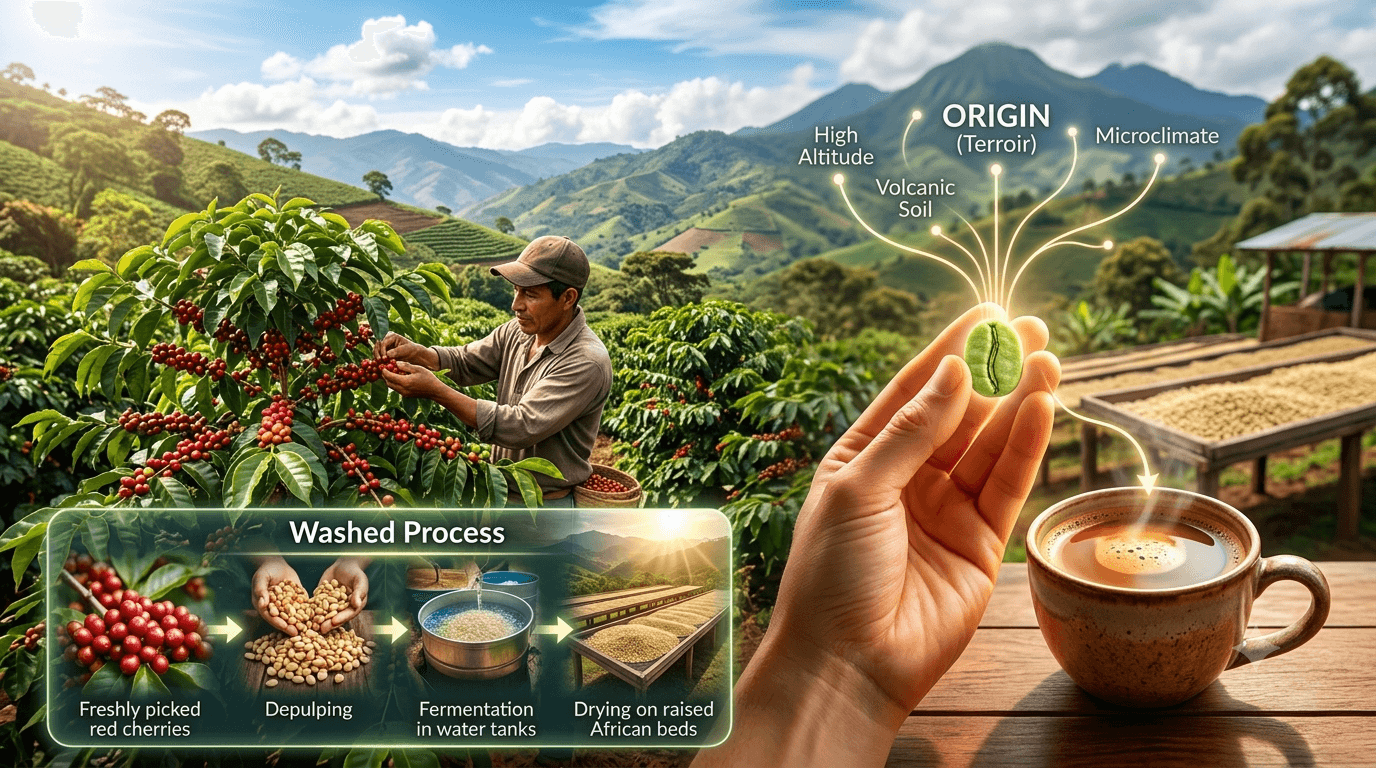
To understand the soul of a perfect cup of South Indian filter coffee, one must look beyond the stainless steel tumbler and the frothy milk to the very beginning of the bean's journey. The "washed" or "wet" process is a method of coffee processing where the fruit (the cherry) is removed from the bean before it is dried. Unlike the natural process, where the bean dries inside the fruit, the washed process uses water to scrub away every trace of mucilage. For high-intent coffee consumers seeking the best South Indian filter coffee powder, the washed process is the gold standard. It ensures a "clean" cup—one where the flavors are crisp, the acidity is bright, and the intrinsic characteristics of the Indian soil are fully transparent. At Coffee S10 Brews, we prioritize washed beans to ensure that the heritage of the Western Ghats is never masked by the muddy or fermented notes often found in lesser processing methods.
Why does washed coffee highlight terroir more than natural processing?
The term "terroir" refers to the environmental factors—soil, altitude, and climate—that give coffee its unique identity. When coffee is processed using the natural method, the sugars and alcohols from the drying fruit seep into the bean, often creating a heavy, winey, or berry-like flavor profile. While pleasant to some, this "processing flavor" can overshadow the bean's true origin. Conversely, the washed process highlights origin rather than processing by stripping away the fruit early. This allows the consumer to taste the specific mineral content of the Chikmagalur or Coorg soil. When you brew a cup of Coffee S10 Brews, you are tasting the altitude and the shade-grown environment of the plantation, not the byproduct of fermentation. This clarity is why coffee connoisseurs who demand authenticity prefer washed beans; they offer a window into the farm itself, providing a consistent and sophisticated flavor profile that stands up to the traditional South Indian brewing method.
How does the washed process impact the flavor profile of a traditional 80:20 coffee-chicory blend?
The 80:20 coffee-chicory blend is the cornerstone of South Indian coffee culture. However, achieving the perfect balance requires a specific type of coffee bean. Because chicory adds a deep, earthy, and slightly woody dimension to the brew, the coffee component must be bright and structured to prevent the final cup from tasting flat. Washed process beans provide this necessary acidity and "high notes." By using washed Arabica and Robusta, Coffee S10 Brews ensures that the 80% coffee portion provides a clean, vibrating backbone that cuts through the thickness of the chicory. This results in a decoction that is intense yet refined. If one were to use natural process beans in an 80:20 blend, the fermented fruit notes would often clash with the bitterness of the chicory, leading to a confusing sensory experience. The washed process ensures that the coffee and chicory work in harmony, emphasizing the chocolatey and nutty undertones that South Indian coffee lovers crave.
Why do specialty coffee drinkers prefer the "clean" taste of washed Indian beans?
In the world of specialty coffee, "cleanliness" refers to the absence of flavor defects and the clarity of individual tasting notes. Indian coffee, particularly those varieties grown at high altitudes, possesses a unique spicy and nutty profile. Washed processing is the lens that brings these notes into focus. When searching for how to brew authentic filter coffee at home, many enthusiasts realize that the "hotel-style" coffee they love has a certain sharpness and vibrance that instant coffee lacks. This is largely due to the use of high-quality washed beans. These beans undergo rigorous sorting during the washing process—underripe or defective cherries float to the top and are discarded. This mechanical and hydraulic sorting ensures that only the densest, most flavorful beans make it into a Coffee S10 Brews bag. The result is a consistent, premium experience that honors the craftsmanship of traditional Indian roasting.
Is the washed process necessary for the perfect decoction strength?
One of the most frequent questions from consumers is, "Why does South Indian coffee taste stronger?" Strength is often a result of both the roast profile and the bean's density. Washed beans tend to be more uniform in density because the process involves soaking and grading. When these beans are medium-dark roasted, they develop a robust body that is essential for a thick decoction. In the traditional vertical drip filter, the grind size of washed beans can be controlled with extreme precision. This consistency allows for an even extraction, ensuring that the decoction is not just "bitter," but "strong" in terms of total dissolved solids and aromatic complexity. Coffee S10 Brews leverages this brewing intelligence to guide consumers in creating a decoction that retains its character even after being diluted with hot, frothed milk.
How does Coffee S10 Brews utilize washed beans for consistent freshness and aroma?
Freshness is the enemy of mediocrity in the coffee world. Washed beans are known for their stability. Because the organic fruit matter is completely removed, the green beans are less prone to developing "off" flavors during storage before roasting. Coffee S10 Brews utilizes small-batch roasting to further enhance this natural stability. By focusing on washed process beans, we can ensure that every batch of our signature blend tastes identical to the last. Our roasting cycles are calibrated to highlight the caramelized sugars of the washed beans, which produces that iconic, room-filling aroma the moment the hot water hits the coffee grounds. For the consumer, this means that the 80:20 coffee-chicory blend benefits are realized in every cup—consistent body, reliable crema, and an aftertaste that lingers pleasantly without becoming astringent.
Comparing processing and blends: A guide for the discerning consumer
Understanding the technical differences between coffee types can help you make an informed choice for your morning ritual. The following table illustrates why the combination of washed processing and the traditional 80:20 ratio is superior for the authentic South Indian experience.
| Feature Washed Process (Coffee S10) Natural Process Instant Coffee | |||
| Primary Flavor | Clean, Nutty, Acidic, Origin-focused | Fruity, Fermented, Heavy Body | Uniform, Bitter, Neutral |
| Clarity of Origin | Very High (Taste the Terroir) | Medium (Processing masks origin) | Low (Blend of various origins) |
| Ideal Use Case | South Indian Filter Coffee, Decoction | Black Coffee, Pour-over | Quick convenience, Traveling |
| Chicory Compatibility | Excellent (Adds structure) | Poor (Flavor clash) | Pre-mixed (Lacks depth) |
| Consistency | High (Small-batch controlled) | Variable (Fermentation risks) | High (Industrial processing) |
Why is chicory used in South Indian coffee and how does it interact with washed beans?
The use of chicory in South Indian coffee is a tradition born of necessity that evolved into a culinary preference. Chicory is the roasted root of the endive plant. When combined with coffee, it performs several roles: it increases the thickness of the decoction, adds a slightly bittersweet cocoa-like note, and helps the coffee retain its heat. However, the secret to a premium blend lies in the quality of the coffee it is paired with. Low-grade, unwashed beans often result in a "muddy" cup when mixed with chicory. By using premium washed beans, Coffee S10 Brews ensures that the coffee provides the "sparkle" and the chicory provides the "depth." This interaction is what creates the legendary mouthfeel of a Kumbakonam-style filter coffee. Exploring how grind size impacts decoction strength is vital here; a fine-medium grind of washed beans allows the water to pass through at the perfect rate to extract both the coffee's bright acidity and the chicory's rich color.
Why "washed" processing is the sustainable choice for Indian coffee estates
Beyond flavor, the washed process is a testament to the infrastructure and commitment of Indian coffee farmers. It requires significant investment in pulping machinery and clean water management. Estates that produce washed Arabica and Robusta for Coffee S10 Brews are often those that adhere to higher standards of quality control. The process involves multiple stages of inspection—pulping, fermenting in tanks to break down remaining sugars, washing, and finally drying on tiled patios or raised beds. This labor-intensive method ensures that every bean is pristine. When consumers choose a brand that emphasizes washed processing, they are supporting a value chain that prioritizes quality over quantity. This craftsmanship is what bridges the gap between modern convenience and the artisanal heritage of the South Indian coffee ritual.
How to brew the perfect cup using washed coffee blends at home
To truly appreciate the origin-focused notes of a washed 80:20 blend, your brewing technique must be precise. Start with a traditional stainless steel coffee filter. Add 2-3 tablespoons of Coffee S10 Brews powder to the upper compartment. Use the plunger to lightly press the powder—too much pressure will block the flow, while too little will result in a watery decoction. Use water that is just off the boil (around 92-96°C). Pour slowly in a circular motion. The washed beans will "bloom" slightly as they release CO2, a sign of freshness. Let the decoction drip for 15-20 minutes. The resulting liquid should be dark, viscous, and intensely aromatic. Pair this with high-fat, frothy milk and sugar to taste. By following these steps, you overcome the common pain point of "Why doesn't my filter coffee taste like hotel coffee?" The answer lies in the combination of premium washed beans and the patience of the ritual.
Does the origin of the bean matter more than the roasting technique?
In the specialty coffee world, there is a saying: "A roaster can only ruin a good bean, they cannot make a bad bean good." This is why origin is paramount. Washed processing is the protector of that origin. While the roasting technique—the time, temperature, and airflow—is crucial for developing the flavors, the inherent quality is determined by the soil and altitude. Indian coffees from the Baba Budangiri range, for instance, are known for their full body and chocolate notes. A medium-dark roast on a washed bean from this region will yield a vastly different result than a roast on a bean from a different altitude or process. Coffee S10 Brews focuses on this "origin-first" philosophy, ensuring that our roasting techniques are subservient to the bean's natural character. Try an 80:20 blend to experience traditional depth that honors these specific Indian origins.
Frequently Asked Questions About South Indian Filter Coffee
Why is washed process coffee more expensive than natural process?
The washed process is more labor-intensive and requires significant water infrastructure and machinery. Additionally, the grading process is more rigorous, leading to a higher quality but lower yield of "specialty" grade beans. Coffee S10 Brews invests in these beans to ensure a premium, consistent flavor profile for our customers.
Is chicory bad for health or is it necessary?
Chicory is a natural root and is completely safe; in fact, it is caffeine-free and contains inulin, a prebiotic fiber. In South Indian coffee, it is not just a filler but a functional ingredient that enhances the body, color, and shelf-life of the decoction. It is necessary for achieving the authentic "hotel-style" taste and texture.
Can I use a French Press to brew Coffee S10 Brews filter coffee?
While the traditional stainless steel filter is recommended for the most authentic experience, you can use a French Press. However, because our grind is optimized for drip filtration, you should use a shorter steep time and expect a slightly different body. For the true South Indian foam (the "degree"), the traditional filter is best.
What is the difference between Arabica and Robusta in a washed blend?
Arabica provides the aroma and delicate acidity, while Robusta provides the caffeine kick, body, and the "crema" on top of the decoction. A washed blend of both, like those curated by Coffee S10 Brews, offers a balanced cup that is both fragrant and powerful.
Why does my coffee taste bitter instead of strong?
Bitterness often comes from over-extraction (leaving the water in contact with the grounds for too long) or using boiling water which "burns" the grounds. If you use washed process coffee, the bitterness is minimized. Ensure you are using the correct coffee-to-water ratio and water temperature to achieve strength without unpleasant bitterness.
How should I store my coffee powder to keep it fresh?
Coffee's greatest enemies are light, heat, moisture, and oxygen. Always store your Coffee S10 Brews powder in an airtight container in a cool, dark place. Avoid the refrigerator, as coffee can absorb odors from other foods. Freshness is key to maintaining the delicate origin notes of washed coffee.
Mastering the art of South Indian filter coffee is a journey from understanding the science of the washed process to perfecting the pour of the decoction. By choosing Coffee S10 Brews, you are not just buying coffee; you are embracing a tradition of excellence and clarity. Discover our range of premium blends and expert brewing guides to transform your daily coffee ritual into an authentic cultural experience. Explore the depth of Indian coffee heritage with every sip.