Why You Need a "Scale" for Better Coffee: Measuring Time and Weight
Unlock better coffee! Discover why a brewing scale is essential for perfect South Indian filter coffee. Master consistency & rich taste with Coffee S10 Brews tips.
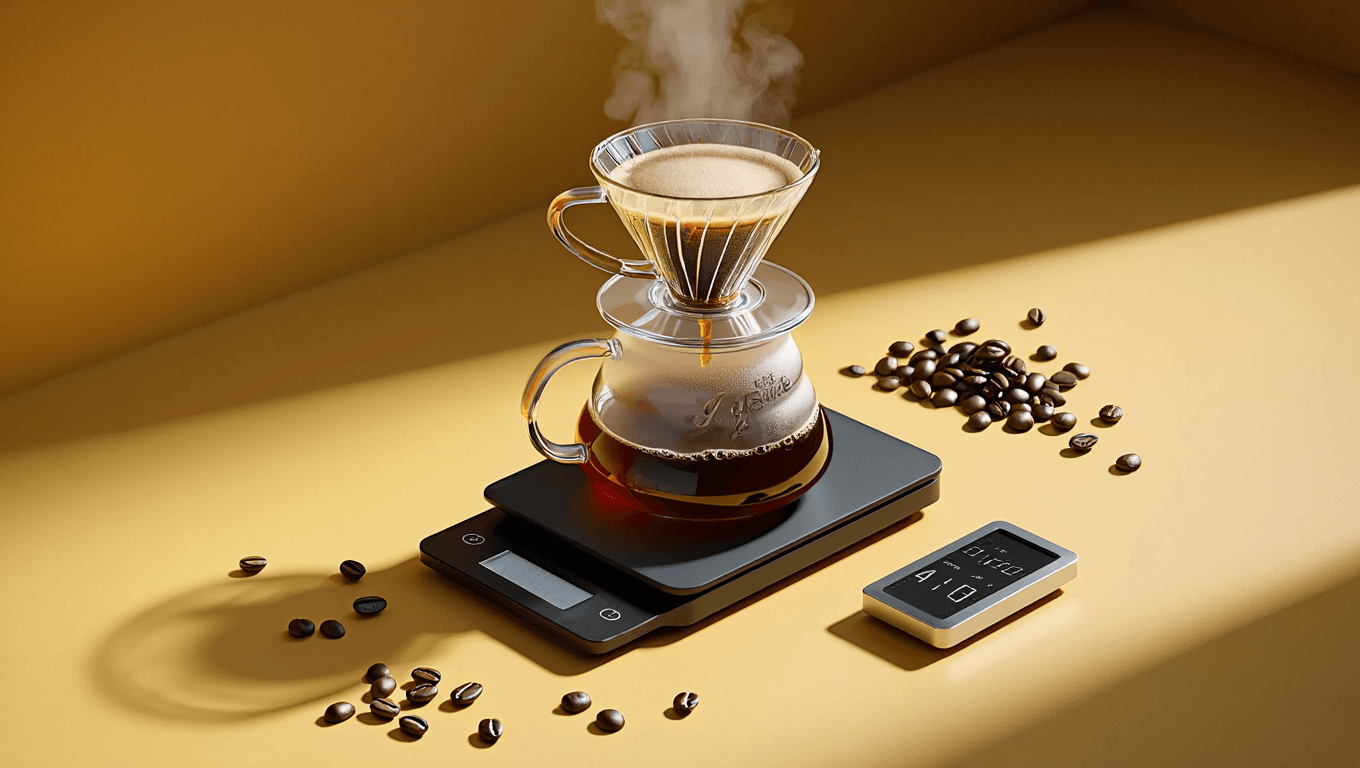
Why is a digital scale essential for consistent South Indian filter coffee?
Most Indian households rely on the traditional "tablespoon" method to measure their coffee powder. While this carries a sense of nostalgia, it is the primary reason why your morning cup tastes heavenly one day and underwhelming the next. Coffee, especially a specialized 80:20 blend like those from Coffee S10 Brews, is an organic product with varying densities. A tablespoon of finely ground coffee might weigh 7 grams today and 10 grams tomorrow depending on how tightly it is packed. By switching to a digital scale, you eliminate the guesswork. Precision allows you to replicate the exact "hotel-style" strength every single morning. When you weigh your coffee to the gram, you ensure that the water-to-coffee ratio remains constant, allowing the nuanced notes of handpicked beans and high-quality chicory to shine through without being drowned out by excess water or scorched by over-concentration.
How does the 80:20 coffee-chicory ratio affect brewing weight?
Understanding the physics of your coffee powder is the first step toward mastery. A traditional South Indian filter coffee powder is often a blend, with the 80:20 ratio being the gold standard for body and aroma. Chicory is denser and more water-soluble than coffee beans. If you are using Coffee S10 Brews’ signature 80:20 blend, the weight of the powder behaves differently during the "bloom" phase than a 100% Arabica roast. Because chicory absorbs water and expands differently, measuring by weight ensures you aren't over-filling your brass filter. Over-filling leads to a "choked" brew where the water cannot pass through, while under-filling leads to a weak, watery decoction. Using a scale allows you to find the "sweet spot"—typically 20 to 25 grams of powder for a standard small stainless steel filter—guaranteeing that thick, syrupy decoction that defines the authentic South Indian experience.
Measuring the decoction: Why volume is misleading compared to weight?
Many home brewers measure their yield by looking at the lines on their coffee filter or using a measuring cup. However, the volume of the decoction can be deceptive due to the "crema" or the micro-foam produced by fresh Coffee S10 Brews grounds. Weight is an absolute measurement; volume is an estimate. If you aim for 60ml of decoction, weighing it ensures you have exactly 60g of liquid gold. This precision is vital because the first press (the first drop-down) is significantly more concentrated than the second. By weighing the output, you can decide exactly when to stop the extraction to avoid the bitter, over-extracted tannins that emerge at the end of the brewing cycle. This level of brewing intelligence is what separates a casual drinker from a connoisseur who understands the craftsmanship behind every gram of roasted bean.
What is the golden ratio for authentic South Indian filter coffee?
The search for the "best South Indian filter coffee powder" often ends in disappointment if the ratio is wrong. Through rigorous testing, Coffee S10 Brews recommends a starting ratio of 1:2 or 1:3 for the decoction. This means for every 20 grams of coffee powder, you should aim for 40 to 60 grams of final decoction. This ratio is specifically designed for the 80:20 blend. The 20% chicory acts as a catalyst, providing the viscosity needed to hold up against the addition of hot, frothy milk. If you use too much water (a higher ratio), you lose the chocolatey, earthy base notes. If you use too little, the decoction becomes a thick paste that won't mix smoothly. A scale is the only tool that allows you to hit these precise mathematical targets, bridging the gap between home brewing and the legendary consistency of iconic South Indian tiffin centers.
Understanding extraction time: Why slow drips define the S10 Brews experience?
While weight tells you how much, time tells you how well. The South Indian filter is a gravity-based percolation method. If your decoction drips through in two minutes, the water hasn't had enough contact time with the grounds to extract the oils and flavors. If it takes thirty minutes, the water has likely cooled down too much, leading to a sour profile. Ideally, a perfect 80:20 decoction should take between 10 to 15 minutes to fully extract. By using a timer (often built into coffee scales), you can monitor this flow. If it’s too fast, your grind might be too coarse or you haven't tamped the powder firmly enough with the plunger. Coffee S10 Brews provides a consistent medium-fine grind specifically calibrated for this timeframe, ensuring that every second of contact time contributes to a rich, aromatic aftertaste.
Comparing Coffee Experiences: Why Precision Matters
To understand why the "scale and timer" approach is superior, we must look at how South Indian filter coffee stands against other methods. The following table highlights the differences in intensity, composition, and the necessity of precision.
| Feature Instant Coffee 100% Coffee (Arabica/Robusta) S10 Brews 80:20 Blend | |||
| Composition | Processed extract & fillers | Pure roasted beans | 80% Premium Coffee, 20% High-grade Chicory |
| Body/Viscosity | Thin and watery | Medium body | Thick, syrupy, and lingering |
| Brewing Precision | Not required | High (to avoid acidity) | Critical (to balance strength & aroma) |
| Best Use Case | Quick caffeine fix | Black coffee/Pour-over | Traditional Milk-based Filter Coffee |
| Flavor Profile | One-dimensional | Acidic/Fruit-forward | Nutty, Chocolatey, Bold |
Does water temperature and weight impact the "hotel coffee" flavor?
The "hotel coffee" secret isn't just the beans; it's the thermal stability and the water-to-powder weight. Many people use boiling water (100°C), which burns the delicate coffee solids in a 80:20 blend, leaving a burnt, ashy taste. The ideal temperature for brewing Coffee S10 Brews is between 92°C and 96°C. By using a scale to measure your water, you ensure you aren't pouring a massive volume of water that will sit in the upper chamber and cool down too quickly. Small, measured pours keep the slurry temperature high, which is essential for the chicory to release its natural sugars. These sugars provide the "crema-like" golden layer on top of the decoction, a hallmark of artisanal South Indian craftsmanship that is impossible to achieve through guesswork.
How to dial in your grind size using weight-based measurements
Grind size and weight are two sides of the same coin. If you find that 20g of coffee is producing a bitter brew, you might assume you need less coffee. However, the real issue might be the grind size being too fine, causing over-extraction. Coffee S10 Brews maintains a strict quality control over grind consistency to ensure that 20g of our powder always occupies the same volume in your filter. This consistency allows you to "dial in" your recipe. Once you find that 22g of powder with 50g of water produces your perfect cup, you can repeat that exact formula every day. This eliminates the frustration of "hit or miss" coffee and turns your morning ritual into a meditative, reliable practice of modern accessibility meets traditional flavor.
The science of chicory density in Coffee S10 Brews 80:20 blend
Why chicory is used in South Indian coffee is a question of both tradition and science. Chicory is more soluble than coffee, meaning it gives up its flavor and color much faster. If you measure by volume, you might accidentally get a scoop that is chicory-heavy, leading to an overly medicinal taste. Because Coffee S10 Brews uses small-batch roasting and careful blending, our 80:20 ratio is perfectly homogenized. Using a scale ensures that you are getting the intended proportion of both ingredients in every brew. The weight-based approach respects the chemistry of the blend, allowing the 80% coffee to provide the caffeine and aroma while the 20% chicory provides the depth and that iconic dark tint that distinguishes authentic filter coffee from a standard latte.
Why time is the secret ingredient in a perfect South Indian decoction
In the world of fast food and instant gratification, the South Indian filter is a lesson in patience. But even patience needs to be measured. If you leave your decoction to sit for three hours, it undergoes oxidation, losing its vibrant aroma and turning bitter. A scale with a timer helps you realize that the "sweetest" part of the decoction is pulled within the first 15 to 20 minutes. Modern coffee enthusiasts often use the "double-bloom" technique: pouring 20g of water, waiting 30 seconds (measured on the scale), and then pouring the remaining water. This ensures the grounds are fully saturated, preventing "channeling" where water bypasses the coffee. This level of control is how Coffee S10 Brews empowers you to bring professional-grade brewing into your home kitchen.
Frequently Asked Questions About South Indian Filter Coffee Precision
1. Why doesn’t my home-brewed filter coffee taste like the coffee in high-end South Indian hotels?
Hotel coffee is consistent because they use fixed ratios and often brew in large quantities which retain heat better. At home, you can replicate this by using a digital scale to ensure a strict 1:2 or 1:3 coffee-to-water ratio and using a high-quality 80:20 blend like Coffee S10 Brews.
2. Is a 80:20 coffee-chicory blend better than 100% pure coffee?
For the specific South Indian "Kaapi" experience, an 80:20 blend is superior. The chicory adds the necessary thickness and earthy bitterness that survives the addition of fats in milk. Pure coffee often feels too thin when mixed with traditional Indian buffalo or cow milk.
3. How many grams of coffee powder should I use for one cup of filter coffee?
For a strong single serving, we recommend using 15 to 20 grams of Coffee S10 Brews powder to yield approximately 40-50ml of decoction, which is then mixed with 100-120ml of frothy, hot milk.
4. Can I use a normal kitchen scale for coffee?
Yes, as long as it has a "tare" function and measures in 0.1g or 1g increments. Accuracy is key to maintaining the consistency of your decoction strength.
5. Why is my filter coffee decoction too thin?
This usually happens if the water-to-coffee weight ratio is too high (too much water) or if the coffee powder is not tamped down correctly. Using a scale to measure exactly 50ml of water for 20g of powder will solve this.
6. Does the freshness of the powder affect the weight?
Freshly roasted coffee like Coffee S10 Brews contains CO2. When you pour water, it "blooms" and expands. Older, stale coffee won't expand, often leading to a faster flow rate and a weaker taste, even if the weight is the same. Always use fresh grounds for the best results.
Mastering the art of South Indian filter coffee is a journey from guesswork to precision. By incorporating a scale and timer into your ritual, you honor the craftsmanship of the beans and the tradition of the blend. Explore the full range of Coffee S10 Brews products and dive into our extensive brewing guides to transform your daily caffeine fix into a masterpiece of flavor and consistency.