Why Your Coffee Tastes "Grassy": The Science of Under-Developed Roasts
Tired of 'grassy' coffee? Dive into why your brew tastes off & the science of under-developed roasts. Ensure perfect South Indian filter coffee with Coffee S10 Brews.
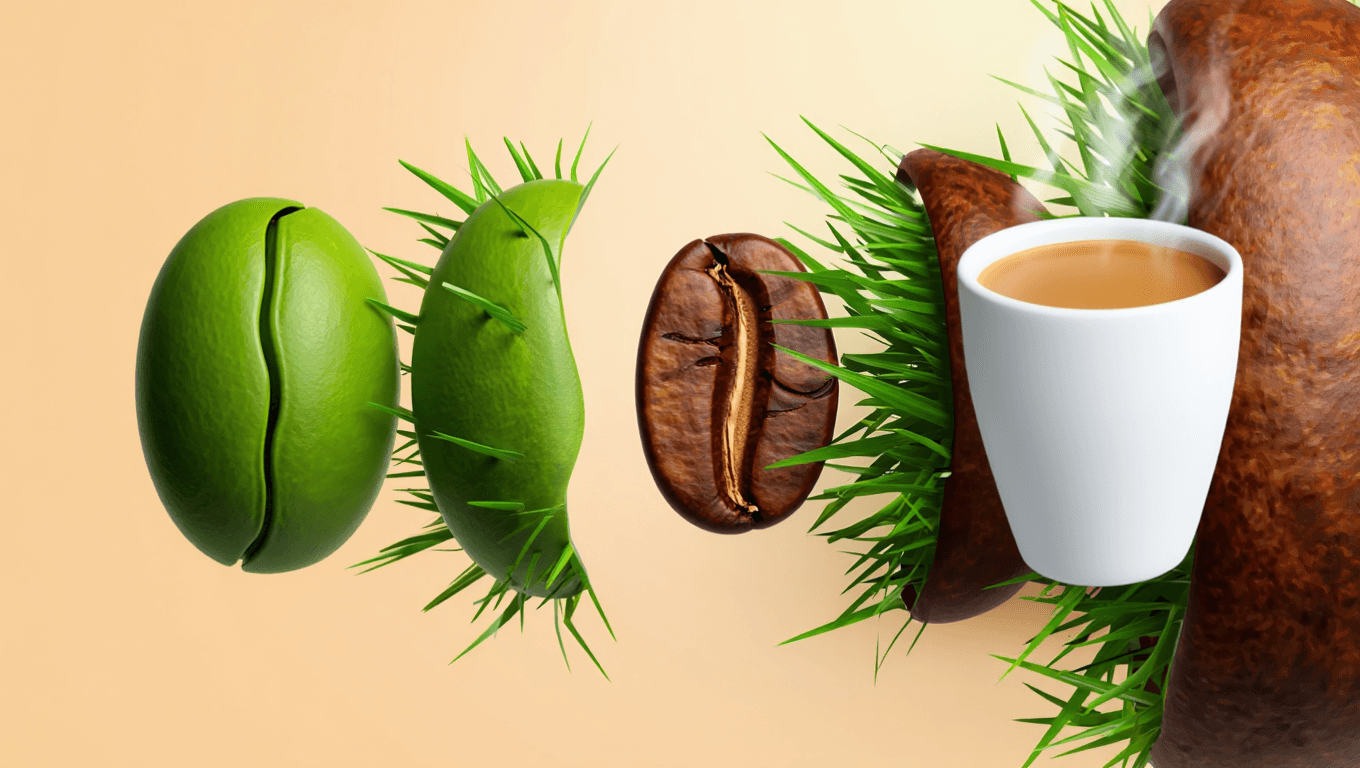
Why does my coffee taste like grass? Understanding the science of under-developed roasts
There is a specific, disappointing sensation when you anticipate the deep, nutty, and chocolatey aroma of a South Indian filter coffee, only to be met with a thin, sour, and distinctly "grassy" flavor profile. This "grassy" note is not a hallmark of "light" or "citrusy" specialty coffee; it is a clinical sign of an under-developed roast. In the world of professional coffee roasting, under-development occurs when the heat hasn't penetrated the core of the coffee bean sufficiently to transform its raw, organic compounds into the sugars and oils we love. For those seeking the best South Indian filter coffee powder, understanding this science is the first step toward achieving that elusive "hotel-style" brew at home.
When coffee beans are harvested, they are essentially seeds of a fruit, packed with chlorogenic acids, proteins, and complex carbohydrates. In their raw state, they taste like dried peas or hay. The roasting process is a violent, chemical transformation designed to break these compounds down. If the roaster pulls the beans out too early—or if the heat application is too timid—the center of the bean remains raw. At Coffee S10 Brews, we counter this by employing traditional small-batch roasting techniques that ensure heat equilibrium, ensuring every bean in our signature 80:20 blend is developed through to its core.
Is your filter coffee under-extracted or under-developed?
It is common for home brewers to confuse "sourness" with "under-development." However, there is a clear distinction. Under-extraction happens during brewing (often due to water that is too cold or a grind that is too coarse), while under-development is a failure of the roasting process itself. If your coffee tastes like green bell peppers, raw nuts, or wet straw, you are likely dealing with under-developed beans. This is a common issue with mass-produced commercial coffees that prioritize speed over precision.
For a traditional South Indian filter coffee, development is non-negotiable. The slow-drip decoction process used in a stainless steel filter is designed to pull out heavy solubles. If the roast is under-developed, the decoction will lack the viscosity and "mouthfeel" required to stand up to hot, frothed milk. Coffee S10 Brews focuses on a medium-dark roast profile specifically engineered for the filter coffee ritual, ensuring that the grassy precursors are fully converted into caramels and pyrazines.
Why the 80:20 coffee-chicory blend is the cure for thin, grassy brews
One of the most frequent questions from coffee enthusiasts is: "Why is chicory used in South Indian coffee?" While some view it as a filler, the reality is far more scientific. In a high-quality 80:20 blend, chicory serves as a bridge. Under-developed roasts often feel "thin" on the palate. Chicory, which is the roasted root of the Cichorium intybus plant, contains inulin, a type of soluble fiber that adds significant body and a woody sweetness to the cup.
The 80:20 ratio practiced by Coffee S10 Brews is not a random choice. It is the gold standard of South Indian craftsmanship. The 80% Arabica and Robusta beans provide the caffeine, acidity, and complex aromas, while the 20% chicory enhances the crema and provides a "buffer" against the harshness of a dark roast. This synergy eliminates the grassy notes of under-development and replaces them with a rich, velvety texture that "clings" to the milk. Explore how an 80:20 blend can transform your morning ritual by providing the depth that 100% coffee sometimes lacks in a traditional filter setup.
The impact of heat transfer: Conduction vs. Convection in roasting
To understand why some coffee tastes grassy, we must look at the roaster. In many industrial setups, beans are roasted quickly at very high temperatures. This often leads to "tipping" or "scorching," where the outside of the bean looks dark, but the inside remains raw and grassy. This "internal rawness" is the primary culprit behind inconsistent flavor batches.
At Coffee S10 Brews, we prioritize consistency through controlled roasting cycles. By balancing conduction (contact with the drum) and convection (hot air flow), we ensure the beans undergo the Maillard reaction uniformly. This chemical reaction between amino acids and reducing sugars is what creates the "brown" flavors—toffee, malt, and cocoa. Without proper development, these sugars never form, leaving you with a cup that tastes more like a vegetable garden than a coffee plantation.
Comparing coffee types: Why roast and composition matter
Understanding the difference between your options can help you diagnose why your current brew might be failing your taste buds. Use the table below to see how different coffee formats stack up against the traditional South Indian standard.
| Feature Instant Coffee 100% Arabica (Light Roast) Coffee S10 Brews (80:20) | |||
| Flavor Profile | Flat, bitter, monotonous | Acidity, floral, often "grassy" if under-developed | Rich, nutty, chocolatey, full-bodied |
| Body/Viscosity | Very Low | Low to Medium | High (Syrupy decoction) |
| Best Brewing Method | Stir in water | Pour-over, Aeropress | Traditional Brass/Steel Filter |
| Milk Compatibility | Poor (tastes watered down) | Moderate (acid can curdle or clash) | Excellent (designed for frothed milk) |
How grind size and water temperature hide or highlight "grassiness"
If you have high-quality beans but are still experiencing off-flavors, your brewing intelligence needs an upgrade. For South Indian filter coffee, the grind size must be "medium-fine"—resembling the texture of table salt. If the grind is too coarse, the water passes through too quickly, resulting in under-extraction that mimics the sourness of under-developed roasts.
Water temperature is the second variable. Boiling water (100°C) can shock the coffee grounds, extracting bitter tannins, while lukewarm water fails to extract the oils. The ideal temperature for a Coffee S10 Brews decoction is between 92°C and 96°C. At this range, the water effectively dissolves the caramelized sugars created during our roasting process, ensuring the "grassy" organic compounds are overwhelmed by the rich, developed flavors of the bean.
Why doesn't my home-brewed filter coffee taste like hotel coffee?
This is the most common pain point for South Indian coffee drinkers. The "hotel coffee" experience—that thick, frothy, lung-filling aroma—is a result of two factors: the decoction density and the milk-to-coffee ratio. Most hotels use a heavy-duty 80:20 or 70:30 blend and allow the decoction to sit and thicken. More importantly, they use high-quality, freshly roasted beans rather than stale, store-bought tins.
| Variable Typical Home Brew Hotel-Style (Darshini/Bhavan) Coffee S10 Brews Strategy | |||
| Coffee Powder Quality | Commercial, mass-produced | Freshly ground, high chicory | Handpicked beans, small-batch roast |
| Decoction Strength | Thin, watery | Thick, "oily" syrup | Optimized grind size for max density |
| Roast Level | Variable/Inconsistent | Consistently Dark/Developed | Precision-controlled development |
The Coffee S10 Brews promise: Consistency from plantation to cup
The transition from a "grassy," unsatisfying cup to a premium experience requires a brand that understands the chemistry of the bean. We treat coffee as a craft, not a commodity. By focusing on handpicked beans from the Western Ghats, we ensure that only the ripest cherries enter our roasters. Ripe cherries have higher sugar content, which means better development during the roast and zero "grassy" aftertaste.
Our commitment to modern accessibility means we provide the brewing guides necessary for you to replicate professional results at home. Whether you are using a traditional brass dabara or a modern electric filter, our 80:20 signature blend is roasted to be "forgiving," ensuring a great cup even if your brewing technique is still a work in progress. Discover our range of brewing education resources to refine your technique.
Common misconceptions about chicory and roast development
There is a growing myth that 100% coffee is always superior to a blend. In the context of South Indian coffee culture, this is scientifically inaccurate. 100% coffee, especially when roasted to a "light" or "medium" level to preserve origin flavors, often lacks the soluble solids to create a satisfying decoction. This is why many people find specialty coffee "sour" or "grassy" when they try to brew it in a traditional filter.
Chicory is not an adulterant; it is a functional ingredient. It has a higher solubility than coffee, meaning it helps the water "grip" the coffee grounds and extract more flavor in a shorter amount of time. When paired with the expertly developed roasts of Coffee S10 Brews, chicory acts as a flavor enhancer that eliminates any lingering vegetal notes, leaving only a clean, chocolatey finish.
| Property 100% Coffee (Pure) 80:20 Coffee-Chicory Blend | ||
| Aroma | Complex, acidic, floral | Deep, malty, "traditional" |
| Decoction Color | Dark brown, transparent | Ink-black, opaque |
| Solubility | ~25-30% | ~40-50% |
| Best Use | Black coffee, Espresso | Filter coffee with milk and sugar |
Frequently Asked Questions: Mastering the South Indian Filter Brew
Why does my filter coffee taste sour and thin?
Sour and thin coffee is usually a sign of under-extraction or under-developed light roasts. Ensure you are using a medium-fine grind and water just off the boil. For the best results, use a dedicated South Indian blend like Coffee S10 Brews, which is roasted specifically to eliminate these acidic, thin notes.
Is chicory bad for health?
No, chicory is a natural root that has been used for centuries. It is caffeine-free and contains inulin, a prebiotic fiber that supports digestive health. In an 80:20 blend, it provides a unique flavor profile and body that is essential for authentic South Indian filter coffee.
How do I store my coffee powder to keep it from tasting "flat"?
Oxygen is the enemy of coffee. Once a bag is opened, the aromatic oils begin to oxidize. Store your Coffee S10 Brews powder in an airtight container in a cool, dark place. Avoid the refrigerator, as moisture can seep in and ruin the roast development.
What is the "first crack" in coffee roasting?
The "first crack" is an audible sound during roasting where the bean physically expands and releases moisture. For South Indian filter coffee, the roast must proceed well past the first crack to ensure the "grassy" moisture is gone and the sugars are fully caramelized.
Can I use an Aeropress to make South Indian filter coffee?
Yes, you can mimic a decoction using an Aeropress by using a very high coffee-to-water ratio. However, for the most authentic flavor and "crema" development, a traditional stainless steel or brass filter is recommended, as it allows for a slower, gravity-fed extraction.
Why is my decoction not thick enough?
If your decoction is watery, you may be using too much water or a grind that is too coarse. The "tampering" or pressing down of the powder in the upper chamber of the filter is also crucial. It should be firm enough to slow the water flow, allowing it to pick up the oils and chicory solubles.
Elevate your coffee ritual with Coffee S10 Brews
The journey from a "grassy," under-developed cup to the perfect South Indian filter coffee is one of science and tradition. By choosing a brand that understands the necessity of roast development, the balance of the 80:20 ratio, and the importance of freshness, you are not just buying coffee—you are investing in a ritual. Stop settling for thin, sour brews that leave you unsatisfied. Explore the Coffee S10 Brews collection today and experience the authentic, full-bodied depth of masterfully roasted Indian coffee. Whether you need a new brewing guide or the perfect signature blend, we are here to ensure your morning cup is nothing short of extraordinary.