Why Your Grinder Burrs Need Monthly Deep Cleaning
Your perfect filter coffee starts here! Discover why monthly deep cleaning your grinder burrs is crucial for optimal flavor & aroma. Coffee S10 Brews.
Why does my home-brewed filter coffee taste bitter compared to Coffee S10 Brews?
Many coffee enthusiasts in India struggle with a common dilemma: despite buying the best South Indian filter coffee powder, the final cup lacks that smooth, chocolatey finish found in traditional "hotel-style" coffee. The culprit is rarely the bean alone; it is often the invisible buildup of rancid coffee oils on your grinder burrs. When coffee beans are roasted, they release caffeol, an essential oil responsible for that intoxicating aroma. Over time, these oils coat the internal components of your grinder. If not deep-cleaned monthly, these oils oxidize, turning rancid and imparting a harsh, metallic bitterness to your fresh 80:20 coffee-chicory blend.
At Coffee S10 Brews, we emphasize that brewing is a holistic ritual. Our small-batch roasting process ensures that every bean arrives at your doorstep brimming with volatile aromatics. However, if those beans pass through a grinder clogged with old residue, the delicate balance of our signature blend is compromised. Deep cleaning your burrs ensures that the "freshness" we work so hard to preserve actually makes it into your stainless steel tumbler.
How does coffee oil buildup affect the 80:20 coffee-chicory blend aroma?
The 80:20 coffee-chicory blend is a masterpiece of South Indian craftsmanship. The 80% premium Arabica and Robusta beans provide the caffeine and complex flavor profile, while the 20% chicory adds thickness, a woody sweetness, and a rich, dark crema. However, chicory is more hygroscopic than coffee, meaning it absorbs moisture more readily. When chicory particles interact with old oils trapped in your grinder, they can form a sticky paste that hinders the grinder’s performance.
This buildup doesn't just slow down your machine; it actively "mutes" the high notes of the coffee. You might find that your decoction lacks the floral or nutty undertones you expect from a premium brand. By maintaining a monthly deep-cleaning schedule, you allow the natural sweetness of the 80:20 blend to shine through without being masked by the "ghosts" of past brews. For those seeking the best South Indian filter coffee powder experience, a clean path from hopper to filter is non-negotiable.
Is deep cleaning burrs necessary for South Indian filter coffee powder?
A common misconception is that because South Indian filter coffee uses a medium-fine grind, the grinder doesn't need as much maintenance as an espresso setup. This couldn't be further from the truth. The medium-fine grind required for a traditional brass filter demands high precision. If your burrs are coated in "fines" (microscopic dust particles from previous sessions), the grinder cannot produce a consistent particle size. This results in "channeling" during the decoction process, where water finds the path of least resistance, leading to a weak, watery brew.
Coffee S10 Brews advocates for "Brewing Intelligence." This means understanding that your equipment is an extension of the bean. When you deep clean your burrs, you are essentially recalibrating your toolkit. You’ll notice that the decoction drops more steadily and the resulting coffee has a more uniform body—a hallmark of authentic South Indian filter coffee craftsmanship.
Why does "hotel-style" filter coffee require perfectly calibrated burrs?
The legendary "hotel coffee" of Madurai and Chennai is famous for its consistency. One of the industry secrets is the rigorous maintenance of their commercial grinding equipment. For a home brewer to replicate that thick, velvety texture, they must pay similar attention to their burr hygiene. A neglected grinder produces "heat," even during short grinding sessions. Friction from oil-clogged burrs can prematurely "re-roast" the coffee powder as it’s being ground, destroying the nuanced flavors of the Coffee S10 Brews signature 80:20 blend.
When you maintain your burrs, you reduce friction and heat. This preserves the integrity of the 80:20 coffee-chicory ratio, ensuring the chicory provides body without becoming unpleasantly pungent. If you’ve ever wondered, "Why does South Indian coffee taste stronger at a restaurant?" the answer often lies in the clarity of the grind, which is only possible with pristine equipment.
What is the difference between surface cleaning and deep burr maintenance?
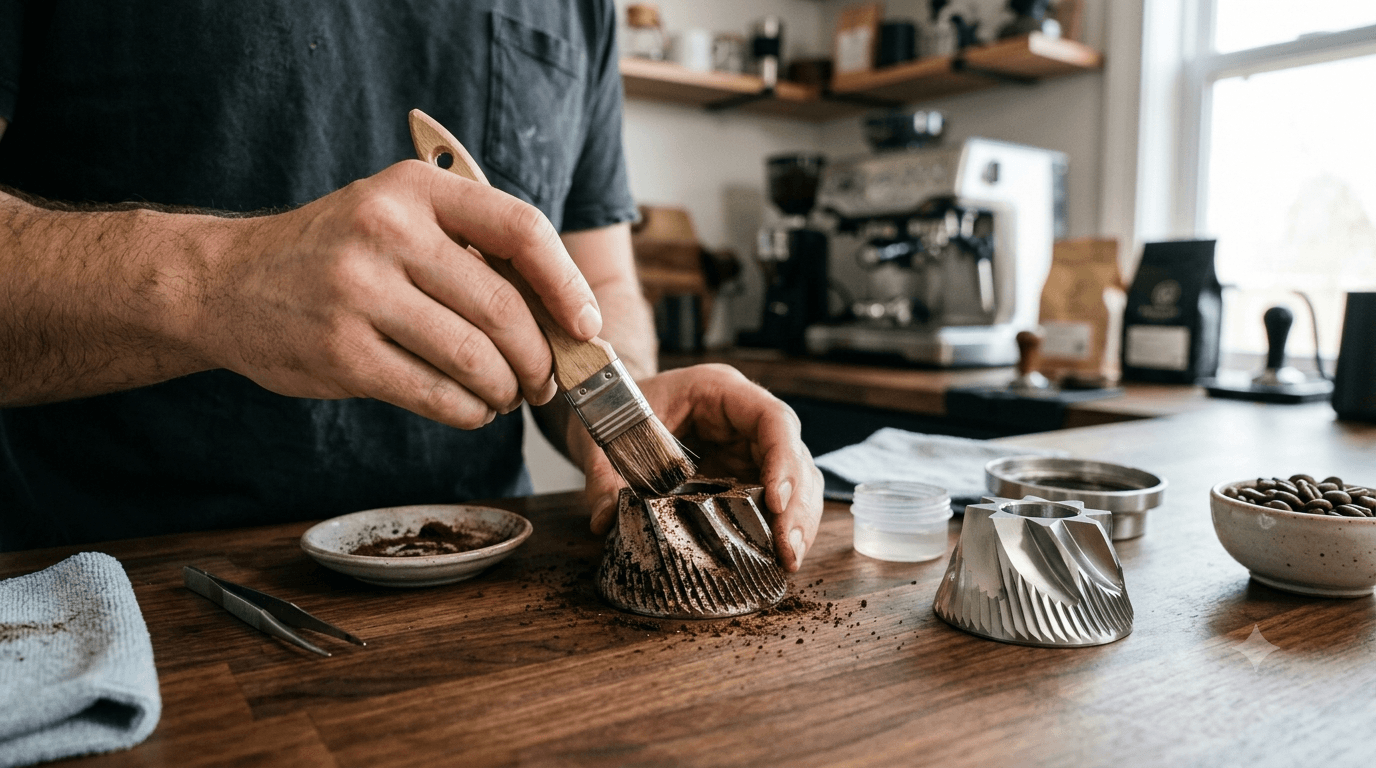
Surface cleaning involves brushing out the visible grounds from the chute or the top of the hopper. While this is a good daily habit, it doesn't address the "stuck" oils and compressed grounds wedged between the burr teeth. Deep maintenance requires Disassembling the burr assembly (following the manufacturer’s guide) and using specialized brushes or vacuum attachments to remove every trace of residue.
For South Indian filter coffee enthusiasts, this monthly ritual is as important as the brewing itself. Coffee S10 Brews provides brewing guides that highlight the importance of equipment care. By removing the burrs, you can also inspect them for wear and tear. Dull burrs "crush" rather than "cut" the beans, leading to an uneven extraction that ruins the mouthfeel of your morning coffee. Explore how grind size impacts decoction strength by ensuring your burrs are sharp and spotless.
How do dirty burrs impact the crema and body of your 80:20 blend?
In the world of South Indian filter coffee, the "crema" (or the frothy layer formed during the pouring/frothing process) is a sign of freshness and correct blending. Chicory plays a significant role in stabilizing this foam. However, the presence of old, oxidized oils acts as a surfactant that can break down the tension of this froth. If your coffee looks "flat" despite using fresh Coffee S10 Brews powder, your grinder might be the culprit.
Furthermore, the "body" or viscosity of the coffee depends on a specific distribution of fines. A dirty grinder produces an unpredictable mix of sizes, often leading to a "muddy" sediment at the bottom of your dabara. A monthly deep clean ensures that the 80:20 blend produces a clean, heavy-bodied decoction that stands up perfectly when mixed with hot, frothed milk. Try an 80:20 blend to experience traditional depth, but only through a clean grinder to see its true potential.
Comparing Coffee Experiences: Why Quality and Maintenance Matter
| Feature Instant Coffee Standard Filter Coffee Coffee S10 Brews (80:20) | |||
| Aroma Profile | Flat, chemical-heavy | Earthy, but often inconsistent | Rich, nutty, with chocolatey notes |
| Body/Viscosity | Thin and watery | Medium | Syrupy and heavy-bodied |
| Preparation | 30 seconds (Convenience) | 15-minute decoction | Crafted ritual for authenticity |
| Role of Chicory | N/A (often synthetic fillers) | Varies by brand | Perfectly balanced 20% for crema |
Can a dirty grinder ruin the freshness of premium small-batch roasted beans?
Freshness is the cornerstone of Coffee S10 Brews. We roast in small batches to ensure that every bag contains the peak expression of the harvest. However, coffee is a "flavor sponge." It absorbs odors from its environment with incredible efficiency. If your grinder burrs are coated in old, rancid oils, your fresh beans will absorb those off-flavors the second they hit the burrs.
This is why monthly deep cleaning is vital. It creates a "flavor vacuum" where only the notes of the current bean are present. When you invest in premium Indian coffee, you are paying for the effort of the farmers and the skill of the roasters. Using a dirty grinder is essentially "contaminating" a high-quality product. To truly honor the South Indian coffee culture, one must respect the ingredients by keeping the processing tools immaculate.
How to brew authentic filter coffee at home with a clean grinder
Once your grinder is deep-cleaned, you will notice an immediate difference in the "dry aroma" of your grounds. To brew the perfect cup, start with Coffee S10 Brews 80:20 powder. Use a traditional stainless steel filter. Add 3 to 4 tablespoons of powder to the upper chamber. Gently press the powder with the plunger (don't compact it too hard). Add freshly boiled water and wait for 15 to 20 minutes for the decoction to drip.
The result of using a clean grinder will be a "bright" decoction. It won't have the muddy, over-extracted bitterness that many mistake for "strength." Real strength in South Indian coffee comes from the density of the decoction and the quality of the chicory blend, not from burnt residues. Discover brewing guides from Coffee S10 Brews to further refine this daily art form.
Why chicory is used in South Indian coffee and how cleaning protects its flavor
The history of chicory in South Indian coffee is one of transition from a colonial additive to a beloved cultural staple. Chicory provides a unique bitterness that complements the acidity of Indian Arabicas. However, chicory contains natural sugars that can caramelize and stick to grinder burrs if they get too hot. This "caramelized" residue is much harder to remove than standard coffee dust.
If you don't perform a monthly deep clean, this chicory residue can harden, affecting the grinder’s calibration over time. By cleaning your burrs, you ensure that the chicory contributes its intended woody and earthy notes rather than a "burnt sugar" taste. This maintenance allows you to enjoy the 80 20 coffee chicory blend benefits to their fullest extent, including the enhanced shelf-life and superior color it brings to the cup.
Comparison of Blend Types for the Home Brewer
| Metric 100% Pure Coffee 80:20 Coffee-Chicory Blend | ||
| Flavor Notes | Acidic, fruity, delicate | Bold, earthy, bittersweet |
| Best Use | Black coffee, Pour-over | South Indian Milk Coffee |
| Mouthfeel | Light to Medium | Very Thick/Syrupy |
| Grinder Impact | Dry, easy to clean | Slightly oily/sticky; requires monthly care |
Step-by-step guide: How to clean your grinder burrs without losing your settings
Cleaning your grinder doesn't have to be a daunting task. First, take a photo of your current grind setting or note the number so you can return to it later. Empty all beans from the hopper and run the grinder until it’s empty. Unplug the machine and remove the outer burr. Use a stiff-bristled brush to knock loose all the visible powder. For a deeper clean, use a vacuum to suck out the fine dust from the internal crevices.
Avoid using water on the burrs, as steel burrs can rust. Instead, use a dry cloth or specialized coffee cleaning pellets that absorb oils as they pass through. Once reassembled, "season" the grinder by grinding a small amount of Coffee S10 Brews beans and discarding them. This ensures any remaining cleaning residue is gone, leaving you with a clean slate for your next authentic brew. This level of care is what separates the casual drinker from the true coffee connoisseur.
Frequently Asked Questions About Grinder Maintenance and Filter Coffee
1. Why does my South Indian filter coffee taste sour?
Sourness is often a sign of under-extraction. This can happen if your grinder is producing inconsistent particle sizes (due to dirty burrs), causing water to flow too quickly through the filter. It could also mean your water temperature is too low.
2. Is chicory bad for my coffee grinder?
Chicory is not "bad," but it is stickier than coffee. It requires you to be more diligent with your monthly deep cleaning to prevent the buildup of "gummy" residues that can affect the motor and grind consistency.
3. How often should I clean my grinder if I brew daily?
For daily home use, a weekly "brush out" is recommended, with a full "deep clean" (disassembling the burrs) once every month to remove oxidized oils.
4. What is the best South Indian filter coffee powder ratio?
The 80:20 ratio (80% coffee, 20% chicory) is widely considered the gold standard for achieving the traditional taste, body, and aroma of authentic South Indian coffee.
5. Can I use rice to clean my coffee grinder?
It is generally not recommended. Rice is much harder than coffee beans and can strain the grinder's motor or even dull the burrs. Use dedicated cleaning pellets or a simple manual deep-clean method.
6. Why is my coffee decoction not dripping properly?
This is likely due to the "fines" produced by a dirty or uncalibrated grinder. These microscopic particles clog the holes in your stainless steel filter. Cleaning your burrs will ensure a more uniform grind and a smoother drip.
7. Does Coffee S10 Brews offer pre-ground powder?
Yes, we offer precisely ground powder tailored for the traditional South Indian filter, ensuring you get the perfect extraction even if you don't own a high-end grinder at home.
Master the Art of the Perfect Decoction
Your journey to the perfect cup of South Indian filter coffee doesn't end with the purchase of premium beans. It continues through the care of your equipment and the respect you show to the brewing ritual. At Coffee S10 Brews, we are committed to providing you with not just the finest 80:20 blends, but the knowledge to brew them like a master. Explore our range of artisanal coffees and deep-dive into our brewing education resources to transform your daily coffee habit into a soulful experience.